Cruise Ship Medical Facilities: What UK Passengers Can Expect
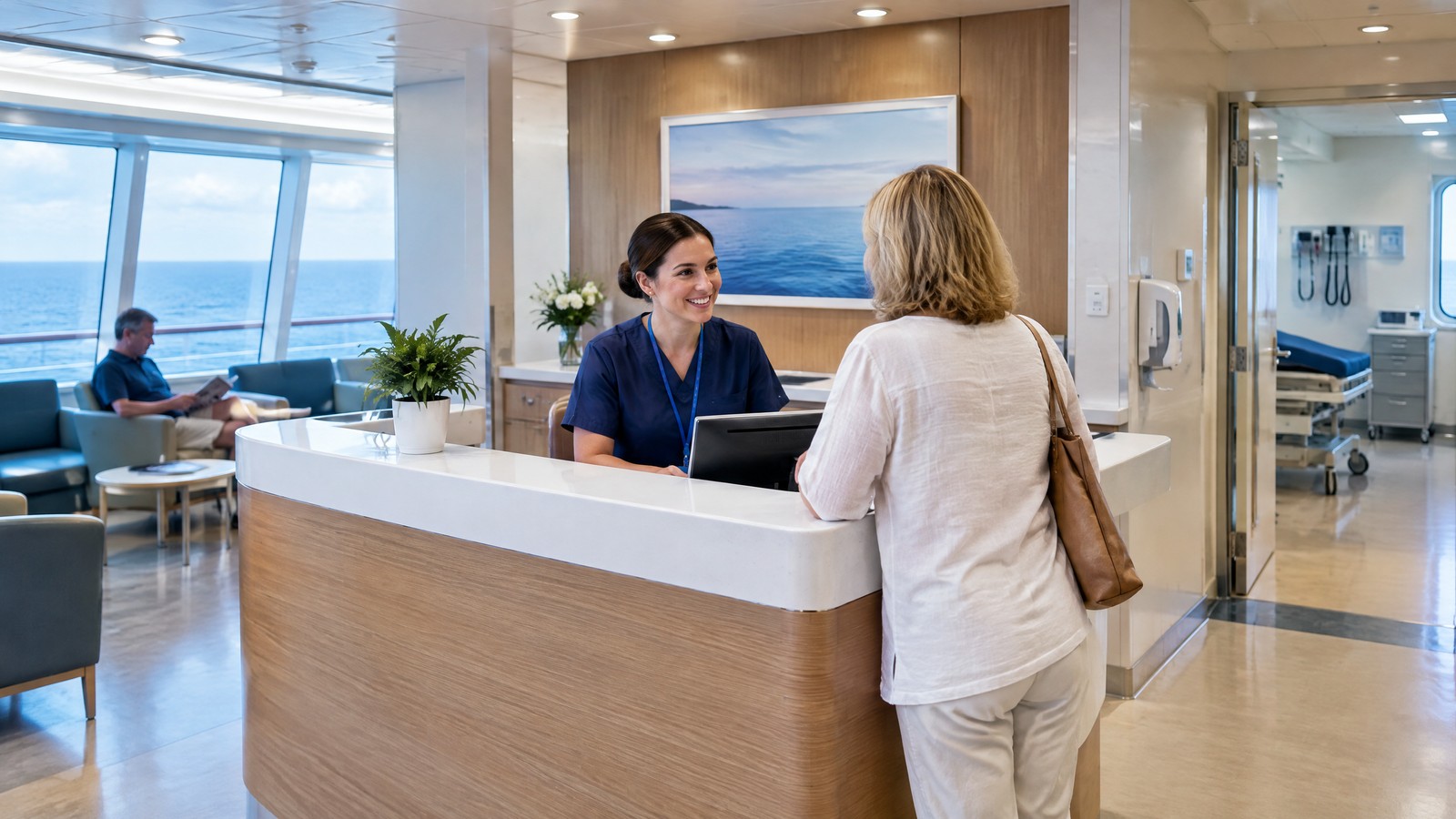
Wondering what happens if you need medical care at sea? Here’s what UK cruisers can expect from shipboard medical centres, how they differ from hospitals, what insurance to check, and how to prepare if you take medication or have a health condition.
If you’re asking “cruise ship medical facilities – what to expect,” the short answer is reassuring but realistic: most mainstream cruise lines do provide an onboard medical centre staffed by qualified medical professionals, typically with set clinic hours and a 24/7 emergency response. However, it is not the same as a UK hospital or the NHS. Think capable assessment, routine help and urgent stabilisation within the limits of a ship at sea, with transfer to shoreside care when needed and available. For example, P&O Cruises states that all its ships have a medical centre with doctors and nurses and a 24-hour emergency service, while Royal Caribbean also describes round-the-clock professional care with the aim of stabilising emergencies and arranging shoreside treatment where necessary. Facilities and policies vary by line and ship, so always check your specific operator before booking.
Do cruise ships have doctors and medical centres?
In practical terms, major operators commonly carry a medical team and run a medical centre. P&O Cruises, for example, says all its ships have a medical centre staffed by doctors and nurses, with routine hours and a 24-hour emergency service. Royal Caribbean likewise refers to licensed physicians and nurses providing care 24/7. These are operator examples, not a promise that every vessel worldwide is staffed identically. In the UK regulatory context, there is also a legal threshold: GOV.UK states that a UK ship carrying 100 or more persons on an international voyage of 72 hours or longer must carry a medical practitioner. That rule applies to qualifying UK ships and voyages; it is not a universal guarantee for every flag state or itinerary. Regardless of the operator, verify the exact arrangements for your specific ship and sailing before you book, and keep those answers in writing if you have particular needs.
How is a ship’s medical centre different from a land hospital? In short: scope and setting. A cruise medical centre is designed for seagoing realities—assessment, routine medical issues, first aid, and urgent stabilisation—without the full specialist teams and equipment you’d expect in a hospital ashore. Sea location, weather and port availability also affect how quickly a patient could reach a shore facility if needed. For a first-time overview of what a day-to-day cruise is like, start with our planning hub: What to Expect on Your First Cruise Holiday (/articles/what-to-expect-on-your-first-cruise-holiday).
What can the onboard medical centre usually help with?
While facilities vary by ship and operator, a P&O Cruises example sets a helpful expectation range. P&O lists services and equipment that may include ECG, oxygen therapy, nebulisers, X-ray, selected pathology tests, an inpatient ward area, medicines and 24-hour emergency services. Framed correctly, this suggests that many routine issues and a number of urgent scenarios can be professionally assessed and initially managed onboard. However, always treat examples as guidance rather than a universal checklist; confirm your ship’s specifics with your line before you sail.
- Minor illness that isn’t settling with self-care, such as a fever or a persistent upset stomach
- A fall, sprain or minor injury that needs clinical assessment
- Worsening of a known condition where you’ve been advised to seek medical review
- Seasickness that does not respond to over-the-counter measures (see How to Avoid Seasickness on a Cruise Ship (/articles/how-to-avoid-seasickness-on-a-cruise-ship) for prevention tips; persistent symptoms warrant assessment)
- Concerns about hydration, heat exposure or travel-related tummy bugs
- Routine questions about safe medication use while travelling (the clinical team can advise generally but cannot replace your usual specialist)
What are the limits of cruise‑ship medical care?
Two constraints matter most: capability and geography. Capability-wise, P&O explicitly states there is no access to surgery, complex intensive care, advanced imaging or medical specialists onboard. Geography-wise, even with a 24/7 medical team, the ship may be days from a port with suitable hospital facilities. Royal Caribbean notes that the medical team aims first to stabilise emergency patients and, when necessary, coordinate transfer to an appropriately equipped shore facility. Transfer or evacuation is not guaranteed and may depend on the ship’s position, port availability, weather and local services. Planning takeaway: choose insurance and itineraries with these realities in mind, and make contingency plans with your clinician if you have a condition that might need specialist care.
If a serious problem occurs, the immediate goal is typically stabilisation onboard, followed by coordination with shoreside providers where necessary and feasible. Timings and methods vary; do not assume a helicopter or rapid tender will always be possible. Build that uncertainty into your risk planning and insurance checks.
Is onboard treatment free for UK passengers or covered by the NHS?
Do not assume this. P&O explains that its ship medical centres provide private healthcare, and that charges apply for services and medicines. That is a line-specific statement, not a market-wide billing rule—but it highlights why you should read your own operator’s current terms carefully. Because onboard care can be private, a UK Global Health Insurance Card (GHIC) or EHIC will not typically settle a shipboard clinic bill; those cards are for medically necessary state-provided care in participating countries and do not cover private treatment or medical repatriation. Always verify your cruise line’s billing practices and ensure you have suitable travel insurance before sailing.
Budget planning tip: set aside a contingency for medical-centre charges in addition to your normal onboard spend. See How to Avoid Extra Charges on a Cruise (/articles/how-to-avoid-extra-charges-on-a-cruise) for general strategies to reduce surprises.
Travel insurance, GHIC and EHIC: what to check before a cruise
GOV.UK advises buying appropriate travel insurance before international travel, declaring pre-existing physical and mental health conditions and checking cover for activities and every destination on your itinerary. For cruises specifically, GOV.UK highlights that reaching a hospital can be more difficult and that cruises generally require an additional level of cover—so check the operator’s booking conditions and your policy wording carefully. A GHIC or EHIC can still be useful for eligible state healthcare in participating destinations when you’re ashore, but it does not replace insurance and does not cover private care or repatriation. For a deeper dive into policy choices, start with Cruise Travel Insurance Guide: What Does It Cover? (/articles/cruise-travel-insurance-guide) and Do You Need Travel Insurance for a Cruise? UK Guide 2026 (/articles/do-you-need-travel-insurance-for-a-cruise).
- Medical expenses that reflect the realities of being at sea, including treatment onboard and ashore where applicable (check limits and exclusions).
- Emergency transport and medical repatriation, including from a ship, where offered by your insurer.
- Full disclosure of pre-existing conditions, with acceptance confirmed in writing by the insurer.
- Coverage for every country and territory on your itinerary, including any pre- or post-cruise stays.
- Any planned activities (for example, zip-lining or scuba) and ship excursions that may require additional cover.
- 24-hour emergency assistance contact number saved on your phone and shared with a travel companion.
- Alignment with your cruise line’s booking conditions regarding insurance requirements.
If you have a condition, use medical equipment or take regular medicine
Preparation matters more than improvisation at sea. P&O asks guests with pre-existing conditions to discuss plans with their doctor, declare needs before sailing and understand that the onboard medical centre is not designed to provide ongoing treatment for pre-existing conditions. Processes around medical equipment, oxygen, sharps disposal, mobility aids and pregnancy vary by line and itinerary, so treat your chosen operator’s policy as the definitive rule for your sailing. Contact the cruise line early, provide any requested documentation, and keep written approvals with you.
- Keep all essential medicines in your hand luggage, in original, clearly labelled dispensing packaging.
- Carry a copy of your repeat prescription; for controlled or injectable medicines, consider a doctor’s letter as P&O advises.
- Check that your medication is permitted in every destination on your itinerary; rules differ by country and can change.
- Bring enough medication for the full trip plus a buffer in case of delay.
- Store insurer details and your GP/specialist contact information where you can access it quickly.
- For broader packing advice, see our Ultimate Cruise Packing List 2026: Everything You Need to Bring (/articles/ultimate-cruise-packing-list).
What happens in an onboard emergency?
If you or someone you’re with needs urgent help at sea, follow the ship’s published emergency instructions immediately. The onboard medical team will assess the person, provide treatment within the medical centre’s capability and, for serious cases, aim to stabilise the patient. Royal Caribbean describes the next step, when necessary, as arranging transfer to a shoreside facility that is appropriately equipped. Availability and timing depend on the ship’s location, weather, port and local services. Do not rely on any assumed evacuation method. The ship’s medical professionals and the situation at hand determine the safest course of action.
- Alert the crew or contact the medical centre using the ship’s emergency instructions.
- Provide clear information: symptoms, time started, known conditions, medications, allergies.
- Follow crew guidance; the medical team will come to you or request you attend the medical centre.
- Expect triage and assessment first, then treatment within capability.
- If the case is severe, the team may coordinate shoreside care or transfer where feasible.
UK pre-cruise health checklist
A calm, early checklist reduces stress later. NHS guidance advises seeking travel-health and vaccination advice four to six weeks before travel where possible, noting that required or recommended vaccines depend on your itinerary. GOV.UK advises buying appropriate travel insurance, declaring pre-existing conditions and checking that cover extends to every destination on your cruise. Add operator-specific medical and accessibility checks to that list, and carry the documents you might need if plans change.
- Speak to your GP, specialist or a travel-health professional about fitness to travel, medicines and any monitoring plan.
- Seek travel-vaccine advice four to six weeks before departure where possible; check official entry and health rules for every port.
- Buy cruise-appropriate travel insurance covering medical treatment, emergency transport and repatriation as applicable; declare conditions.
- Check your cruise line’s medical-needs declaration process and equipment rules; keep written confirmations.
- Pack medicines and documentation in hand luggage; include copies of prescriptions.
- Save your insurer’s 24-hour assistance details and your ship’s emergency contact information.
- For overall planning, see First Time Cruise Tips for Beginners UK (/articles/first-time-cruise-tips) and What to Expect on Your First Cruise Holiday (/articles/what-to-expect-on-your-first-cruise-holiday).
Decision guide: match your itinerary and cover to your health needs
Choosing the right cruise is partly about ports and ship features, and partly about realistic access to care if something goes wrong. Use the table below to map common traveller profiles to practical pre-booking checks and sensible onboard expectations. These are editorial pointers to help your planning; always verify any line-specific rules directly with your cruise operator and your insurer before committing.
<table><thead><tr><th>Traveller type</th><th>What to check before booking</th><th>Onboard expectation</th><th>Insurance priority</th><th>Money-saving move</th></tr></thead><tbody><tr><td>First-time cruiser</td><td>Confirm there is a medical centre and 24/7 emergency response on your chosen ship; ask how to contact it at sea.</td><td>Assessment and routine care available; emergencies stabilised, with shoreside transfer if necessary and feasible.</td><td>Comprehensive medical cover plus emergency transport/repatriation.</td><td>Consider an annual policy if you’ll travel more than once; compare cruise add-ons.</td></tr><tr><td>Traveller with stable long-term condition</td><td>Declare your condition to the line and insurer; ask about medication storage and clinic appointment access.</td><td>Ongoing specialist treatment is not provided onboard; plan for monitoring and bring supplies.</td><td>Written acceptance of your pre-existing condition; strong repatriation cover.</td><td>Buy early to benefit from cancellation protection linked to your condition.</td></tr><tr><td>Mobility aid or medical equipment user</td><td>Get written approval for equipment (e.g., oxygen) from the cruise line; confirm charging/storage options.</td><td>Medical centre can assess issues; complex equipment support varies by line.</td><td>Cover for equipment loss/damage and medical needs; check limits.</td><td>Bring spare parts/consumables to avoid last-minute sourcing at sea.</td></tr><tr><td>Pregnant traveller</td><td>Check the cruise line’s pregnancy policy and gestational limits; get clinician advice.</td><td>Onboard care focuses on assessment and stabilisation; no obstetric specialist care promised.</td><td>Policy that covers pregnancy-related care where allowed by the insurer.</td><td>Choose itineraries with frequent port access for added reassurance.</td></tr><tr><td>Adventure/remote itinerary fan</td><td>Assess days at sea and distance to advanced hospitals; confirm medical-centre hours and emergency response.</td><td>Emergency response onboard, but transfer times can be longer.</td><td>Higher limits for evacuation where available; confirm with insurer.</td><td>Compare itineraries with more proximate ports if you want to reduce risk/cost.</td></tr><tr><td>Budget-conscious family</td><td>Ask how onboard medical charges are billed; check excesses on your policy.</td><td>Expect private charges on some lines; plan a contingency fund.</td><td>Family policy with cruise add-on; ensure children’s needs are declared.</td><td>See How to Avoid Extra Charges on a Cruise for tips.</td></tr><tr><td>Solo traveller</td><td>Share emergency contacts and medical info with the line or a trusted person.</td><td>Know how to reach the medical centre after hours.</td><td>24/7 assistance services and repatriation; single-occupancy cover details.</td><td>Store documents digitally and physically for quick access.</td></tr></tbody></table>
Budget and documentation: avoiding surprises at sea
Because some onboard medical centres operate as private facilities, bills can be separate from your cruise fare. Keep your insurer’s emergency number, policy number and a payment method ready, and notify the insurer’s assistance team promptly if you receive significant care. Ask guest services where medical charges appear on your onboard account and when they are posted. For general budget planning, see How to Avoid Extra Charges on a Cruise (/articles/how-to-avoid-extra-charges-on-a-cruise).
Keep your health information organised: repeat prescriptions, a list of current medications and doses, allergies, key diagnoses and clinician contact details. If you’re travelling with companions, share what they might need in an emergency. A simple one-page summary in your wallet plus a phone copy saves time when minutes matter.
Routine care vs. ongoing treatment: set expectations early
P&O notes that its medical centre is not designed to provide ongoing treatment for pre-existing conditions. That’s a useful planning lens across cruise lines: if you routinely see a specialist or require scheduled therapies, arrange those before or after your holiday and build in extra medication supply. If your condition is sensitive to dehydration, heat or motion, discuss with your clinician and create a self-management plan you can follow onboard. Prevention tips can help reduce clinic visits—see How to Stay Healthy on a Cruise Ship in 2026 (/articles/how-to-stay-healthy-on-a-cruise-ship).
Seasickness and self-care, sensibly handled
Over-the-counter remedies and non-medicinal strategies work for many travellers. Our practical guide How to Avoid Seasickness on a Cruise Ship (/articles/how-to-avoid-seasickness-on-a-cruise-ship) explains prevention approaches. If symptoms persist or worsen, or you’re unsure what’s appropriate with your regular medicines, seek an assessment from the onboard medical team rather than self-medicating beyond the label.
Paperwork that helps the medical team help you faster
Documentation speeds safe decision-making. A clearly written medication list, details of implants or devices, recent clinic letters for active conditions, and any relevant baseline test results can be very useful. While you won’t need to show everything to board, having it to hand if you feel unwell can reduce delays and miscommunication. Where P&O or your line requests specific medical forms, complete and return them by the stated deadline and keep copies.
Port days and health: a few smart habits
It’s easy to underestimate heat, steps and timing on shore. Carry your essentials—medications, a bottle of water, sun protection, and your insurer’s card—each time you disembark. If you’re relying on a GHIC/EHIC ashore in participating countries, remember its limits: it applies to medically necessary state-provided care and not to private treatment or repatriation. If in doubt, contact your insurer’s assistance line before you seek care ashore so they can guide you to an appropriate facility.
Where to keep health and insurance details
Store your insurer’s emergency number, policy number and your ship’s contact details in three places: your phone, a paper copy in your cabin safe and a copy in your day bag. Share them with a travelling companion. If you’re cruising solo, consider leaving a set with someone at home who can liaise with your insurer if needed.
Final take: confident, prepared and realistic
The right mindset is calm preparedness. Expect competent assessment and urgent care within the ship’s capability, not a hospital-at-sea. Know that serious cases may be stabilised and, where appropriate, transferred ashore—but evacuation is not guaranteed or instant. Choose insurance that reflects those realities. If you take regular medicines or live with a condition, do the paperwork early and travel with labelled supplies and documentation. For a rounded pre-cruise briefing, pair this guide with What to Expect on Your First Cruise Holiday (/articles/what-to-expect-on-your-first-cruise-holiday) and our Cruise Travel Insurance Guide (/articles/cruise-travel-insurance-guide).
Sources and verification
Operator capabilities and limits vary by ship and itinerary. Before you book—and again before you travel—verify details with your cruise line and insurer. Official references used for this 2026 guide:
• GOV.UK: maritime medical-care requirements and ship’s doctors — https://www.gov.uk/government/publications/msn-1841-m-amendment-2-mlc-2006-medical-care-ships-doctors/msn-1841-m-amendment-2-maritime-labour-convention-2006-medical-care-ships-doctors
• P&O Cruises: medical information before travelling — https://www.pocruises.com/help-hub/centre/getting-ready-to-sail/medical-requirements-and-accessibility/medical-information-to-know-before-travelling
• P&O Cruises: medical requirements — https://www.pocruises.com/essential-information/medical-requirements
• GOV.UK: foreign travel insurance — https://www.gov.uk/guidance/foreign-travel-insurance
• GOV.UK: Global Health Insurance Card — https://www.gov.uk/global-health-insurance-card
• NHS: travel vaccinations — https://www.nhs.uk/vaccinations/travel-vaccinations/
• Royal Caribbean: onboard medical services — https://www.royalcaribbean.com/faq/questions/medical-services-onboard-regulations
For preparation beyond the onboard clinic, read our cruise travel insurance guide, UK cruise insurance picks, CPAP machine checklist, mobility planning guide, and first-time cruise guide.
Frequently Asked Questions
Is there a doctor on every cruise ship?
Not always. For qualifying UK ships, GOV.UK requires that ships carrying 100 or more people on an international voyage lasting 72 hours or more have a medical practitioner onboard. That rule applies to qualifying UK-flag ships and voyages and is not a universal standard for every line or flag. Many mainstream operators do staff medical centres with doctors and nurses, but you should verify your specific ship’s arrangements before booking.
Can a cruise ship medical centre do an X‑ray?
Some can. P&O lists X-ray among the diagnostic tools available on its ships, alongside ECG, oxygen and selected pathology tests. Facilities vary by operator and ship, so check what your particular vessel offers rather than assuming the same capability fleet‑wide.
Is the ship’s doctor covered by the NHS?
Do not assume NHS cover onboard. P&O states that its medical centres provide private healthcare and that charges apply for services and medicines. Other lines have their own billing arrangements. Read your operator’s current terms and make sure you have travel insurance that covers medical care at sea.
Will a GHIC or EHIC cover me on a cruise?
A GHIC/EHIC can help with medically necessary state‑provided care in participating countries when you are ashore, but it does not replace travel insurance and does not cover private treatment or medical repatriation. Because onboard care is often private, do not expect a GHIC/EHIC to settle a shipboard clinic bill.
What happens if I need hospital treatment at sea?
The onboard team will assess and treat within the medical centre’s capability and prioritise stabilisation in an emergency. If necessary and feasible, they may coordinate transfer to a shoreside facility. Evacuation methods and timing depend on the ship’s location, weather, port access and local services; they are not guaranteed.
Can I bring prescription medicines on my cruise?
Generally yes, but follow rules. Keep medicines in original, clearly labelled packaging and carry copies of prescriptions; for controlled or injectable drugs, consider a doctor’s letter as P&O advises. Some destinations restrict certain medicines, so check each country’s rules and your cruise line’s guidance before you travel.
I have a long‑term condition—will the onboard clinic manage it throughout the cruise?
Do not assume ongoing management. P&O notes its medical centre is not designed to provide ongoing treatment for pre‑existing conditions. Discuss travel plans with your clinician, bring sufficient medication and monitoring supplies, and declare your needs to the cruise line in advance.
Is there a charge to see the ship’s doctor?
It depends on the operator. P&O states that charges apply for services and medicines because its onboard care is private. Other lines set their own fees and billing processes. Check your line’s current policy and ensure your travel insurance covers you for medical treatment at sea.
Will the ship always be able to evacuate someone quickly?
No. Transfer or evacuation depends on factors like position, weather, port availability and local resources. Operators such as Royal Caribbean emphasise stabilisation first and coordinating shore care when necessary. Never plan your health decisions on the assumption of a guaranteed rapid evacuation.
What should I do right now to prepare for medical peace of mind on my cruise?
Three steps: (1) Buy cruise‑appropriate insurance that covers medical treatment, emergency transport and declared conditions; save the assistance number. (2) Confirm your cruise line’s medical‑needs declaration process, and get written acceptance for any equipment or special requirements. (3) Pack medicines and documentation in hand luggage, including prescriptions and key clinician contacts. For broader prep, see Do You Need Travel Insurance for a Cruise? UK Guide 2026 (/articles/do-you-need-travel-insurance-for-a-cruise) and our Ultimate Cruise Packing List 2026 (/articles/ultimate-cruise-packing-list).
Related articles
- Ultimate Cruise Packing List 2026: Everything You Need to Bring
- First Time Cruise Tips for Beginners UK: Your Ultimate Guide
- Cruise Travel Insurance Guide: What Does It Cover?
- How to Avoid Seasickness on a Cruise Ship: Independent Planning Guide 2026
- What to Expect on Your First Cruise Holiday in 2026
- How to Stay Healthy on a Cruise Ship in 2026
- How to Avoid Extra Charges on a Cruise in 2026: Independent Planning Guide
- Do You Need Travel Insurance for a Cruise? UK Guide 2026