Home › Articles › Cruise Advice
Missed Your Cruise Ship? UK Port Guide (2026)
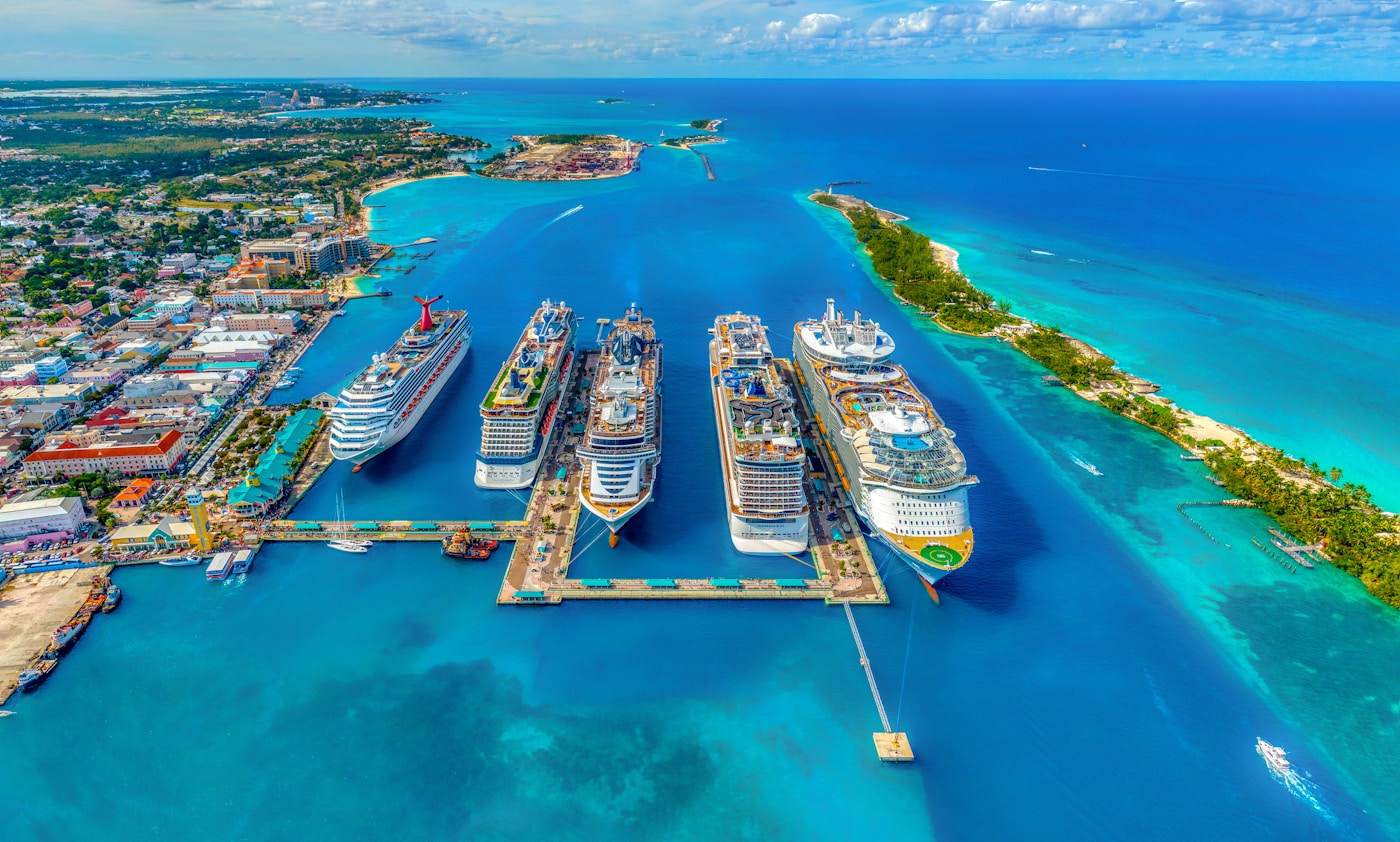
Missed your cruise ship at a port call? This 2026 UK-focused guide explains what happens next, who pays, how to rejoin, the role of port agents and insurance—and how to avoid it happening again.
What happens if you miss your cruise ship at port? This UK guide for 2026 explains how cruise lines typically handle late‑returning guests, who you must contact first, realistic options to rejoin the ship, the role of travel insurance, and how to prevent a repeat. We focus on UK sailings and lines popular with British travellers such as P&O Cruises, Cunard and Marella, with clear steps and decision points to help you act fast.
Are you really left behind? Check ship time vs local time
Before panicking, confirm whether the ship has actually sailed. “All aboard” is set on ship time, which can differ from local time. Many missed‑ship incidents stem from this mismatch. Check: the port terminal information screens, harbour view of the berth, and any last messages from the cruise line. If you see your ship still alongside but gangways removed, you’re almost certainly staying ashore until the next port. Tip: For future cruises, read our ship‑time explainer: Ship time vs local time.
Security closes the gangway well before scheduled departure to finalise manifests and casting‑off procedures. Once casting‑off begins, the captain cannot legally or safely stop for a late guest unless directed by authorities. If you miss the cut‑off, ship staff typically pass your details to the designated port agent. Expect the ship to leave on schedule while the port agent becomes your local point of contact.
What happens next: roles and realities
- The ship departs on schedule in most cases.
- The cruise line nominates a port agent at each call. Their contact details are printed in the daily programme or shown on the gangway sign. Photograph this each morning.
- The port agent can liaise with the ship, advise on rejoining at the next port, and help with translation and paperwork. They are not obliged to pay for your costs unless the line authorises it.
- If your passport is held by the ship (common where visas are processed), the agent will coordinate with the line on how you can be reunited with your document—either couriered or collected at the next port, subject to local law.
- If you were on a cruise‑line excursion that returned late, many lines state they will arrange for you to rejoin the ship at the next feasible port at no extra cost to you; verify your line’s policy (see Sources and verification).
- Port agent (from the daily programme or pier notice)
- Cruise line’s emergency/guest services number (on your cruise card or app)
- Your travel insurer’s emergency assistance line (save it in your phone)
- Local police or port authority only if instructed by the agent/line (e.g., for reports, lost property)
- Your airline (if you decide to fly to the next port) or rail operator
- UK embassy/consulate if you lose your passport or need an Emergency Travel Document
Your first 60 minutes: the action plan
Time matters. Here’s a practical, no‑fluff sequence to stabilise the situation and preserve options.
- Stop and check: confirm ship time vs local time.
- Call the port agent immediately; state your full names, cabin number, and show ID.
- Call the cruise line’s emergency number to log the incident and request guidance.
- Photograph the pier, terminal signs, and any transport tickets as evidence.
- If your passport is on board, ask the agent what’s possible locally; they will liaise with the ship.
- Contact your insurer’s emergency line; ask what they need to open a claim and whether they will assist with bookings.
- Decide quickly: rejoin at next port or fly home (use the decision matrix below).
- Start checking transport options on a metasearch and the airline’s own site; consider trains/ferries for near‑by next ports.
- If you must stay overnight, secure accommodation close to the departure point for your onward travel.
- Keep all receipts and call logs; you may need them for claims.
Documents and visas you’ll need to keep moving
- Passport: Essential for flights, international trains and hotel check‑ins in many countries. If it’s with the ship, the agent will coordinate options.
- Visas/eTA/ETIAS: Requirements vary by nationality and itinerary. In 2026, the EU’s ETIAS system is expected for visa‑exempt nationals; check the official ETIAS site before travel. If you plan to cross borders to rejoin, ensure you meet entry rules.
- Boarding pass or proof of onward travel: Some borders ask for exit proof.
- Insurance documentation: Your policy number and emergency contact.
- Incident evidence: Photos, call records, times, and any statements from the agent or local authorities.
Who pays? The cost reality (and how to limit it)
Unless your delay is from a cruise‑line shore excursion covered by the line’s policy, you generally pay for re‑routing, hotels and meals. Travel insurance with cruise cover may reimburse some costs (often under “Missed Port” or “Travel Delay/Disruption”), subject to terms and evidence. Money‑saving ideas appear in the tip box below, but act fast: fares can rise during the day.
<table><thead><tr><th>Situation</th><th>Rejoin at next port</th><th>Fly home instead</th></tr></thead><tbody><tr><td>Next port is within the same country and <4–6 hours by train/short flight</td><td>Usually best. Lower cost, simpler border formalities.</td><td>Less attractive unless cruise is nearly over.</td></tr><tr><td>Next port is in a different country with strict entry rules</td><td>Possible but check visas/ETIAS/ESTA first.</td><td>Often simpler if documentation is uncertain.</td></tr><tr><td>Passport is held on the ship</td><td>Only if the agent can arrange lawful document transfer/pickup.</td><td>Likely required if documents cannot be provided in time.</td></tr><tr><td>Travelling with children or mobility needs</td><td>Consider comfort, connections and daylight travel.</td><td>Prefer if multiple connections or overnight transits are needed.</td></tr><tr><td>Early in the cruise with several ports ahead</td><td>Rejoining often maximises holiday value.</td><td>Consider if rejoin costs exceed remaining cruise value.</td></tr></tbody></table>
Insurance: what may be covered (check your policy)
Policies differ widely. Look for sections labelled “Missed Port,” “Missed Departure/Connection,” or “Travel Disruption.” Some UK cruise policies include a helpline to organise flights/hotels; others reimburse reasonable costs after the event. Exclusions often apply for oversleeping or personal scheduling errors. Always read your 2026 policy wording and call the emergency number for guidance before booking expensive last‑minute travel. For broader context, see our guide: Travel insurance for cruises.
Evidence to keep for a claim (editorial checklist)
- Photos of pier/terminal boards showing time
- Copies of tickets/receipts for transport, meals and hotels
- Emails/texts from the port agent or cruise line
- Call logs with times and numbers dialled
- Police/authority report number if applicable (e.g., theft)
- A brief written timeline of what happened and why you were delayed
Cruise‑line tour vs independent excursion: why it matters
If a cruise‑line‑operated excursion returns late, many lines state they will cover arrangements to get you back to the ship or to the next port. With independent tours, responsibility typically sits with you. Because policies can change, verify your line’s current position before sailing and keep proof you were on a ship tour. For help choosing excursions, see: Ship vs independent excursions.
<table><thead><tr><th>Cruise line</th><th>Stated approach if a ship‑run tour is late</th><th>Where to verify</th></tr></thead><tbody><tr><td>P&O Cruises (UK)</td><td>Historically indicates ship‑run tours are coordinated with departure; late returns are managed by the line/agent.</td><td>See P&O Shore Experiences terms (link in Sources).</td></tr><tr><td>Cunard</td><td>Shore experiences are operated under specific T&Cs; late return support typically arranged via the line/agent.</td><td>See Cunard Shore Excursions T&Cs (Sources).</td></tr><tr><td>Marella (TUI)</td><td>TUI‑operated excursions are coordinated with the ship; assistance provided if delayed.</td><td>See Marella/TUI excursion terms (Sources).</td></tr><tr><td>Royal Caribbean</td><td>Publishes a “Return to Ship”/“Back to Ship” guarantee for line‑operated excursions.</td><td>See Royal Caribbean excursion guarantee (Sources).</td></tr></tbody></table>
Getting to the next port: planes, trains and ferries
- Short‑haul flights can be quickest, but factor airport transfers and security time. Non‑stop is best; if you must connect, allow generous buffers.
- In Europe, fast trains (e.g., TGV, AVE, Frecciarossa, ICE) can beat flying city‑centre to city‑centre with fewer ID checks.
- Ferries or coaches may be viable for near‑coastal hops.
- Aim to arrive in the next port at least 4–6 hours before all‑aboard to cushion delays.
- If you need your passport couriered, ensure you’ll be at a reliable address during courier hours (the port agent can advise).
Special situations: families, solos and mobility needs
- Families with children: Prioritise daytime travel and single‑segment journeys. Keep snacks, meds and entertainment handy. Ensure you carry parental consent documentation if guardians are split.
- Solo travellers: Share your live location with a trusted contact and stick to well‑lit, central transfer points.
- Travellers with reduced mobility: Book assistance at stations/airports in advance (often available even last‑minute). Choose hotels near terminals with step‑free access and 24‑hour reception.
- Medication dependence: Keep prescriptions and a photo of labels. Ask the port agent to help find a pharmacy if you need replacements.
<table><thead><tr><th>Traveller type</th><th>Top priority</th><th>Preferred option</th><th>Why</th></tr></thead><tbody><tr><td>Family with young kids</td><td>Minimise connections</td><td>Direct train/flight to next port; arrive early</td><td>Reduces stress and missed connections risk.</td></tr><tr><td>Older travellers</td><td>Comfort and assistance</td><td>Daytime travel, meet‑and‑assist services</td><td>Smoother transfers and easier navigation.</td></tr><tr><td>Solo traveller</td><td>Safety and simplicity</td><td>Central, well‑reviewed hotels; mainline stations</td><td>Better lighting, security and support.</td></tr><tr><td>Budget traveller</td><td>Cost control</td><td>Early search across modes; semi‑flex fares</td><td>Balances savings with some flexibility.</td></tr><tr><td>Mobility needs</td><td>Accessibility</td><td>Step‑free routes; pre‑booked assistance</td><td>Reduces physical barriers and delays.</td></tr></tbody></table>
Preventing a repeat: timing, tech and habits
- Treat “all aboard” as your deadline, not sail‑away time; aim to be back 60–90 minutes before.
- Set your phone to ship time and add two alarms. Keep a basic wristwatch synced to ship time as backup.
- Download offline maps and save the port and terminal in favourites. See: Staying connected at sea.
- Choose ship‑run tours on tight or remote calls; DIY is fine when the port is walkable and local transport is frequent.
- At breakfast, photograph the port agent details and the terminal’s location on a map.
- Keep essential meds, cards and ID on you ashore; don’t rely on returning to the ship for them.
- Before you cruise, prepare a simple documents pack: Cruise documents checklist.
- Confusing ship time with local time
- Under‑estimating return‑journey traffic or queues
- Planning a tight independent tour with no buffer
- Not carrying passport/ID where needed ashore
- Relying on a single, non‑refundable transport plan back to the port
- Ignoring weather or local events impacting transport
UK domestic port days and ID nuances
On UK‑only itineraries, ID requirements can differ from international sailings. Some lines allow alternative photo ID on specific domestic cruises, but many still require a passport. Policies can change—always check your cruise line’s official documentation for your 2026 sailing. If you miss the ship at a UK port call, domestic travel to the next UK port is typically simpler, but you still need valid ID for hotels and flights. For background, read: Do you need a passport for a UK cruise?.
Who to contact: handy list to save
- Port agent: in your daily planner and at the gangway sign
- Cruise line emergency/guest services: on your keycard or app
- Travel insurer emergency line: on your policy certificate
- Local emergency number: in most of Europe, dial 112; in the UK, 999/112
- UK embassy/consulate: nearest mission for ETDs and advice
- Airline/rail/ferry operators if rejoining at the next port
- For planning ahead: Cruise excursions—ship vs independent and Travel insurance for cruises
Sources and verification (check before you sail)
Always confirm the latest 2026 policies on the cruise line’s official site for your exact sailing and excursion. Useful starting points:
- P&O Cruises Shore Experiences terms: https://www.pocruises.com/legal/shore-experience-terms-and-conditions
- P&O Cruises Travel & essential information: https://www.pocruises.com/cruise-with-confidence/travel-advice
- Cunard Shore Excursions terms: https://www.cunard.com/en-gb/legal/terms-and-conditions-of-shore-excursions
- Marella (TUI) excursions information: https://www.tui.co.uk/cruise/onboard/shore-excursions
- Royal Caribbean “Return to Ship”/shore excursions info: https://www.royalcaribbean.com/faq/topics/shore-excursions
- MSC Shore Excursions terms: https://www.msccruises.co.uk/shore-excursions/terms-and-conditions
- Norwegian Cruise Line shore excursion terms: https://www.ncl.com/uk/en/shore-excursions-terms-and-conditions
- UK Government Emergency Travel Document: https://www.gov.uk/emergency-travel-document
- FCDO travel advice (country‑specific entry rules): https://www.gov.uk/foreign-travel-advice
- ETIAS (EU) official information: https://travel-europe.europa.eu/etias_en
Frequently Asked Questions
Will the ship wait for me if I’m a few minutes late?
Usually not. Departure and security procedures make late boarding unsafe and impractical. The captain may only delay for operational or safety reasons. Assume you must rejoin at the next port and contact the port agent immediately.
If I miss the ship, who pays for my flights and hotel?
In most cases, you do. If a cruise‑line excursion caused the delay, many lines state they will arrange and pay to get you back to the ship, but you must verify the exact policy for your 2026 sailing. Travel insurance may reimburse some expenses if your policy covers missed ports or disruption.
What if my passport is still on the ship?
Tell the port agent and cruise line at once. They will advise how (and if) your passport can be transferred or collected legally. Do not attempt to travel internationally without proper documents. If your passport is lost or cannot be provided in time, contact the nearest UK embassy/consulate about an Emergency Travel Document.
Can travel insurance cover missing the ship after a DIY tour?
Possibly. Some policies cover missed ports or travel disruption even for independent plans, but exclusions are common (e.g., insufficient time allowed). Read your 2026 policy wording and call the insurer’s emergency line before making large purchases.
I was on a ship‑run shore excursion that came back late—am I protected?
Many lines state that if their official excursion returns late, they will arrange for you to rejoin the ship at no extra cost. The details vary by cruise line and itinerary, so confirm on the official site for your sailing (see Sources and verification). Keep proof you were on the ship excursion.
Could I get compensation from an airline under EU/UK 261 if I book a flight and it’s delayed?
Passenger rights like EU/UK 261 can apply if the airline‑operated flight you booked is significantly delayed or cancelled for reasons within the airline’s control. This is separate from missing your ship. Check the airline’s policy and applicable regulations; eligibility depends on the specific circumstances.
Are port taxes or unused days refunded if I leave the cruise early?
Policies differ by line and fare type. Some lines may refund certain unused charges or taxes if you disembark mid‑cruise, but many fares are non‑refundable once the voyage begins. Verify with your cruise line and ticket terms for your 2026 booking.
How much buffer time should I allow when going ashore independently?
Aim to be back at least 60–90 minutes before the published all‑aboard time, more if the port is remote or transport is infrequent. Always set alarms to ship time and monitor traffic or service updates.