Home › Articles › Cruise Advice
How to manage dietary needs on a UK cruise (2026)
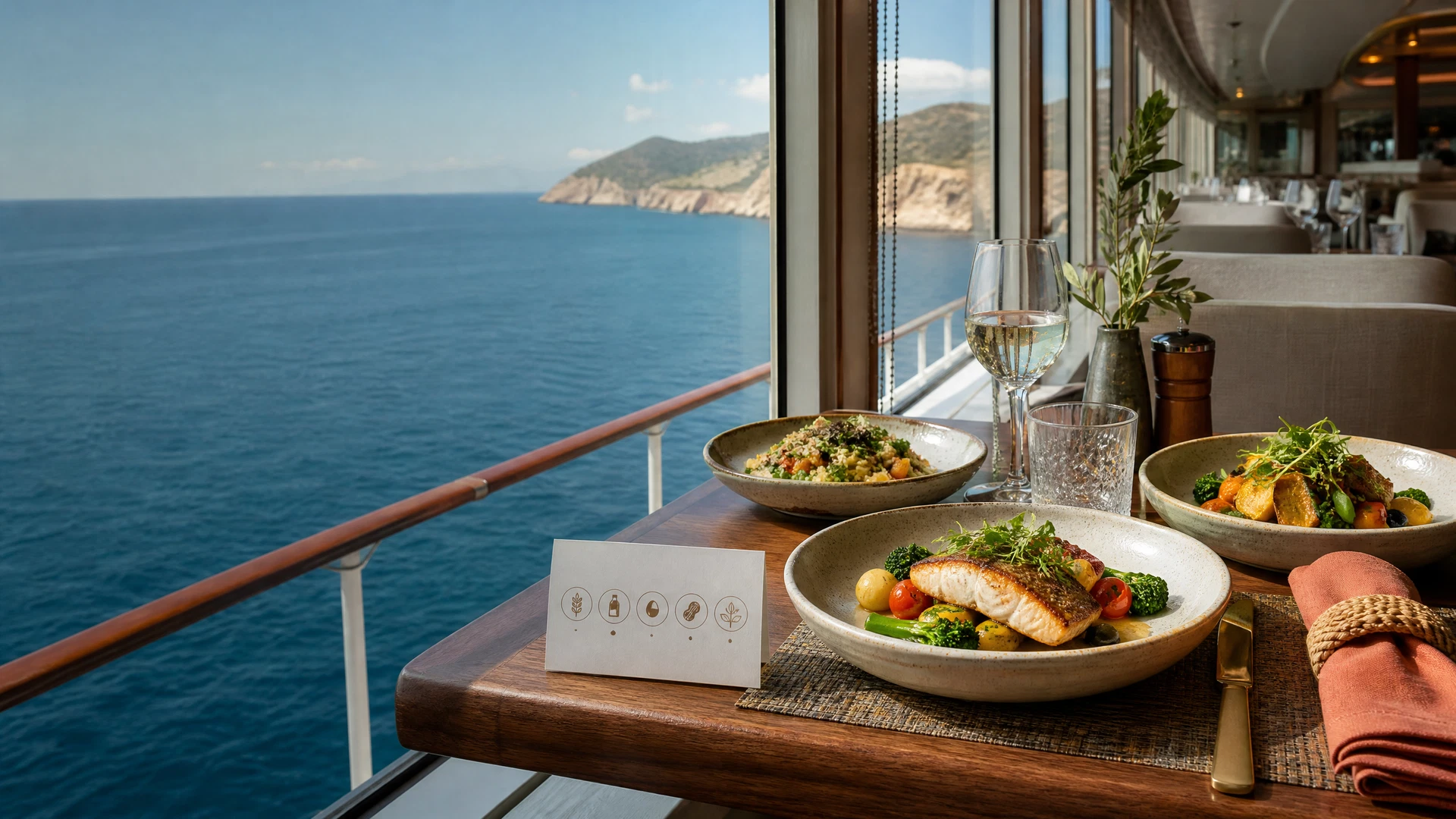
Sailing from the UK with dietary needs? Here’s how to plan, notify, and eat confidently on board in 2026. Clear steps, decision table, UK line nuances, and money-saving tips—plus official links to verify details before you book.
If you’re wondering how to manage dietary requirements on a cruise UK in 2026, the good news is that most UK-focused lines can support a wide range of needs with advance notice and good communication. Whether you’re coeliac, vegan, halal, low-sugar, low-sodium, or navigating severe allergies, success comes from planning early, documenting everything, and working closely with the ship’s dining team once on board. This guide explains what to do, when to do it, and how to save money while keeping mealtimes stress-free. Passengers booked on Arvia can apply this process with the Arvia restaurants and reservations guide.
What counts as a dietary requirement on cruises?
Dietary requirements cover medical, ethical, cultural, and preference-based needs that affect what you can safely or comfortably eat. Cruise kitchens are set up to handle many of these with notice, but exact provisions vary by cruise line, ship, itinerary, and supplier availability. In 2026, it remains essential to confirm your needs directly with the cruise line before you pay a deposit if your diet is safety-critical.
- Allergies: e.g., nuts, peanuts, shellfish, egg, dairy, sesame, soya
- Coeliac disease and medically required gluten-free diets
- Lactose-free and dairy-free diets
- Vegetarian and vegan
- Halal and kosher observance (may require pre-order; availability varies)
- Low-sugar/diabetic, carbohydrate-counting, low-sodium, renal-friendly
- Low-FODMAP and other clinician-advised protocols (confirm feasibility)
- Child-specific needs (purees, textures) and infant feeding (check policies)
How UK cruise lines generally handle special diets
UK-focused lines such as P&O Cruises, Cunard and Marella typically invite guests to declare dietary needs in advance so the ship can plan menus and order suitable ingredients. On board, staff will usually point you toward a designated contact (often the maître d’, head waiter, or restaurant supervisor) who can review menus, note substitutions, and advise on cross-contact risks. Labelling on buffets and menus is increasingly common, but it can vary by venue and sailing; always verify with staff if you have a medical need. Editorial assessment: larger UK-oriented fleets tend to have established processes for gluten-free, vegetarian/vegan and lactose-free requirements, with pre-ordering in the main dining room often the most reliable route. However, halal and kosher arrangements can be more limited or require significant advance notice; confirm with the line before booking as provisioning differs by itinerary and ship.
- Before booking: List your must-haves (e.g., strict gluten-free with zero cross-contact) and nice-to-haves. If non-negotiable, contact the cruise line or your travel agent to confirm feasibility in writing before you pay a deposit.
- At booking: Declare your requirements via the booking system or through your agent. Ask for the line’s dietary form if one exists and keep copies of everything you submit.
- 4–8 weeks before sailing (check your line’s deadline): Reconfirm your needs and any special orders (e.g., kosher meals). Ask where to meet the dining team on embarkation day.
- 1 week out: Pack safe snacks if allowed by your line, plus a doctor’s letter and emergency meds if relevant. See packing advice: cruise packing list.
- Embarkation day: Visit the MDR or speak with the maître d’ to set up a routine (often pre-ordering the next day’s meals). Note which venues and dishes will work best.
- Daily onboard: Double-check ingredients and preparation methods. If you’re highly sensitive, ask for custom preparation away from your allergen where feasible.
- Post-cruise: Keep notes on what worked to inform your next booking and share feedback with the line.
<table><thead><tr><th>Traveller type</th><th>Best-fit onboard approach</th><th>Lines to consider (editorial)</th><th>Notes to verify pre-booking</th></tr></thead><tbody><tr><td>Severe allergy (e.g., nuts)</td><td>Set dining in MDR; meet head waiter daily; avoid self-serve items; carry meds</td><td>UK-oriented mainstream lines with clear MDR processes (e.g., P&O, Cunard)</td><td>Request written confirmation of accommodation steps; ask about cross-contact controls</td></tr><tr><td>Coeliac (strict GF)</td><td>MDR pre-order; avoid buffet fryers unless confirmed GF-only</td><td>Larger UK fleets with labelled menus and GF staples</td><td>Confirm separate preparation, bread/pasta availability, dessert options</td></tr><tr><td>Vegan</td><td>MDR for daily pre-order; explore buffet salad/grain stations</td><td>Lines with broader menus (editorial: Cunard/P&O often show multiple meat-free options)</td><td>Confirm plant milks, desserts, and protein sources are available</td></tr><tr><td>Halal observance</td><td>Seek fish/vegetarian dishes; ask about halal sourcing or sealed meals</td><td>Mainstream UK lines (availability varies)</td><td>Confirm halal certification and handling in writing; options may be limited</td></tr><tr><td>Kosher observance</td><td>Pre-order sealed kosher meals if offered; coordinate MDR serving times</td><td>Selected lines/itineraries only</td><td>Confirm pre-order deadlines, supply limits, and any fees</td></tr><tr><td>Low-sugar/diabetic</td><td>Customise sauces; request simple proteins/veg; carry measured snacks</td><td>Most mainstream lines</td><td>Check sugar-free drink options; verify dessert substitutes</td></tr><tr><td>Low-sodium/renal</td><td>Request no-added-salt prep; simple grills; avoid cured/packaged items</td><td>Most mainstream lines (chef consultation often possible)</td><td>Confirm stock/broth use, marinade ingredients, and portion control</td></tr><tr><td>Families with infants</td><td>Ask about purees; bring formula/sterilising aids as permitted</td><td>Family-focused lines (e.g., Marella)</td><td>Confirm what baby items you may bring and onboard storage/cleaning options</td></tr></tbody></table>
Key pre-booking questions to ask in 2026
- Can the line meet my specific requirement on my exact sailing and ship?
- How should I notify you (form, email, agent) and by what deadline?
- Will the ship carry staples I rely on (e.g., gluten-free bread/pasta, plant milks)?
- Can I pre-order daily in the MDR? Who is my point of contact on board?
- Are halal/kosher meals available on my itinerary? Do they require a surcharge or extended notice?
- For allergies: What steps reduce cross-contact risk? Are separate fryers/prep areas used for certain items?
- Are there hours/venues where labelling is most reliable?
- May I bring sealed specialty snacks? Are there restrictions at embarkation or in certain ports?
- If I need a fridge for medication or specialist foods, can my cabin accommodate this? See cabin guidance: how to choose a cabin.
Which venues work best on board?
- Main Dining Room (MDR): Often most reliable for special diets due to table service, chef oversight, and the ability to pre-order for the next day.
- Buffet: Good for variety and speed, but labelling can be inconsistent and cross-contact risks are higher around shared tongs and mixed stations.
- Speciality restaurants: Can be excellent with notice but may have fixed menus less open to substitution. Speak to the venue a day ahead.
- Room service: Useful for simple, controlled meals. Note that some lines charge at certain times or for certain items—check yours in advance.
- Casual grills and poolside spots: Limited menus; ask about marinades, oils, and grill usage.
<table><thead><tr><th>Venue</th><th>Strength for special diets</th><th>Watch-outs</th></tr></thead><tbody><tr><td>Main Dining Room</td><td>Pre-ordering, chef involvement, consistent team</td><td>Requires planning a day ahead for best results</td></tr><tr><td>Buffet</td><td>Wide choice; salads/grains can work well</td><td>Cross-contact; mixed utensils; variable labelling</td></tr><tr><td>Speciality</td><td>High-quality prep; potential for custom dishes</td><td>Menu rigidity; need 24–48 hours’ notice; possible fees</td></tr><tr><td>Room Service</td><td>Controlled preparation; simple dishes</td><td>Limited range; potential delivery fees at certain times</td></tr><tr><td>Casual/Poolside</td><td>Quick proteins; made-to-order grills</td><td>Marinades/sauces may contain allergens; shared grills</td></tr></tbody></table>
Making buffets safer and simpler
Arrive early when stations are freshly set and less crowded. Ask staff for freshly plated items from the kitchen if cross-contact is a concern. Use individually packaged condiments where possible. Confirm fryer usage if you’re avoiding gluten or certain allergens. If labels are missing or vague, treat them as unknown and request alternatives from a chef.
- Leverage the MDR: Custom dishes are usually included, reducing reliance on speciality venues.
- Choose inclusive lines/itineraries: Some UK-focused sailings bundle more dining variety in the fare—compare before you upgrade.
- Bring permitted staples: If your line allows sealed snacks, you’ll avoid multiple paid alternatives on board.
- Skip drink upgrades you won’t use: If you’re low-sugar, a premium package may not add value; see drinks packages guide.
- Use included room service strategically: A simple grilled protein and vegetables can be both safe and cost-effective if your line includes delivery at standard times (policies vary—verify yours).
Vegan and vegetarian on UK cruises
Vegetarian options are broadly available on UK lines, and vegan choices are improving. For consistency, discuss protein sources (tofu, legumes), dairy alternatives, and desserts with the MDR team on day one. Buffets can supplement with salads, grains and fruit; check dressings and toppings for hidden dairy/egg. Editorial assessment: lines with larger dining teams and classic MDR formats (e.g., P&O Cruises and Cunard) often manage repeat vegan requests well with daily pre-orders, but dessert creativity varies by ship and supplier. Always verify what will be available on your sailing.
Coeliac and medically required gluten-free
State clearly that your gluten-free requirement is medical and request careful handling. Confirm separate prep where feasible and ask about dedicated fryers; if not available, avoid fried items that may share oil with gluten-containing foods. Many ships can source gluten-free bread, pasta and cereals, but supply can vary—verify before booking if these are essential. Pre-ordering in the MDR usually yields the safest, most satisfying meals, including desserts prepared without gluten-containing ingredients.
Halal, kosher, and faith-based needs
Provisioning for halal and kosher can be limited or itinerary-dependent. Some lines can provide sealed or certified meals with sufficient advance notice, while others rely on fish/vegetarian alternatives. If certification matters, request written confirmation, including how meals are stored, heated, and served. During religious holidays or fasting periods, discuss adjusted mealtimes or suitable pre-dawn/after-sunset options with the dining team. Be clear about alcohol/gelatine restrictions in sauces and desserts.
Low-sugar, low-sodium, and other medical diets
For carbohydrate management, ask for sauces on the side, avoid sweet glazes, and request simple preparations of proteins and vegetables. For low-sodium or renal-friendly needs, specify no-added-salt cooking and check the use of stocks, rubs, pickles, and cured items. If you count macros or follow a low-FODMAP approach, bring a concise list of acceptable ingredients to share with staff; together you can identify the best menu pathways. Confirm sugar-free soft drinks or mixers if relevant to your plan.
Travelling with children and infants
Ask your line about purees, simple pastas, and whether kitchen staff can mash or blend dishes. Many families bring familiar, sealed baby foods, formula, and utensils (subject to the line’s policy). If you need a bottle warmer or sterilising support, ask ahead so housekeeping can advise what’s possible in your cabin category. If your child has allergies, bring clear written instructions and notify the kids’ club team as well as dining staff. Pack essentials using our cruise packing list.
Shore days: safe eating beyond the ship
Research ports for suitable restaurants and supermarkets before you sail. Consider booking ship-run excursions that return in time for lunch on board if local options look limited; see our shore excursions guide. Carry safe, sealed snacks if your cruise line and local regulations allow. Some destinations restrict bringing certain foods ashore—check port rules in the daily programme and with ship staff. Keep translation cards on your phone for key ingredients and preparation terms.
When and how to escalate on board
If information is unclear or you experience a near miss, ask to speak with the maître d’ or restaurant manager promptly. For ongoing issues, request a meeting with the executive chef or hotel management. Keep notes of who you spoke with and what was agreed to ensure consistency across venues. If you need medical advice, contact the ship’s medical centre—see our overview of what to expect in cruise health and safety.
Choosing a cruise line and itinerary
If dietary needs drive your choice, prioritise lines with structured MDR dining and clear notification channels. Editorially, UK-centric fleets like P&O Cruises and Cunard are popular with British travellers partly because of familiar menu styles and service patterns, which can make pre-ordering smoother. Family-focused lines like Marella can work well for varied preferences, especially on inclusive itineraries where you won’t feel pushed into paid venues. Before booking any sailing, confirm feasibility in writing for your exact ship and dates and consider sailings round-trip from the UK if you prefer familiar embarkation support. If you’re undecided between lines, see our overview: best cruise lines from the UK.
Insurance, documentation, and peace of mind
Carry a concise medical letter describing your allergy or condition and required emergency treatment. Store emergency meds in your hand luggage and carry them ashore. Photograph ingredient labels of any packaged foods you bring. Inform your travel insurer of pre-existing conditions and confirm coverage for shipboard medical care and diversion costs—details vary by policy. For context on travel cover, see travel insurance for cruises.
Sources and verification (check before booking)
Policies change and can differ by ship, itinerary, and supplier. In 2026, always verify on the official site for your sailing:
- P&O Cruises UK: Special diets and allergens — https://www.pocruises.com/
- Cunard Line: Dietary requirements and special needs — https://www.cunard.com/
- Marella Cruises (TUI): Dietary requirements — https://www.tui.co.uk/cruise/
- Fred. Olsen Cruise Lines: Special diets — https://www.fredolsencruises.com/
- Saga Cruises: Dietary requirements — https://travel.saga.co.uk/cruises
- MSC Cruises UK: Special needs and dietary — https://www.msccruises.co.uk/
- Royal Caribbean UK: Dining and dietary needs — https://www.royalcaribbean.com/gbr/en
Use each line’s contact channels or special assistance team to confirm deadlines for notification, availability of specific items (e.g., kosher/halal, gluten-free staples), and any fees or limitations on your chosen itinerary.
Frequently Asked Questions
Do UK cruise lines guarantee allergen-free kitchens?
No. Cruise galleys prepare large volumes, and absolute avoidance of cross-contact cannot be guaranteed. If you have a severe allergy, carry emergency medication, inform staff every time you order, and prioritise the main dining room with pre-ordered meals. Verify the line’s procedures for your sailing before booking.
How far in advance should I notify dietary requirements?
As early as possible. Many lines ask for several weeks’ notice for special orders (e.g., kosher) and prefer written details in advance for allergies, coeliac requirements, and complex diets. Exact deadlines vary by line and itinerary—check your cruise line’s official guidance for 2026 before you book.
Can I bring my own food on a UK cruise?
Some lines allow sealed, commercially packaged snacks, but rules vary and certain ports restrict taking food ashore. Always check your cruise line’s policy and port regulations. If permitted, bring clearly labelled items and keep them in their original packaging.
Is the buffet safe for coeliac or severe allergies?
Buffets carry higher cross-contact risks, especially at busy times. If you’re coeliac or highly sensitive to allergens, use the main dining room for pre-ordered meals and ask staff to plate items from the kitchen. Treat unclear or unlabelled buffet dishes as unknown.
Will I find vegan options without pre-ordering?
You’ll usually find some vegan-friendly items, especially at the buffet and on MDR menus, but range varies by ship and supplier. For reliable variety and balanced meals, meet the dining team on day one and pre-order vegan options for the next day.
What about halal and kosher meals on UK cruises?
Availability varies and often requires advance notice. Some ships can provide sealed or certified meals on certain itineraries, while others rely on fish and vegetarian alternatives. If certification is essential, obtain written confirmation for your sailing, including how meals are handled and served.
Can speciality restaurants handle dietary needs?
Often yes, but they may need notice and menus can be less flexible. Visit or call the venue 24–48 hours in advance to discuss your requirements. If the menu cannot be safely adapted, the MDR usually remains your best option at no extra cost.
What should I tell my travel insurer?
Disclose any relevant medical conditions (e.g., severe allergies, coeliac disease) and confirm cover for shipboard treatment and potential medical diversions. Carry documentation and emergency medication. See our overview of cruise travel cover in the UK for context: /articles/travel-insurance-for-cruises-uk.