Portsmouth cruise port parking guide 2026
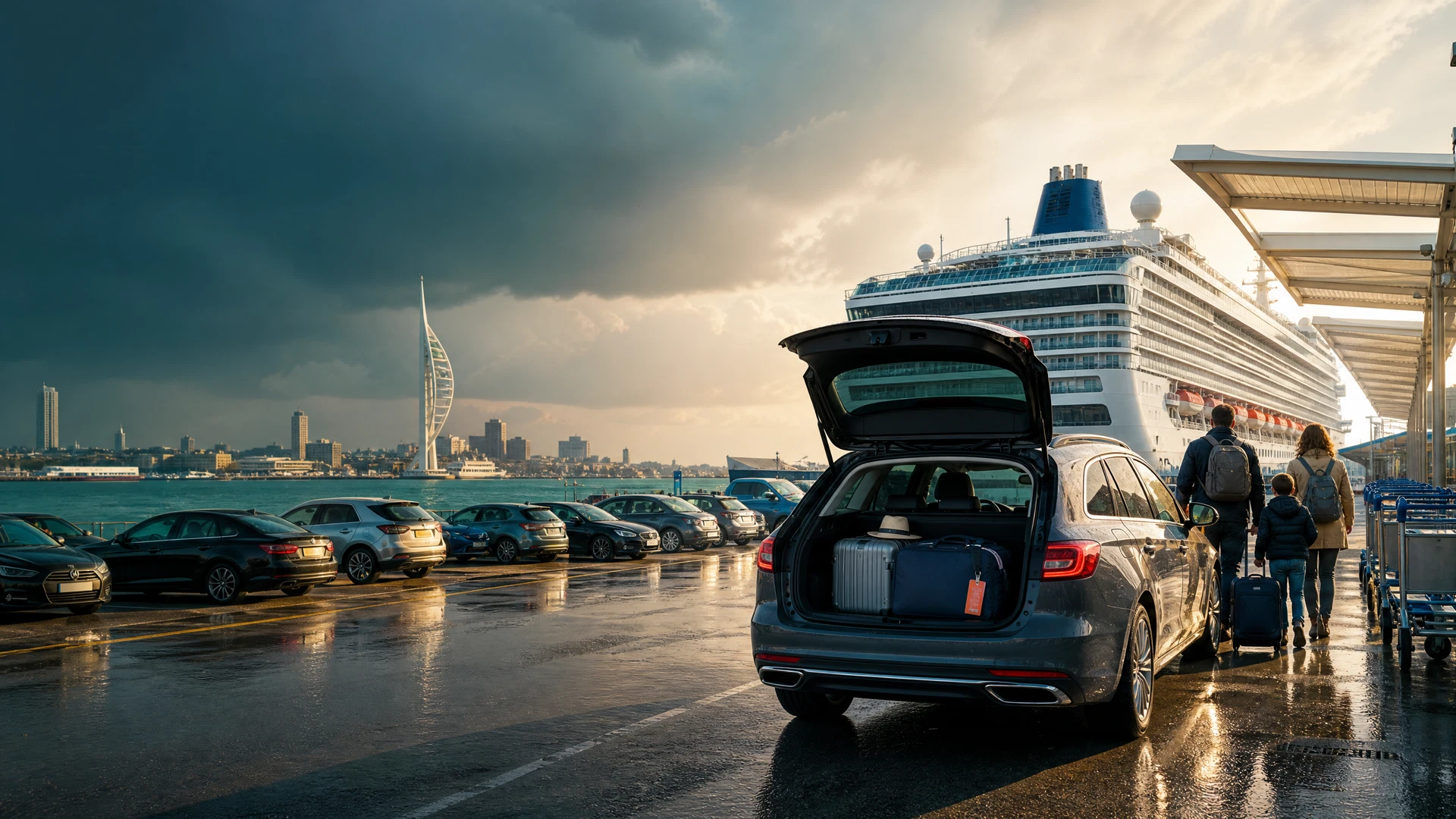
A clear, no-nonsense 2026 guide to parking for cruises from Portsmouth International Port. Compare on-site, off-site, hotel and valet options, with tips for EVs, families and accessible travel.
If you’re sailing from Portsmouth International Port in 2026 and plan to drive, this Portsmouth cruise port parking guide 2026 sets out the choices, trade-offs and practical steps so you can book with confidence. Whether you want the shortest walk to check-in, the lowest overall cost, or EV charging, we explain how to choose and what to verify before you pay.
How Portsmouth cruise parking works in 2026
Portsmouth International Port handles cruise and ferry traffic, with signposted access from the M275. For cruises, parking typically falls into four buckets: on-site port parking within walking distance; off-site car parks with shuttle transfers; meet-and-greet (valet) handover by pre-arrangement; and hotel-with-parking packages. Availability and processes can vary by sailing date, ship, and any arrangements your cruise line has in place. Because procedures and providers can change, confirm current details on the port’s website and in your cruise documents before booking.
<table><thead><tr><th>Feature</th><th>On-site port car park</th><th>Off-site shuttle car park</th><th>Meet & greet (valet)</th><th>Hotel + parking</th><th>Skip parking: rail + taxi</th></tr></thead><tbody><tr><td>Walking distance</td><td>Shortest</td><td>Shuttle required</td><td>Kerbside handover</td><td>Hotel to port transfer</td><td>Short taxi ride</td></tr><tr><td>Need to hand over keys?</td><td>Usually no</td><td>Sometimes</td><td>Yes</td><td>Usually yes (hotel parks car)</td><td>No</td></tr><tr><td>Transfer complexity</td><td>Lowest</td><td>Medium</td><td>Low</td><td>Medium</td><td>Low</td></tr><tr><td>Best for</td><td>Mobility, minimal faff</td><td>Price-sensitive travellers</td><td>Ease with luggage</td><td>Early check-in, long drives</td><td>Those near direct rail lines</td></tr><tr><td>To verify before booking</td><td>Pre-book link, height limits</td><td>Shuttle frequency, hours</td><td>Insurance, key handling</td><td>Transfer time, return timing</td><td>Taxi rank availability</td></tr></tbody></table>
On-site parking at Portsmouth International Port
For most cruisers who prioritise simplicity, the port’s own on-site parking is the most straightforward option. Spaces are within walking distance of the terminal and are designed for cruise durations. In 2026, the port asks drivers to pre-book via the official links on its website so your registration is recognised and a space is allocated for your sailing. Because capacity and procedures can change, always follow the most recent booking steps published on Portsmouth International Port’s official parking or cruise pages. Key points to check before you reserve include: whether your sailing date is eligible for on-site booking; the stated walking distance and signage for the cruise area (distinct from ferry lanes); and any vehicle size or height restrictions that might affect SUVs with roof boxes or vans.
Security is typically described by the port in terms such as CCTV, lighting and staffed presence, but wording can change—review the current statement on the port’s site. Keep your booking confirmation accessible on arrival, and note any guidance about where to place a permit or how ANPR (number plate recognition) is used.
How to book and what to expect on the day
- Reserve your space using the port’s official online link from its cruise/parking page. 2) Bring your booking confirmation and ensure your number plate is correct. 3) Follow M275 signage for Portsmouth International Port and the cruise terminal, not the ferry lanes, unless the port directs you otherwise. 4) Drop heavy luggage and travelling companions at the terminal kerb if permitted and safe to do so, then park and walk back. 5) On return, keep your exit instructions handy. If your ship is delayed, follow the port’s guidance for overstays and any payment top-ups.
- Closest to check-in, minimal transfers
- Usually keep your keys; straightforward exit
- Port security and signage designed for cruise flows
- Typically higher cost than off-site options
- Spaces can sell out on peak dates; pre-booking is expected
- Height and length limits can apply—confirm if you have a tall vehicle or roof box
Off-site park & ride and independent car parks
Off-site car parks near Portsmouth can be cost-competitive, especially for longer itineraries. They usually include a shuttle to and from the cruise terminal on embarkation and disembarkation days. When comparing operators, look beyond headline rates and verify the practicalities that determine a smooth handover: the location and frequency of shuttles, the published first and last shuttle times, whether family groups can travel together with their luggage on the same minibus, how returns are handled if your ship docks early or late, and where the pickup point is at the cruise terminal. Independent operators’ terms, opening hours, and insurance wording vary—read their conditions in full and check recent reviews with a critical eye. If an off-site operator mentions port permissions or terminal access, confirm that their drop-off point is the official one for cruise passengers.
Shuttle timings, luggage and return-day realities
Shuttles are at their busiest around standard check-in waves and immediately after disembarkation begins. If you need extra time for mobility reasons, or you’re travelling with prams and multiple cases, build buffer time into your arrival and confirm whether the shuttle can accommodate bulky items. On return, identify the pickup bay before you enter the terminal—signage can be crowded when multiple ships or ferries are in. If your sailing is disrupted, contact the operator early to coordinate a later pickup.
- Often lower total cost, especially for 10–14 nights
- May offer flexible change/cancellation policies
- Choice of covered/uncovered in some cases
- Requires shuttle transfers and schedule coordination
- Some require leaving keys; check where cars are stored
- Longer wait times possible at peak disembarkation
Meet & greet (valet) at the cruise terminal
Meet-and-greet parking can be the easiest for travellers with lots of luggage: you drive to the terminal, hand over your keys to a vetted provider, and your car is parked for you off-site, then returned kerbside when you disembark. In 2026, availability and pick-up points are subject to port permissions and can differ by sailing. Confirm the exact handover location in your booking, what ID is required, and the operator’s insurance details. Ask whether the car is moved more than once, fuel mileage expectations, and what happens if your arrival is outside the scheduled window.
Hotels with parking (“stay and cruise”)
A hotel-and-parking bundle can be excellent if you face a long drive or prefer a restful start. Many South Coast hotels advertise stay-and-park deals for cruisers; check proximity to the M275 or main routes, transfer options to the port, and whether parking is on-site or at a third-party lot. Packages often include a taxi credit or shuttle at set times—verify the exact inclusion, especially for early embarkation slots. If using a hotel across the harbour or further along the A27/M27 corridor, factor in morning traffic, especially around junctions feeding the M275.
- Confirm total nights of parking included for your cruise length, plus any grace period for delays.
- Ask if the car remains at the hotel or is moved off-site; if off-site, request details and insurance cover.
- Verify the transfer: mode (taxi/shuttle), timings, luggage capacity, and child seats if needed.
- Check cancellation/change terms and whether parking dates can shift if your sailing changes.
- Get the hotel’s written confirmation with all inclusions listed.
Accessibility, Blue Badge and special assistance
If you hold a Blue Badge or require mobility assistance, contact the port and your cruise line well before sailing. Ask the port about designated disabled bays, proximity to entrances, and whether on-site parking has step-free routes to the cruise terminal. Confirm kerbside drop-off procedures and waiting limits, and arrange special assistance through your cruise line to ensure continuity from kerbside to check-in. Policies on companion drop-off and escorting vary; rely on written guidance from the port’s official accessibility pages and your cruise documents.
Electric vehicles and oversized vehicles
EV provision at ports evolves quickly. In 2026, some UK ports offer limited on-site charging but do not guarantee availability for cruise parking durations. Before you book, check Portsmouth International Port’s latest statement on EV charging, charging networks supported, and whether long-stay charging is permitted. A practical approach is to arrive with a high state of charge using rapid hubs on the M3/A3(M)/M27 corridor, then top up after disembarkation.
For tall, long or unusual vehicles (roof boxes, vans, motorhomes), verify the port car park’s height limits and any exclusions in advance. Off-site operators may accept larger vehicles in open lots, sometimes with separate pricing—confirm space availability and access roads, and get the acceptance in writing on your booking.
Driving to the port: routes, signage and Clean Air Zone
Portsmouth International Port is signed from the M275, which feeds directly from the M27. Use the official postcode shown on the port’s contact page and follow “Portsmouth International Port” signs as you near the city; this helps distinguish the cruise terminal from other waterfront areas. Portsmouth operates a Clean Air Zone (CAZ) affecting certain commercial vehicle categories; private cars are not currently charged, but rules can change—check the city council’s CAZ page immediately before travel if you drive a van or minibus variant. Build in extra time for weekend and holiday peaks and for local events that affect traffic around the M275 approaches.
Drop-off, pick-up and taxis
Short-stay drop-off is normally signposted, with strict no-waiting zones near the terminal doors. If you’re dropping passengers, unload swiftly and move the vehicle to avoid congestion and penalties. For pick-up, agree a meeting point away from the busiest kerb if possible. Licensed taxis serve the terminal when ships are in port; during ferry peaks, queues can form—pre-booking a private hire can reduce waits. If you have a hotel-and-parking package, confirm the designated pick-up area used by your included taxi or shuttle on disembarkation.
Rail, coach or not driving at all
Portsmouth is well connected by rail. The main city stations are Portsmouth & Southsea and Portsmouth Harbour. From either, the cruise terminal is a short taxi ride away in normal traffic. If you prefer coach travel, services typically arrive near The Hard Interchange or central stops, after which you’ll need a taxi or local bus. If you’re weighing up a no-car approach, compare total journey time, taxi availability for your arrival window, and the reliability of your last connection. For packing light and avoiding parking altogether, see our embarkation advice in UK cruise embarkation tips.
Which option suits you? Real-world recommendations
Objective facts: On-site is the shortest walk; off-site can be cheaper; meet-and-greet reduces handling but needs more due diligence; hotels with parking reduce early-morning stress; rail plus taxi removes parking entirely. Editorial assessment: For most families and those with accessibility needs, on-site is the least stressful if budget allows. Value-seekers with flexible timing often do best with an off-site shuttle, provided shuttle hours align with their ship’s schedule. Traveller-dependent preferences: Nervous drivers who dislike tight city turns may prefer hotel stays outside the centre and a relaxed morning transfer; EV owners should plan charging before and after the cruise rather than relying on on-site options.
<table><thead><tr><th>Traveller type</th><th>Top recommendation</th><th>Why</th><th>What to verify</th></tr></thead><tbody><tr><td>Family with kids and lots of luggage</td><td>On-site port parking</td><td>Shortest walk, simplest logistics</td><td>Pre-booking steps; adjacent bay availability</td></tr><tr><td>Price-conscious couple</td><td>Off-site shuttle</td><td>Lower total cost for longer cruises</td><td>Shuttle frequency; last return time</td></tr><tr><td>Limited mobility/Blue Badge</td><td>On-site parking + special assistance</td><td>Reduced transfers; step-free routes</td><td>Disabled bays, escort from kerbside</td></tr><tr><td>EV owner</td><td>On-site parking, charge en route</td><td>Minimise on-cruise charging uncertainty</td><td>Current EV policy; nearest rapid hubs</td></tr><tr><td>Nervous driver</td><td>Hotel + parking outside city core</td><td>Arrive off-peak, taxi to terminal</td><td>Included transfers; morning traffic</td></tr><tr><td>Luxury/low-fuss</td><td>Meet & greet</td><td>Kerbside handover and return</td><td>Insurance, authorised operator, timings</td></tr><tr><td>Solo traveller with light bags</td><td>Rail + taxi</td><td>No parking admin or fees</td><td>Taxi availability; last train times</td></tr></tbody></table>
Money-saving tactics that still work in 2026
- Book early for peak school holiday sailings; on-site spaces can go quickly.
- Compare total costs, not just the day rate—add shuttle fees, taxi vouchers, or key-holding surcharges where relevant.
- Check if your cruise line offers a parking partnership or loyalty discount; verify on the line’s official site before booking.
- Consider splitting the drive: a value hotel near the M3/A3(M) corridor the night before can reduce fuel-hungry congestion and parking stress on embarkation morning.
- Share the taxi: if you’ve chosen rail or a hotel, travelling companions can split a pre-booked private hire to the terminal.
If your cruise is delayed or extended
Weather or operational changes can shift arrival and departure times. Before you travel, read your chosen parking provider’s overstay policy and charges, and make sure you know how to pay any balance if the ship docks late. For on-site parking, follow the port’s official guidance and signage for delayed disembarkation. For off-site shuttles, contact the operator as soon as your cruise line updates the ETA. Keep your booking confirmations and telephone numbers (port, parking provider, cruise line) handy in your hand luggage.
Security, insurance and peace of mind
Only book via official links on the port’s site or through well-established operators with clear, UK-based customer service details. Read every clause on liability, especially around windscreen chips, tyres, and minor scuffs, which many operators list as exclusions. If handing over keys, photograph your car (including mileage and fuel level) at the terminal and keep time-stamped images. Check your personal motor insurance for any exclusions related to valet services. For hotel packages, ensure the hotel confirms in writing where your car will be kept and who is responsible.
Embarkation morning: a simple step-by-step
- Check for any last-minute port traffic alerts.
- Enter the port following “cruise” signs and keep right where ferry and cruise flows diverge, if signposted.
- If allowed, drop luggage and accompanying travellers at the terminal; keep one adult with the bags.
- Park (on-site or off-site) and keep your booking details and ID accessible.
- If using a shuttle, confirm where to wait and expected transport time.
- At the terminal, keep travel documents, medication and valuables in hand luggage—not in checked cases.
Final checks before you click “Book”
- Is the provider linked from the official Portsmouth International Port website or your cruise line’s documentation?
- Do the shuttle hours cover your scheduled embarkation and realistic disembarkation times?
- Have you confirmed vehicle restrictions (height, length, EV policies, roof boxes)?
- Are cancellation terms appropriate if your sailing changes?
- Do you have written confirmation of inclusions (transfers, key handling, overstay policy)?
Useful planning reads on MyCruiseAdvisor
For broader planning context, you may find these helpful: UK cruise embarkation tips, Southampton cruise parking guide, Hotel-and-parking strategies for UK cruise ports, Cruising with a Blue Badge: what to arrange, and Train to your UK cruise: station-to-terminal tips.
Sources and verification
Always verify procedural details, opening hours and any restrictions directly with official sources before you book:
- Portsmouth International Port – Cruise: https://www.portsmouth-port.co.uk/cruise
- Portsmouth International Port – Getting here and parking: https://www.portsmouth-port.co.uk/getting-here and https://www.portsmouth-port.co.uk/parking
- Portsmouth City Council – Clean Air Zone: https://www.portsmouth.gov.uk/services/transport/clean-air-zone/
- National Rail Enquiries (stations in Portsmouth): https://www.nationalrail.co.uk/
- Fred. Olsen Cruise Lines – Before you sail/Getting to the port: https://www.fredolsencruises.com/
- Saga Cruises – Before you travel (travel to port and parking information): https://travel.saga.co.uk/cruises
- Viking Cruises – Before you go (embarkation and port information): https://www.viking.com/
If your cruise line provides parking or port transfer options, use the link in your booking confirmation or the line’s official “Before you sail” pages and confirm details for your exact sailing date in 2026.
Frequently Asked Questions
Do I need to pre-book on-site parking at Portsmouth cruise port in 2026?
Pre-booking is strongly advised and may be required for cruise parking on busy sailings. Use the official link from Portsmouth International Port’s website and check your cruise documents for any line-specific instructions.
Is there EV charging at Portsmouth International Port for long-stay cruise parking?
EV facilities and policies can change. Do not assume you can leave a car plugged in for the duration of a cruise. Check the port’s latest EV guidance before booking, and plan to charge on the motorway network before and after your sailing.
How long is the transfer from off-site car parks to the Portsmouth cruise terminal?
Transfer times vary by operator, traffic and day. Many sites state 10–25 minutes in normal conditions, but allow extra buffer during ferry peaks or adverse weather. Confirm the operator’s first and last shuttle times and pickup point before booking.
Can Blue Badge holders park close to the cruise terminal?
Ports typically provide designated disabled bays and step-free routes, but locations and processes differ. Contact Portsmouth International Port ahead of time and arrange special assistance through your cruise line so support is coordinated from kerb to check-in.
What if my ship returns late—will I be charged extra for parking?
Most providers have overstay policies. For on-site parking, follow the port’s guidance and any payment instructions. For off-site or hotel packages, check terms in advance and keep contact numbers handy so your pickup can be adjusted if necessary.
Is meet-and-greet (valet) parking authorised at Portsmouth in 2026?
Availability depends on port permissions and the specific operator. Only book with companies clearly authorised to operate at Portsmouth International Port and verify their insurance, key handling, and exact handover point in writing.
What’s the best option if I’m anxious about city driving?
Consider a hotel with parking outside the city centre and arrange a morning taxi to the terminal, or skip parking with rail-to-taxi. If you do drive, on-site parking minimises in-city manoeuvres once you reach the M275.
Are private cars affected by Portsmouth’s Clean Air Zone?
Portsmouth’s CAZ has historically focused on certain commercial vehicles. Rules can change—check the city council’s official CAZ page shortly before travel, particularly if you drive a van or minibus variant.
Related articles
- Cruise Travel Insurance Guide: What Does It Cover?
- Are Marella Cruises Still Going Ahead — Everything You Need to Know in 2026
- Are Marella Cruises Going Ahead: The Complete 2026 Breakdown
- Southampton cruise hotels with parking 2026
- Liverpool Cruise Port Parking Guide 2026
- Portsmouth cruise hotels with parking 2026