Home › Articles › Ports & Transfers
Harwich International station to cruise terminal
Travelling to your cruise via Harwich International by train? The station sits beside the port, and the official port page calls it a very short walk to the passenger terminal, with a covered walkway onward to the berths. Here’s how to make the connection smoothly in 2026, when to get assistance, and what to check on National Rail and Greater Anglia before you travel.
If you’re searching for “Harwich International station to cruise terminal”, here’s the good news for 2026: Harwich International station is directly adjacent to the port facilities at Parkeston Quay in Essex. The port’s official guidance says rail passengers have a very short walk to the air-conditioned passenger terminal, and a covered walkway links the terminal to the passenger berths. That makes Harwich one of the simplest UK rail-to-ship connections—provided you plan your train times, assistance and luggage carefully, and follow your cruise line’s boarding instructions on the day.
For the next planning step, see the first-time cruiser guide.
For the next planning step, see the accessible cruise planning guide.
For the next planning step, see the UK cruise passport guide.
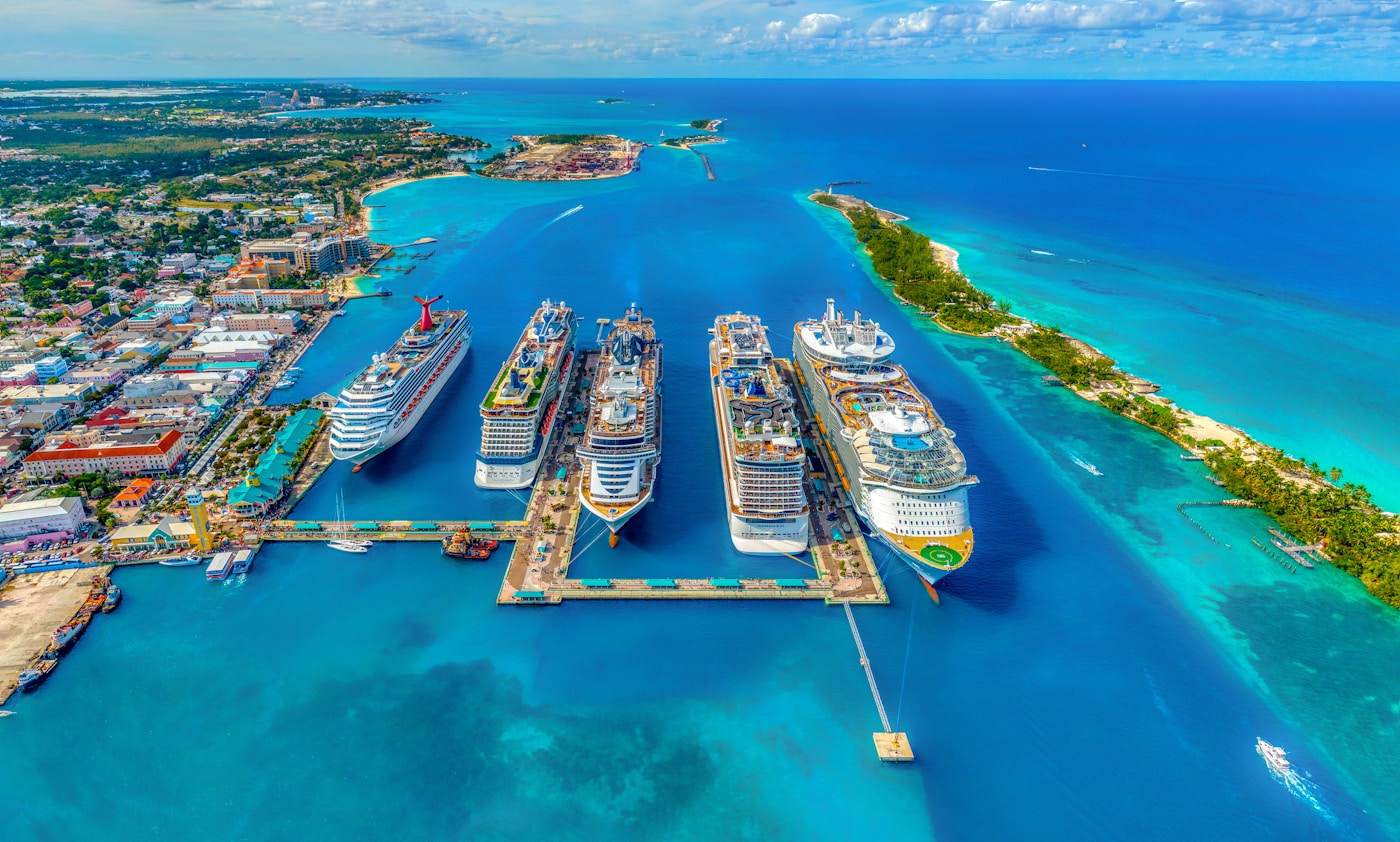
Suggested image: View from Harwich International station platform towards the port buildings, showing wayfinding and the covered pedestrian link towards the passenger terminal (illustrative, not a live operational map).
Is the station effectively at the cruise terminal?
For 2026 sailings, treat Harwich International station as adjacent to the port’s passenger facilities rather than as a separate town-centre arrival. Harwich International Port’s passenger-facilities page says passengers arriving by train or coach have a very short walk to the passenger terminal, and that terminal is connected to the passenger berths by a covered walkway. That means most travellers can step off a Greater Anglia service and move straight towards port check-in without needing a taxi or shuttle.
Two important qualifiers apply. First, the port page is written primarily around ferry operations, so don’t assume every cruise call replicates the same internal queuing, gangway position or movement pattern. Second, cruise lines can allocate different berths or check-in flows by ship and sailing. Always read your cruise booking emails and any pre-departure port information to confirm the named terminal or berth and to follow signposted routes on the day.
The official wording “very short walk” is not a measured distance or time, and the precise path you take can vary depending on signage, staffing and security arrangements for your departure. If anyone in your party has reduced mobility, heavy luggage or equipment, plan to use assistance—either via Rail Passenger Assist for the station side and by notifying the port or your cruise line for the terminal and onward route—to keep the connection as smooth as possible.
Step-by-step: from train platform to check-in
You won’t be crossing town at Harwich; you’re already at Parkeston Quay. Here’s a straightforward sequence to keep your connection calm and controlled while respecting that layouts and signage may vary by sailing.
- On arrival, follow the station’s exit signs and any port/cruise signage. Harwich International is managed by Greater Anglia and offers step-free access to all platforms with lifts, according to National Rail and Greater Anglia.
- Keep your party and luggage together as you move towards the port side. The port states the walk to the passenger terminal from train/coach arrivals is very short.
- Look for terminal entrance signage and staff. Your cruise documents may specify a check-in window—factor in the time you need for assistance, luggage handling and security controls.
- Inside the terminal, follow your cruise line’s instructions for document checks and security screening. The port notes seating and vending in the terminal; however, cruise-specific queuing and facilities can differ by sailing.
- When called, use the covered walkway connection towards the passenger berths as directed by staff and signage. The exact route to your ship depends on its assigned berth and boarding arrangements for your date.
- If anything looks unclear, ask a member of port staff or your cruise line’s embarkation team. They’ll direct you to the correct route for your ship.
Walk, get assistance, or arrange a transfer?
Because the station and port sit together at Parkeston Quay, the default choice is to walk from the station to the passenger terminal if you and your luggage can manage the route. If you prefer support, there are two distinct channels to arrange help: Rail Passenger Assist for your train journey and the station, and port/cruise assistance for the terminal, walkway and boarding phase. Your cruise line may also offer a transfer in some packages. The reviewed official pages don’t establish a universal taxi fare, taxi rank, port shuttle or cruise-line bus at Harwich, so don’t rely on walk-up vehicles or an automatic shuttle. If you want a vehicle-based option, pre-arrange it with a provider and confirm with your cruise line or the port how and where pick-up and drop-off work for your specific sailing.
<table><thead><tr><th>Consideration</th><th>Walk from station</th><th>Rail Passenger Assist + Port/Line assistance</th><th>Cruise-line transfer (if provided)</th><th>Pre-booked private hire (subject to port arrangements)</th></tr></thead><tbody><tr><td>Proximity</td><td>Station is adjacent to port; port calls it a very short walk to terminal</td><td>As left, with coordinated support for mobility and luggage</td><td>Usually minimal distance once at Harwich; follow line’s instructions</td><td>Vehicle meets as arranged; confirm access points in advance</td></tr><tr><td>Control over timing</td><td>High—arrive and walk when ready</td><td>High—pre-book assistance slots and meet points</td><td>Medium—runs to operator’s schedule</td><td>Medium—depends on traffic and operator timing</td></tr><tr><td>Best for</td><td>Light packers, confident walkers</td><td>Wheelchair users, reduced mobility, heavy luggage</td><td>Travellers with transfer included by line</td><td>Groups preferring door-to-door help</td></tr><tr><td>Key caveat</td><td>Route specifics can vary by sailing</td><td>Book assistance in advance with rail and port/cruise line</td><td>Not guaranteed for all fares—check your booking</td><td>No universal taxi rank/fare—pre-book and verify port access</td></tr></tbody></table>
Accessibility: what the station and port say
National Rail lists Harwich International (HPQ) as step-free to all platforms with lifts and classifies it as category B1. Greater Anglia adds that there are lifts, ramp assistance, a platform meeting point for assistance, help points and wheelchairs. On the port side, Harwich International Port’s accessibility page says terminal buildings and walkways offer level or ramped access, wheelchairs can be made available on request, and assistance can be requested at the Harwich International reception desk or through your travel operator.
These are strong indicators that the station-to-terminal link is designed with accessibility in mind. However, they do not guarantee identical access for every ship, berth, or gangway. Planning should include booking Rail Passenger Assist for your train and station, and separately notifying your cruise line and/or the port about your mobility or equipment needs for the terminal and boarding phases.
- Rail Passenger Assist: Request via Greater Anglia or through National Rail channels for boarding/alighting help, ramps and guidance at Harwich International station.
- Port/cruise assistance: Notify your cruise line and/or the port in advance about mobility, wheelchair or equipment needs so the terminal and embarkation route can be supported for your ship.
- On the day: The Greater Anglia assistance meeting point is on the platform; the port lists a reception desk where assistance requests can be made.
- For equipment: The port notes wheelchairs can be made available on request; availability may be limited, so ask in advance.
- Keep plans separate: A rail assistance booking does not automatically transfer to the port or cruise line—make both sets of arrangements.
Timetables and planning your train in 2026
Timetables, connections and platforming can change. The safest approach for 2026 is to plan your route using official tools and re-check close to your travel date. Use the National Rail Journey Planner for the most comprehensive UK-wide view of times, route options and ticketing information. Greater Anglia’s timetables and app allow you to view and download schedules and explicitly advise checking the journey planner or app before travel in case train times are updated. Always plan around your cruise line’s booked arrival/check-in window, then add contingency for luggage, assistance handovers, any security queues and unexpected disruption.
If you are risk-averse, choose an earlier train that still lands within your check-in window and gives breathing room for connection margins, especially if you’re changing trains en route to Harwich International. If boat-train style arrangements are altered on your date, the National Rail and Greater Anglia planners will reflect how best to reach Harwich International. If a rail replacement is scheduled, check Greater Anglia’s replacement bus locations for Harwich International and allow extra time to navigate between bus set-down and the port entrance as directed by staff and signage.
- National Rail Journey Planner for your exact date and time.
- Greater Anglia app/timetables for service updates and platform guidance.
- Planned engineering works, cancellations or strike action.
- Any altered boat-train arrangements that could change your connection pattern.
- Your cruise line’s latest embarkation window and terminal/berth instructions.
- Your assistance bookings and meeting points on both the rail and port sides.
Luggage strategy for the short link
A short walk can still feel long with the wrong bags. Because Harwich’s station-adjacent layout removes the need for a taxi or bus in most cases, your focus should be on controlling weight, manoeuvrability and stability over a compact, public route. Wheeled suitcases that you can handle independently usually work best. Keep one hand free for doors, lifts and tickets. If you anticipate any difficulty, request assistance in advance.
Do not rely on finding trolleys or porters on arrival—neither is established by the reviewed sources. Instead, assume you’ll either roll your baggage yourself from the station to the terminal or that you’ll need booked assistance or a pre-arranged vehicle solution approved by the port or your cruise line.
Pack cruise documents, identification and medications in a small personal bag you keep with you. If you’re travelling with children, separate critical items—snacks, wipes, entertainment—so one adult can manage kids while the other manages luggage. If your cruise line later takes large luggage at the terminal entrance, follow their instructions and keep valuables with you until your cabin is ready. Policies vary by line and sailing, so verify details with your cruise line before departure.
Families, groups and older travellers: tailored advice
Harwich’s station-to-terminal set-up simplifies group coordination, but moment-by-moment management matters. Agree roles before you arrive: one person guides everyone towards terminal signage, another watches children, and a third handles tickets and assistance confirmations. Older travellers or anyone recovering from injury should strongly consider requesting assistance so that the short link doesn’t become tiring at the busiest time of day.
If you’re part of a large multi-generational group, consider staggering your platform exit—those with assistance or heavier luggage go first with an agreed meeting point inside the terminal. This keeps the group out of bottlenecks and reduces stress in the entrance area. If your cruise line has provided a specified check-in time, align your train arrival so you’re neither queuing too early nor cutting it fine.
For UK school holiday departures in 2026, assume higher footfall. That doesn’t change the walk itself, but it can increase the time you spend regrouping, finding lifts and clearing terminal checks. Build margin into your plan and keep phones charged so you can reach assistance teams if needed.
If the berth or route changes on the day
Harwich International Port confirms a covered walkway from the terminal to passenger berths, but your exact boarding route is always subject to the ship’s berth, security configuration and on-the-day operational decisions. That’s normal for any working port. If you find that signage differs from your assumptions, follow staff directions, which take precedence over pre-trip notes.
If your cruise line’s pre-departure email names a berth or provides special instructions (for example, an accessible entrance or a group meeting point), keep those to hand on your phone and check for updates before you disembark your train.
Should your cruise line run a transfer or escorted boarding process for your sailing, they’ll specify where to meet and at what time. Because the reviewed sources do not establish a universal shuttle or transfer at Harwich, don’t assume one exists unless your cruise booking explicitly includes it.
Disruption and contingencies
If disruption hits the railway on your route to Harwich International in 2026, the first step is to re-plan using the National Rail Journey Planner and the Greater Anglia app. If you have pre-booked Rail Passenger Assist, update the operator so the meeting point and timing can be adjusted. If your revised plan risks missing the ship’s check-in window, call your cruise line immediately for guidance—the sooner they know, the more options they can explore. For general contingency thinking, see our advice in What happens if you miss your cruise ship at port?.
In a severe disruption scenario, your fallback is to arrive earlier in the day or on an earlier train than you strictly need, provided you still operate within the cruise line’s instructed window. If you’re travelling with accessibility needs, additional buffer time also helps both assistance teams coordinate any last-minute changes such as temporary lifts or replacement bus set-down points.
Sources and verification
Always verify details for your specific date before travel. The following official pages underpin the station-to-terminal guidance for Harwich in 2026:
- Harwich International Port — Ferry & cruise port facilities: https://www.harwich.co.uk/passenger-travel/ferry-cruise-port-facilities/
- Harwich International Port — Accessibility: https://www.harwich.co.uk/passenger-travel/accessibility/
- National Rail — Harwich International (HPQ): https://www.nationalrail.co.uk/stations/harwich-international/
- Greater Anglia — Harwich International station information: https://www.greateranglia.co.uk/travel-information/station-information/hpq
- Greater Anglia — Timetables: https://www.greateranglia.co.uk/travel-information/timetables
- National Rail — Journey Planner: https://www.nationalrail.co.uk/journey-planner/
- Stena Line — Harwich port (address reference only): https://www.stenaline.co.uk/routes/harwich-hook-of-holland/harwich-port
Note: Stena Line’s page confirms rail access and gives the port address (Harwich International Port, Parkeston Quay, Harwich, Essex CO12 4SR) but is ferry guidance and should not be treated as cruise-line embarkation instructions. Check your cruise line’s latest emails and website on the morning of travel.
Frequently Asked Questions
Is Harwich International station within walking distance of the cruise terminal?
Yes. Harwich International Port’s official guidance says passengers arriving by train or coach have a very short walk to the passenger terminal, and the terminal is connected to passenger berths by a covered walkway. The exact route can vary by sailing, so follow on-the-day signage and staff instructions.
How long does the walk take from the station to the terminal?
The port does not give a timed estimate, only describing it as a very short walk. Because timings can vary with operational layouts, luggage and personal pace, allow enough margin to remain within your cruise line’s advised check-in window.
Is the station step-free and are there lifts?
According to National Rail and Greater Anglia, Harwich International station has step-free access to all platforms with lifts and is categorised B1 by National Rail. Assistance, ramps, help points and an assistance meeting point are also listed by Greater Anglia.
Can I book assistance for the station-to-terminal link?
Book Rail Passenger Assist for your train journey and station needs, and separately notify the port or your cruise line to arrange help within the terminal and towards the berth. A rail assistance booking does not automatically transfer to port or cruise teams.
Is there a taxi rank or shuttle between the station and terminal?
The reviewed official sources do not establish a universal taxi rank, taxi fare, port shuttle or cruise-line shuttle at Harwich. Most passengers walk. If you prefer a vehicle, pre-book with a provider and confirm with your cruise line/port whether and where pick-up/drop-off are permitted for your sailing.
Is the route to the ship covered?
The port says a covered walkway connects the passenger terminal to the passenger berths. The exact boarding route depends on the ship’s berth and on-the-day operations, so follow staff guidance.
Does the station have accessible toilets or a Changing Places toilet?
National Rail’s Harwich International station page lists toilets, accessible toilets and a Changing Places toilet. Check opening arrangements close to travel as facilities can change.
What address should I use for the port?
Stena Line’s official Harwich port page lists the address as Harwich International Port, Parkeston Quay, Harwich, Essex CO12 4SR. Treat this as a location reference only; follow your cruise line’s instructions for embarkation and check-in specifics.
When should I arrive for my cruise at Harwich?
There’s no single rule that fits every sailing. Use your cruise line’s booked arrival and check-in window, adding time for luggage, assistance and security. For general timing strategy, see How early should you arrive at a cruise port?.
What if my train is disrupted and I might miss the ship?
Re-plan instantly using the National Rail Journey Planner and Greater Anglia app, update any Passenger Assist booking, and call your cruise line to discuss options. For what to do if you miss the ship, read What happens if you miss your cruise ship at port?.
Related articles
- First Time Cruise Tips for Beginners UK: Your Ultimate Guide
- First Time Cruiser Complete Guide: What to Expect on Your Voyage
- Do You Need a Passport for a Cruise from UK in 2026?
- How Early Should You Arrive at Cruise Port in 2026?
- What Happens If You Miss Your Cruise Ship at Port? UK Guide
- Best cruise for wheelchair users UK 2026: top accessible ships