Can you bring an electric toothbrush on a cruise ship (UK)?
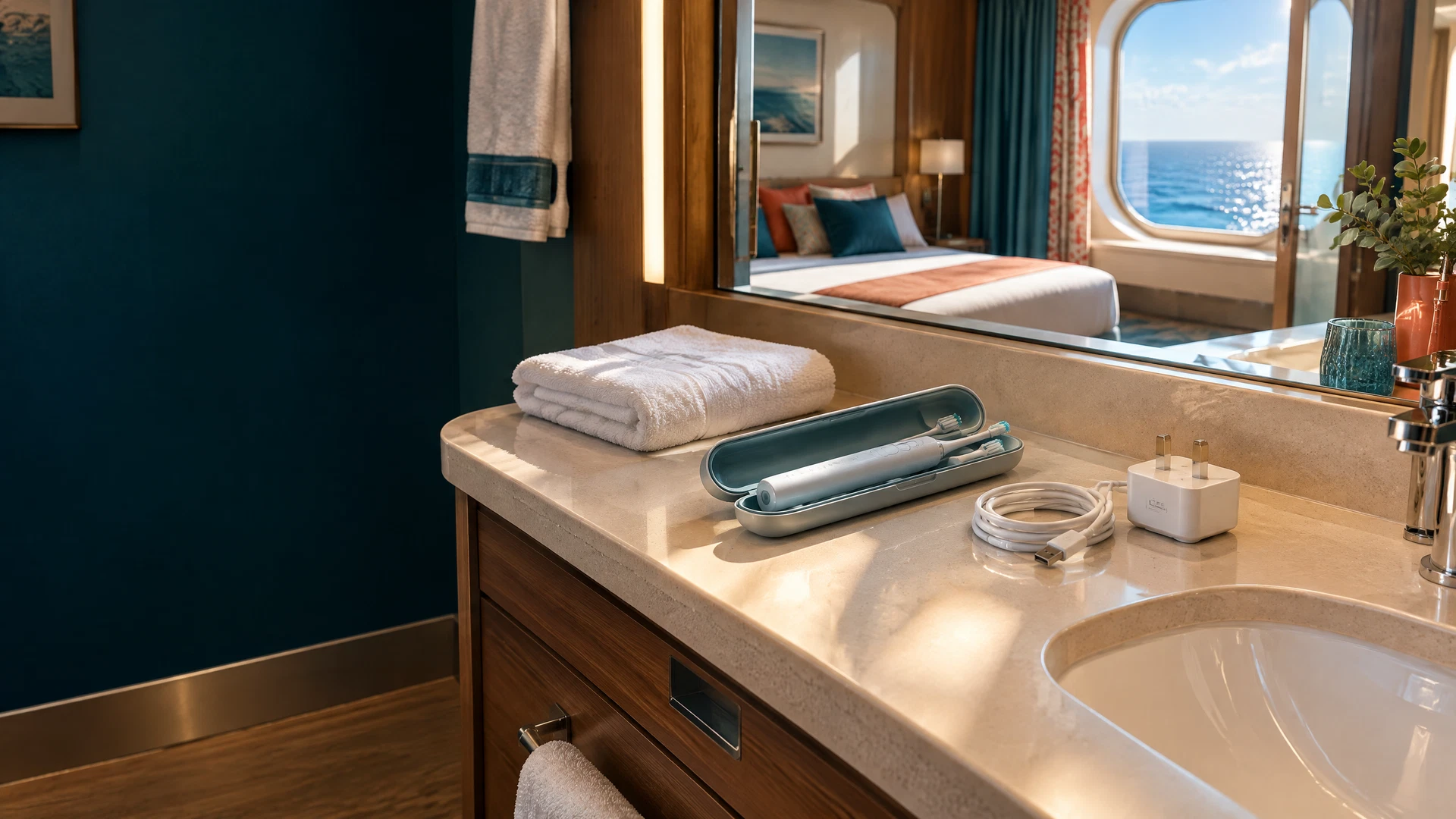
Yes—UK cruisers can bring electric toothbrushes. Here’s how to pack, charge and use them safely on P&O, Cunard, Marella and more in 2026, plus smart tips to avoid banned items.
Short answer first: yes, you can bring an electric toothbrush on a cruise ship from the UK in 2026. Almost all major lines—including P&O Cruises, Cunard and Marella—class electric toothbrushes as personal grooming appliances, not prohibited devices. The key is how you pack and charge them. This guide explains what to bring, where to plug in, lithium-battery considerations, and traveller-specific recommendations, with links to official policies so you can verify before you sail.
Are electric toothbrushes allowed on UK cruise lines in 2026?
In 2026, UK-focused lines (P&O Cruises, Cunard, Marella) and the large international brands sailing from Britain generally permit electric toothbrushes. They are treated like shavers or hairdryers as standard grooming items. Policies can change and can vary by ship, so confirm on your line’s official website before packing. What is typically restricted is not the toothbrush itself, but how you power it: surge-protected strips, extension cords, and household multi-gang adaptors are commonly prohibited for fire-safety reasons. Simple USB chargers and the original toothbrush charging base are normally fine if used as intended.
What to expect in your cabin: sockets, USB and shaver outlets
Most modern cruise cabins offer a mix of 110V (US-style) and 220V (European-style) sockets at the desk/vanity, plus an increasing number of USB-A and sometimes USB-C ports. UK 3‑pin sockets are more common on newer UK-targeted ships but are not guaranteed across fleets. Bathrooms often include a low-amperage shaver-only outlet that can be suitable for electric shavers and many toothbrush charging bases that use a 2‑pin shaver plug. Because ship configurations vary, assume you’ll need a UK-to-EU or UK-to-US plug adaptor for the cabin, and consider that the bathroom shaver socket may be the safest bet for a 2‑pin shaver-style toothbrush charger. If in doubt, check your ship’s FAQ and cabin photos on your cruise line’s site.
<table><thead><tr><th>Feature</th><th>Rechargeable base (inductive)</th><th>USB/AA-powered travel brush</th></tr></thead><tbody><tr><td>Charging needs</td><td>Requires mains socket (often 2‑pin shaver plug or 220V/110V adaptor)</td><td>USB cable or replaceable AA batteries; no shaver socket needed</td></tr><tr><td>Best for</td><td>Longer cruises where you’ll charge weekly</td><td>Fly-cruises, short breaks, cabins with limited sockets</td></tr><tr><td>Packing bulk</td><td>Brush + charging base (bulky)</td><td>Brush + cable or spare AAs (compact)</td></tr><tr><td>Power worries</td><td>Must match voltage/plug type; avoid banned adaptors</td><td>USB is near-universal; AA needs no charging</td></tr><tr><td>Family sharing</td><td>Multiple heads, one base</td><td>One per person is simpler</td></tr></tbody></table>
Lithium batteries and safety: what matters for toothbrushes
Many modern brushes use small internal lithium-ion batteries, typically well within the safe capacity thresholds used by cruise and airline policies. As at 2026, cruise lines generally allow personal devices with internal rechargeable batteries, and portable power banks under defined watt-hour limits. Exact limits and handling rules for spare lithium batteries vary by line. To stay on the safe side: bring only the toothbrush and its standard charger/cable; keep any separate spare batteries (if applicable) in your carry-on for screening; and never use damaged or swollen batteries. If your toothbrush case has a UV sanitiser with a battery, treat it like any battery-powered device and confirm it’s allowed on your line’s prohibited-items page before sailing.
Embarkation screening: where to pack your brush
Keep your electric toothbrush and charger in your carry-on for embarkation day. If security wants a closer look, you can present them quickly without waiting for your checked bag to be delivered later. Packing it in hand luggage also means you can freshen up after boarding without relying on cabin delivery timings.
- The brush handle and head(s), plus a spare head in a small case
- Original charging base or the official USB cable
- A compact UK–EU or UK–US adaptor (if your charger needs one)
- A soft, ventilated travel cap or cover for hygiene
- A small zip pouch to keep moisture away from electronics
- A microfibre cloth to dry the handle and base before packing
- A simple multi-port USB charger (without surge protection), if needed for phones/tablets—check your line’s rules before bringing any multi-port device
Charging safely on board
Use the toothbrush as designed and avoid makeshift setups. If your charger has a UK 2‑pin shaver plug, use the bathroom shaver socket where provided. Keep cords away from water, and don’t leave devices charging on damp surfaces. If your brush is USB-rechargeable, charge it at the desk using a standard USB port or a simple USB wall charger. Unplug once topped up; most modern brushes hold a charge for days to weeks, so you rarely need to leave them plugged in overnight.
UK plugs, EU plugs and voltage: quick guidance
Ships typically provide a mix of 110V (US) and 220V (EU) power at the cabin desk, and a low-amperage shaver outlet in the bathroom. UK 3‑pin sockets may be present on some UK-market ships, but do not assume it. If your charger is dual-voltage (most modern ones are), it will work on either 110V or 220V with the correct physical plug adaptor. Never force a plug; if it doesn’t fit easily, it isn’t compatible.
Hygiene and storage in a compact cabin
Cruise bathrooms are small. Store your toothbrush upright in a travel cup or the cabin’s glass, away from the toilet area and out of direct spray. Dry the handle and charging base after each use to prevent mineral marks and corrosion. Do not use adhesives or hooks on cabin walls—as a rule, they’re not permitted and may cause damage fees. A simple, non-slip mat on the vanity keeps your brush secure in rough seas.
Families sharing a bathroom: keep it organised
If multiple people share one handle, colour-code heads and use separate head covers. Create a simple rota: one person charges after breakfast, another after dinner. For children, a compact USB-rechargeable kid’s brush avoids the need for a shaver socket and can be topped up from the same USB hub used for tablets—provided your line permits basic USB chargers (check their policy).
<table><thead><tr><th>Feature</th><th>Bathroom shaver socket</th><th>Cabin desk outlets/USB</th></tr></thead><tbody><tr><td>Compatibility</td><td>Often suits 2‑pin shaver-plug chargers</td><td>Best for USB-rechargeable brushes or standard plugs via adaptor</td></tr><tr><td>Voltage</td><td>Usually low-current, labelled for shavers</td><td>110V and/or 220V available; check your device rating</td></tr><tr><td>Moisture risk</td><td>Higher—keep cords clear of water</td><td>Lower—charge on a dry desk</td></tr><tr><td>Convenience</td><td>Close to sink; limited space</td><td>More room; easier to keep tidy</td></tr></tbody></table>
Money-saving and sustainability tips
Bring spare heads from home; onboard shops vary in selection, and availability can be limited. A ventilated cap protects the head so you don’t need disposable plastic sleeves. If your family shares one handle, you can often pack a single charging base to reduce bulk. Consider a USB-rechargeable travel brush for short sailings to skip adaptors altogether. For fly-cruises, bringing AA-powered backups can be cost-effective if you already use rechargeable AAs at home—just remember to pack them in carry-on and follow line rules for spare batteries.
Fly-cruises and hand-luggage-only travel
Airline rules for lithium batteries and carry-on liquids apply on your flights, which are separate from cruise rules. Keep your brush and charger in your cabin bag, and avoid packing spare lithium batteries in checked luggage. A USB-rechargeable or AA-powered brush reduces reliance on hotel sockets before/after your cruise. If you’re sailing from the UK to a region with different outlets, a single universal adaptor (without surge protection) plus a multi-port USB charger may cover all your small devices—check your cruise line’s stance on multi-port USB chargers before you pack one.
Pre- and post-cruise hotels
European hotels usually have 220V two‑pin sockets; US hotels use 110V two‑flat-pin outlets. Your toothbrush likely works on both if it’s dual voltage—confirm the charger label. Pack a universal adaptor and charge fully the night before embarkation so you’re not reliant on cabin sockets on day one.
What about water flossers, UV boxes and whitening gadgets?
Compact water flossers and whitening pens are generally allowed, but large appliances or anything with heating elements can be restricted. UV steriliser cases with small batteries are often treated like other electronic accessories. Policies differ by line and can change—verify your exact item against your cruise line’s prohibited-items list in 2026. If you’re tight on space, interdental brushes or floss are lighter alternatives for short trips.
- Fully charge the handle 24–48 hours before you travel.
- Pack the official charging base or USB cable.
- Add one spare head per person.
- Include a suitable plug adaptor (not a surge-protected strip).
- Carry it in your embarkation-day bag.
- On board, identify your safest charging spot (desk USB or bathroom shaver socket).
- Unplug after charging and store upright to dry.
Recommendations by traveller type (2026)
Short UK mini-cruise (2–4 nights): Bring a fully charged handle and skip the charger to save space—most modern brushes last a few days. Families with teens: One shared handle with colour-coded heads plus the charging base; rotate charging times. Hand-luggage-only fly-cruise: Choose a USB-rechargeable brush and one compact USB wall charger; verify your cruise line permits basic USB chargers. Long voyage/world cruise: Pack the main charger, spare head(s), and a labelled pouch; consider a simple, non-surge multi-port USB if permitted. Accessibility/dexterity needs: If your electric brush is essential, pack it in carry-on with a clear label; bring a manual backup just in case. Eco-minded travellers: Use replaceable heads with a protective cap and avoid single-use plastics; recharge during off-peak times to share sockets. Forgetful packers: Put a spare manual toothbrush in your carry-on; if you misplace the charger, you still have a fallback.
Troubleshooting: if your charger won’t work at sea
Check the plug shape and voltage first—does your charger say 100–240V? If yes, you likely only need the correct physical adaptor. Try the bathroom shaver socket if your charger has a 2‑pin shaver plug. If your brush is USB-rechargeable, use a different USB port or cable. Still stuck? Ask Guest Services whether they can advise on safe charging options; availability of loan equipment varies and isn’t guaranteed. For the rest of the cruise, use a manual toothbrush as a backup and set a phone timer to keep your brushing routine consistent.
Objective facts vs. preferences: what we know
Objective facts (2026): Most cruise lines allow electric toothbrushes; items like surge-protected power strips and extension cords are commonly prohibited; cabin power varies by ship; lithium batteries in small grooming devices are generally permitted. Preferences: Whether you bring a base charger or go USB-only depends on your itinerary length, how many people share a cabin, and your tolerance for packing extra gear. Our assessment: for up to 7 nights, a fully charged handle plus a small USB backup brush is the least hassle; for longer trips, bring your main charger and plan a simple charging rota.
Cruise Advisor resources
For broader packing and cabin-power planning, see these guides: How to build a UK-focused cruise packing list read now. What not to pack: items cruise lines commonly ban read now. Carry-on bag for embarkation day: essentials to keep with you read now. Plugs and power at sea: UK cruisers’ guide read now. Hand-luggage-only fly-cruise tips read now. Family cruise packing: sharing space and sockets read now.
Sources and verification (2026)
Always verify your cruise line’s latest prohibited-items and cabin power guidance before you sail: P&O Cruises FAQs: https://www.pocruises.com/cruise-with-us/frequently-asked-questions. Cunard FAQs: https://www.cunard.com/en-gb/the-cunard-experience/faqs. Marella Cruises (TUI) FAQs: https://www.tui.co.uk/cruise/en-gb/about-us/faq. Royal Caribbean Prohibited Items: https://www.royalcaribbean.com/faq/questions/prohibited-items. Norwegian Cruise Line Prohibited Items: https://www.ncl.com/uk/en/help/faq/what-items-am-i-not-allowed-to-bring-onboard. Princess Cruises Prohibited Items: https://www.princess.com/faq/pre-cruise/preparation-and-checklist/what-items-am-i-prohibited-from-bringing-on-board/. MSC Cruises UK FAQs: https://www.msccruises.co.uk/faq. Virgin Voyages Prohibited Items: https://www.virginvoyages.com/faq/prohibited-items. Fred. Olsen Cruise Lines FAQs: https://www.fredolsencruises.com/faqs.
Frequently Asked Questions
Are electric toothbrushes allowed on P&O, Cunard and Marella in 2026?
Yes—electric toothbrushes are generally treated as personal grooming items on these lines. Pack the official charger, avoid banned extension leads or surge-protected power strips, and verify the latest rules on each line’s website before you sail.
Can I use the bathroom shaver socket to charge my toothbrush?
Often, yes. If your charger has a 2‑pin shaver plug, the bathroom shaver outlet is typically suitable for low-wattage grooming devices. Keep cords dry and read the socket label. If your charger uses a standard mains plug, use the cabin desk outlets with the correct adaptor instead.
Do I need a voltage converter for my toothbrush?
Usually not. Most modern chargers are dual voltage (100–240V). Check the label on the charger. If it’s dual voltage, you only need the correct physical plug adaptor. If it’s single voltage, confirm your ship provides that voltage and consider a USB-rechargeable travel brush as a backup.
Are USB multi-port chargers allowed on cruise ships?
Simple USB wall chargers are commonly permitted, but many lines prohibit surge-protected power strips and household extension blocks. Policies on multi-port USB hubs vary—check your cruise line’s 2026 prohibited-items list before packing one.
Can I bring spare lithium batteries or a power bank for my brush?
Toothbrushes typically have internal batteries and don’t need spares. If you carry spare batteries or a power bank for other devices, keep them in your carry-on and ensure they meet your line’s watt-hour limits. Always check your line’s latest lithium-battery policy.
What if my charger doesn’t fit any cabin socket?
Try the bathroom shaver outlet if you have a 2‑pin shaver-style plug. Otherwise, use the correct UK–EU/US adaptor in the cabin desk outlets. If you’re still stuck, ask Guest Services for guidance. Consider a manual toothbrush as a backup.
Will my electric toothbrush be confiscated at security?
The brush itself should not be confiscated. Confiscations usually involve prohibited power gear such as surge-protected strips or extension leads. Pack the brush and its official charger or cable only, and you should be fine.
Is it better to bring a manual toothbrush instead?
It’s personal preference. For short breaks, a fully charged electric brush or a manual backup both work well. For longer cruises, most travellers prefer their electric brush for consistency—just bring the charger and an appropriate adaptor.