Best UK cruise port for train travel 2026: UK guide
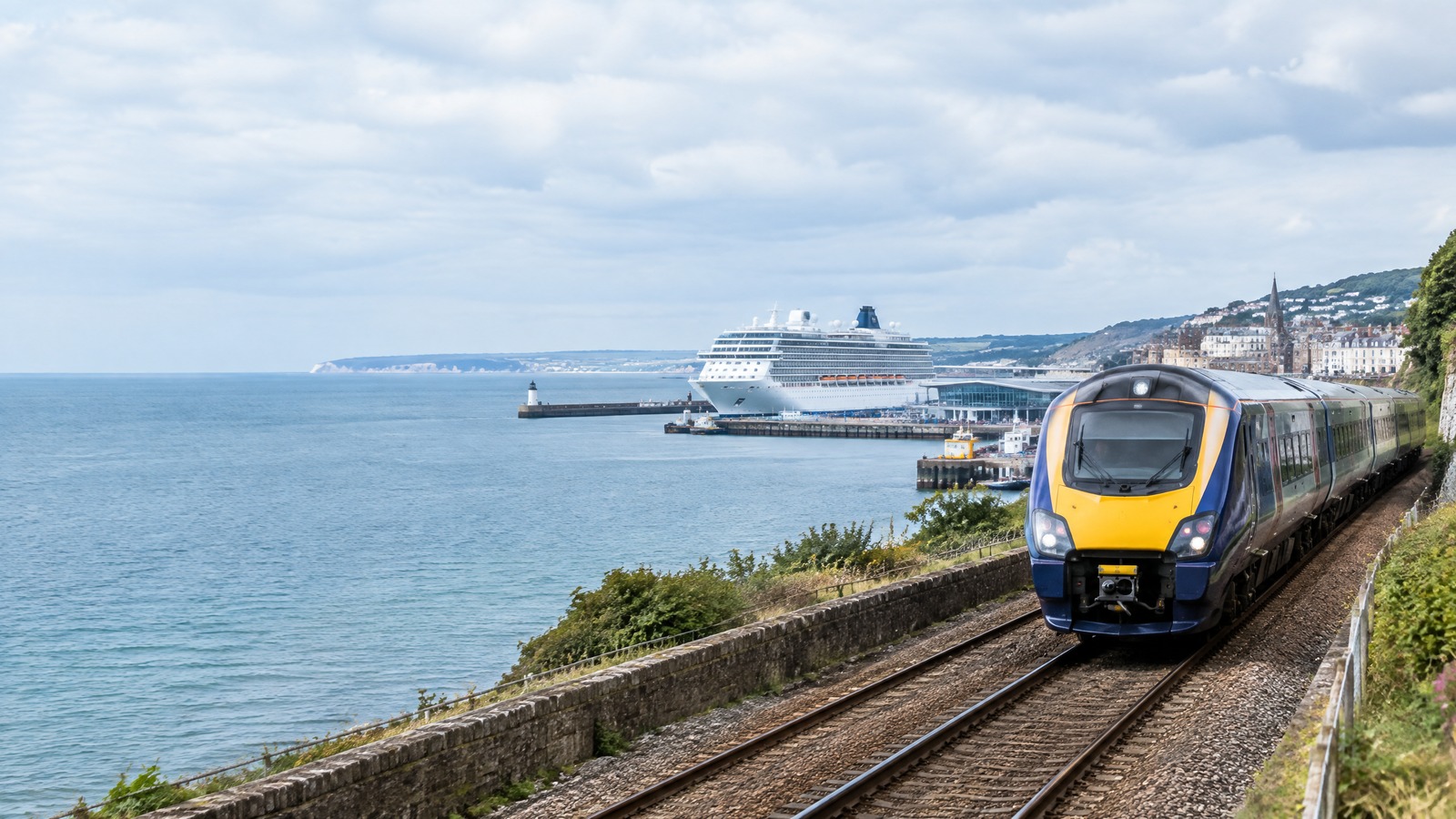
Choosing the best UK cruise port by train in 2026 depends on your origin, the last-mile transfer to the correct terminal, and the sailings available. This guide compares Southampton, Dover, Harwich and other UK embarkation ports with practical, source-checked advice.
For the Southampton station-to-ship leg, see our Southampton train station to cruise terminal guide before comparing ports.
Looking for the best UK cruise port for train travel 2026? The right answer depends on where you start, which ship and terminal you’re actually using, and how comfortable you are with the final transfer from the station to the gangway. This guide compares Southampton, Dover, Harwich and other UK embarkation ports through a rail-first lens, with official-source checks and practical planning steps for 2026. Our aim is simple: help you choose the port that gives the safest complete journey, not just the shortest walk on a map.
How to decide: choose the safest complete rail-to-ship journey
Think in two halves. First, map a practical rail route from your home station to the correct arrival station for the port. Second, plan the final leg to the exact cruise terminal shown on your booking. Weigh these against your preferred 2026 itinerary and your personal needs (mobility, luggage, travelling with children). What usually matters more than a one-station difference is whether you can make the final transfer with time to spare if there’s a disruption or a platform change. If in doubt, travel the day before and book assistance with both the train operator and your cruise line in advance.
- London and South East: Consider Southampton first for sheer choice of 2026 sailings and straightforward onward transfers from Southampton Central. If your preferred sailing departs Dover and your rail route to Dover Priory is strong, Dover can be excellent—just plan the 30–40 minute walk stated by the port or use taxi/shuttle on selected dates. Harwich may be ideal if your train terminates at Harwich International and your ship uses that complex (confirm terminal).
- South West: Southampton is usually the least complex rail target for no-fly cruises thanks to its role as a major homeport. Still verify your terminal and allow buffer time.
- Midlands: Southampton remains the usual benchmark because of homeport breadth; weigh any convenient services toward London for Dover or Harwich only if your chosen cruise sails there and the last mile is acceptable.
- North of England: If you’re set on a round-trip cruise from Northern ports, check Liverpool or Newcastle options; otherwise, Southampton typically offers the widest 2026 choice, with national rail connections to Southampton Central. Plan for one or more changes and a robust buffer.
- Scotland: If your cruise sails from Newcastle, that can reduce train time; otherwise, Southampton is the typical hub for longer itineraries. Consider travelling the day before for connection-heavy routes.
<table><thead><tr><th>Port</th><th>Best for (editorial)</th><th>Rail arrival to target</th><th>Official final-leg evidence</th><th>Main risk/check</th><th>When another port may win</th></tr></thead><tbody><tr><td>Southampton</td><td>Overall benchmark: widest 2026 homeport choice and national rail reach</td><td>Southampton Central (verify terminal specifics)</td><td><a href="https://www.southwesternrailway.com/travelling-with-us/at-the-station/southampton-central">SWR: Southampton Central station</a>; <a href="https://www.southamptonvts.co.uk/media/40wjdykx/vts-website-passenger-directions-oct.pdf">Southampton VTS passenger directions (PDF)</a> (closest station and terminal-specific directions)</td><td>Multiple terminals; you must confirm the exact terminal and follow official directions; allow buffer for disruption</td><td>For high-speed links from Kent, Dover may be simpler if you accept the longer last mile</td></tr><tr><td>Dover</td><td>London/Kent travellers using high-speed services</td><td>Dover Priory</td><td><a href="https://www.portofdover.com/cruise/">Port of Dover cruise</a> (states 66 minutes to London St Pancras; 30–40 minutes walk; shuttle on selected dates)</td><td>Longer last mile than it looks on a map; shuttle operates only on selected dates; verify close to travel</td><td>Southampton if you want broader ship/date choice; Harwich if your route and terminal align</td></tr><tr><td>Harwich</td><td>Essex/east-London travellers whose ship uses Harwich International complex</td><td>Harwich International</td><td><a href="https://www.stenalinetravel.com/routes/harwich-hook-of-holland/harwich-port">Stena Line: Harwich Port</a> (station next to Stena terminal; proves rail adjacency for the ferry terminal). Verify cruise terminal with your line.</td><td>Do not assume cruise ships use the identical passenger path as the ferry; confirm your terminal and last-mile</td><td>Southampton for broader 2026 choice; Dover for Kent high-speed arrivals</td></tr><tr><td>Tilbury</td><td>East London/Essex travellers when the itinerary departs Tilbury</td><td>Typical station to research: Tilbury Town (verify with port/line)</td><td>No single official cruise-rail page cited here; confirm with the port/cruise line; see our guide: <a href="/articles/tilbury-town-station-to-cruise-terminal-guide">Tilbury Town to cruise terminal</a></td><td>Last-mile transfer planning is essential; check terminal access and any shuttle/transfer with official sources</td><td>Southampton or Harwich if they offer your preferred dates/routes and easier rail</td></tr><tr><td>Portsmouth</td><td>South coast travellers for select departures</td><td>Typical stations to research: Portsmouth & Southsea or Portsmouth Harbour (verify)</td><td>Check official port/cruise-line guidance for terminal access; no citation included here</td><td>Terminal allocation and transfer vary; verify exact terminal and plan the last mile</td><td>Southampton for more choice; Dover/Harwich if your rail route is cleaner</td></tr><tr><td>Liverpool</td><td>Northern England travellers prioritising a closer port</td><td>Typical station to research: Liverpool Lime Street (verify)</td><td>Official last-mile varies; see our guide for planning prompts: <a href="/articles/liverpool-lime-street-to-cruise-terminal-guide">Liverpool Lime Street to cruise terminal</a></td><td>Limited homeport breadth versus Southampton; confirm terminal access and timings</td><td>Southampton if dates/ships are limited ex-Liverpool for your plans</td></tr><tr><td>Newcastle</td><td>North East and some Scottish travellers</td><td>Typical station to research: Newcastle (verify)</td><td>Check official port/cruise-line pages for terminal access; no citation included here</td><td>Terminal can be some distance from the station; confirm transfers before booking</td><td>Southampton for broader dates and lines if Newcastle options don’t match</td></tr></tbody></table>
Southampton by train in 2026: the benchmark, not always the winner
Southampton remains the UK’s principal cruise hub for 2026 departures, with major UK lines such as P&O Cruises and Cunard offering sailings. That breadth is why many travellers default to Southampton for rail travel. Objectively, Southampton Central is the nearest mainline rail station for cruise travellers, and the official Southampton VTS passenger directions identify it as the closest station and set out terminal-specific routes, including the recommended southern-side exit. Editorially, that makes Southampton the benchmark for planning—yet the last mile still requires attention because not all ships use the same terminal. Always confirm your terminal with your cruise line and check the live provisional berth on Southampton VTS close to travel; allocations can change.
- South Western Railway confirms there are taxi ranks at Southampton Central, and the station is a gateway for onward travel, including to the cruise area. Source: South Western Railway’s Southampton Central station page.
- The Southampton VTS passenger directions PDF states Southampton Central is the closest train station and provides terminal-specific guidance, including the recommended southern-side exit for certain routes.
- National Rail’s Southampton Central page provides official station information and accessibility. Check it again before you travel for any changes.
- Editorial guidance: because there are multiple cruise terminals, do not set off from the station until you’ve confirmed your exact terminal via your booking and re-checked any late changes.
From London and the South East to Southampton: keep it simple
For London-origin travellers, Southampton is a straightforward rail target with onward taxi ranks directly outside Southampton Central. The key is to match your arrival to the ship’s terminal and allow contingency for delays. For step-by-step last-mile options and terminal-specific prompts, see our focused guide: London to Southampton cruise terminal.
From the Midlands, the North and Scotland to Southampton: build buffer time
Longer national rail journeys often involve at least one change. Editorially, that increases connection risk and makes a day-before arrival advisable, especially in peak periods and on weekends with engineering works. On arrival at Southampton Central, use the taxi ranks shown on the South Western Railway station page or a pre-booked accessible transfer if needed. Confirm your terminal using your cruise documents and the Southampton VTS passenger directions, and follow the official route to avoid confusion in the port area.
Dover by train in 2026: fast London link, longer last mile
Dover can be the most attractive choice for some London and Kent travellers in 2026 because of the stated High-Speed link to London St Pancras. The Port of Dover’s cruise page states a 66‑minute High-Speed journey to London St Pancras, identifies Dover Priory as the nearest station and makes a crucial last‑mile point: the cruise terminals are a 30–40 minute walk from Dover Priory. Taxis are available at both the station and the cruise terminals, and a station shuttle operates on selected dates. Because that shuttle is not guaranteed for every embarkation, plan your final transfer conservatively and verify arrangements close to travel on the official port page or with your cruise line.
- Dover Priory is the nearest station to the cruise terminals. (Port of Dover)
- The port states High-Speed services to London St Pancras at 66 minutes. Always re-check timetables before you book.
- The terminals are a 30–40 minute walk from Dover Priory; with luggage, most travellers prefer a taxi or a port-provided shuttle when available. (Shuttle runs on selected dates; verify the calendar close to sailing.)
- Editorial reminder: build extra time between station arrival and your check-in window, and confirm your terminal in advance.
Harwich by train in 2026: station beside the ferry terminal—what that means for cruises
Harwich has a unique appeal for rail travellers because Harwich International station sits next to the ferry terminal building within the port complex. The Stena Line Harwich Port page confirms direct Greater Anglia trains to Harwich International and that the station is next to the Stena terminal. That’s solid evidence of rail adjacency at the complex. However, do not automatically assume a cruise ship will use the same passenger path as the ferry. Before you book, check your cruise line’s documentation for the exact terminal and confirm how foot and vehicle access works for your date. If your 2026 cruise does indeed embark where rail access is immediate, Harwich can be one of the easiest last miles in the UK.
- Stena Line shows Harwich International station adjacent to the ferry terminal building. This proves the port complex has rail adjacency.
- Editorial boundary: cruise ships may use different berths or passenger flows. Always verify your exact cruise terminal and access route with your cruise line or the port before finalising travel.
- Planning step: if your ship uses Harwich International with walkable access from the station, consider travelling off-peak and arriving early to avoid congestion at the terminal.
Tilbury, Portsmouth, Liverpool and Newcastle: who should consider them?
These ports can reduce your total rail time if they’re geographically closer to home or if your chosen itinerary only sails from there in 2026. Because official last‑mile evidence varies, treat the last mile as a specific planning task: identify the likely arrival station, confirm the terminal with your cruise line, and check transfer options directly with the port or your line before booking. For practical prompts and station-to-terminal considerations based on typical traveller questions, see our focused MyCruiseAdvisor guides where available.
- Tilbury (East London/Essex): Often convenient from east-of-London origins if your sailing departs Tilbury. Start with our prompts in Tilbury Town to cruise terminal and verify the terminal/transfer with official sources.
- Portsmouth (South coast): Can suit select departures if you live nearby; verify terminal allocation and station choice before booking.
- Liverpool (North West): A natural option for Northern travellers when dates align; see Liverpool Lime Street to cruise terminal for planning pointers and confirm last-mile arrangements with the port/cruise line.
- Newcastle (North East): Reduces distance for North East and some Scottish travellers if your itinerary is offered there; confirm terminal access and transfers directly before booking.
- Unsure whether to take the train or drive? Compare with our parking overview: Southampton cruise parking 2026.
Accessibility and assistance: plan both halves of the journey
For accessible travellers in 2026, the easiest port is the one where assistance is pre-booked for the station and the terminal, and the transfer between them is predictable. Objectively, the official pages for Southampton Central and Dover provide accessibility and transfer cues; Harwich offers the prospect of very short station-to-terminal movement if your ship uses the Harwich International complex. Editorially, the safest plan is to book assistance with your train operator and notify your cruise line of your needs early. On the day, arrive early enough to avoid compressed transfers and arrange a taxi or approved accessible transfer if the route involves gradients, shuttles or long perimeters.
- Before booking your cruise, confirm the exact terminal your sailing uses and whether any shuttle/transfer operates on your date.
- Pre-book Passenger Assistance with your rail operator for each leg, including changes; reconfirm 24 hours before travel.
- Check the official station page for lifts, accessible toilets and step-free routes (e.g., National Rail’s Southampton Central information page); re-check in the week of travel.
- Ask your cruise line about terminal assistance procedures and where assisted drop-off is located.
- Build extra buffer for any route that relies on a shuttle or a taxi queue.
- If your mobility device requires specific vehicle access, pre-book a suitable taxi or private transfer; don’t rely on finding one on arrival in busy windows.
Luggage and the last mile: make transfers manageable
Your bag strategy can decide which port feels “easiest.” Long walks, shuttles or multi-stop taxi perimeters are more comfortable with compact, well-rolling luggage. If you prefer to minimise handling, choose a port where your last mile is as simple as stepping into a taxi at the station with time in hand. Where a station and terminal are adjacent (as at Harwich International for the ferry terminal), that can be a decisive factor—if your cruise uses the same complex. Always check your ship’s terminal and any porters’ arrangements with your line, as these can vary by sailing and date.
- Use two smaller rolling cases rather than one oversize bag if your route includes changes.
- Keep travel documents, medication and valuables in a small, hands-free bag; you may need both hands for luggage on the final leg.
- If your port offers bag drop windows, confirm times with your line and avoid cutting them fine; policies can change.
- For Dover’s longer last mile, budget for a taxi unless your sailing date has a confirmed shuttle; the port states the walk is 30–40 minutes.
- At Southampton Central, use the taxi ranks noted by South Western Railway or a pre-booked car if you need guaranteed vehicle type or child seats.
Protect your 2026 sailing from rail disruption
A strong plan doesn’t aim for the last possible train. It builds margin against delays, platform changes and engineering works, especially on weekends and bank holidays. Editorially, the more changes your route has, the stronger the case for travelling the day before and staying near the port. If you must travel on the day, pick earlier trains than the minimum and have a plan B and C.
- Travel the day before on connection-heavy routes; compare the hotel cost with your risk tolerance.
- Choose tickets that suit potential changes—flexible or refundable options can be worth it for long, multi-change journeys.
- Reserve seats where possible for comfort and predictability.
- Check for Railcards you’re eligible for (e.g., 16–25, Senior, Two Together, Family & Friends). Railcards typically reduce fares on many routes—verify current terms.
- Book in advance for long-distance services when your plans are firm; re-check restrictions on Advance fares.
- Consider off-peak or super off-peak trains where schedules allow; always verify conditions and arrival windows against your check-in time.
- Group travel? Some operators offer group discounts on certain services—check the operator’s site.
- If you explore split-ticketing via reputable providers, read the conditions carefully; you must be on trains that call at the stations printed on your tickets.
- Monitor live service updates and engineering works in the week before departure via the rail operator and National Rail.
- Check your travel insurance for missed departure or delay coverage and required documentation.
Which port is easiest from London in 2026?
Editorially, this is a three-way decision. If your sailing departs Southampton, the directness of station-to-taxi and the breadth of 2026 options make it the simplest overall. If your sailing departs Dover and you’re near St Pancras or the Kent High-Speed network, Dover’s rail leg is hard to beat—provided you plan the longer last mile or verify a shuttle on your date. If your sailing departs Harwich and your ship uses Harwich International, the station’s adjacency to the ferry terminal complex can mean a very short transfer; confirm the exact cruise berth before you bank on a walk-across link.
Which port is easiest from the Midlands in 2026?
Most Midlands travellers weighing a broad choice of dates and ships will find Southampton the practical target, with clear onward transfer options from Southampton Central. If you’re set on a Dover or Harwich sailing, compare total journey times with changes and think carefully about the last mile, especially for Dover, which the port itself frames as a 30–40 minute walk from Dover Priory. If you prioritise minimising time on trains and see a suitable Liverpool or Newcastle departure, those may reduce distance—just verify terminal transfers directly before you commit.
Which port is easiest from the North of England in 2026?
If your 2026 cruise sails round-trip from Liverpool or embarks in Newcastle, those ports reduce overall train time. But for the widest range of dates and ships, Southampton remains the benchmark. Expect at least one change on many routes, and consider travelling the day before. Dover is more attractive for Kent/London High-Speed origins than for most Northern ones unless your itinerary starts there and your connection plan is robust.
Which port is easiest from Scotland in 2026?
If your plan includes a Newcastle embarkation and dates align, that may be the simplest rail target from parts of Scotland. Otherwise, Southampton offers the broadest choice of 2026 homeport sailings from major UK lines. With long routes and multiple changes likely, a day-before arrival is the conservative choice. Should you prefer a Dover departure, weigh the longer last mile and the practicalities of connections via London or other hubs.
2026 sailings and how they shape the port choice
Your final answer may be driven by what actually sails from each port in 2026. P&O Cruises and Cunard both show departures from Southampton in 2026 on their official booking pages at the time of writing (checked 10 October 2026). That scale is why Southampton is the benchmark for rail travellers who want the most choice. If your preferred itinerary departs Dover or Harwich and your rail route is strong to those stations, they can be compelling alternatives—provided you verify the terminal and plan the last mile carefully. For other lines and ports, check the operator’s official site for 2026 dates and keep your rail/transfer plan flexible until you have a confirmed terminal.
Pre‑booking checklist for 2026 (use this before you pay)
- Confirm the cruise port and the exact terminal on the cruise line’s official site or your booking confirmation. If you’re departing Southampton, cross‑check the provisional berth on Southampton VTS in the week before travel.
- Map the rail journey to the correct arrival station using the National Rail journey planner or the operator’s planner and re-check for engineering works or alterations in your travel week.
- Decide whether to travel the day before based on the number of changes and your risk tolerance; book a flexible hotel near the port if needed.
- For Southampton, read the terminal‑specific guidance in the Southampton VTS passenger directions PDF; use the southern‑side exit at Southampton Central where recommended.
- For Dover, note the port’s statement that the walk from Dover Priory is 30–40 minutes; check if a shuttle runs on your date and budget for a taxi if not.
- For Harwich, verify whether your ship uses the Harwich International complex and what the exact station-to-terminal route is.
- Pre-book any required accessibility assistance with your rail operator and inform your cruise line of your needs; confirm both in the week of travel.
- Build a buffer between planned station arrival and the check‑in window; aim earlier if your route relies on connections or a shuttle/taxi queue.
- Keep a plan B: earlier train options, alternative connection points, or an overnight fallback if disruption escalates.
- Save offline copies of your terminal directions and tickets; signal can be patchy inside ports.
Sources and verification (checked 10 Oct 2026; re-check before travel)
Official port, station and cruise-line references used in this guide:
- South Western Railway — Southampton Central station: https://www.southwesternrailway.com/travelling-with-us/at-the-station/southampton-central
- National Rail — Southampton Central station info: https://www.nationalrail.co.uk/stations/southampton-central/
- Southampton VTS — passenger directions (PDF): https://www.southamptonvts.co.uk/media/40wjdykx/vts-website-passenger-directions-oct.pdf
- Southampton VTS — provisional cruise ship schedule: https://www.southamptonvts.co.uk/live_information/shipping_movements_and_cruise_ship_schedule/cruise_ship_schedule/
- Port of Dover — cruise passenger information: https://www.portofdover.com/cruise/
- Stena Line — Harwich Port (rail adjacency within port complex): https://www.stenalinetravel.com/routes/harwich-hook-of-holland/harwich-port
- P&O Cruises — cruises from Southampton (2026 departures subject to change): https://www.pocruises.com/cruises-from-southampton
- Cunard — cruises from Southampton (2026 departures subject to change): https://www.cunard.com/en-gb/cruise-types/cruises-from-southampton
Important: Timetables, shuttles, terminal allocations and accessibility facilities can change. Verify all details on official pages for your exact 2026 sailing date before booking and again in the week of departure.
Frequently Asked Questions
Which UK cruise port is easiest by train from London in 2026?
Editorially, it depends on your itinerary. If you sail from Southampton, it’s a straightforward station-to-taxi transfer from Southampton Central with broad 2026 ship/date choice. If you sail from Dover and live near St Pancras or along Kent’s High-Speed network, Dover can offer the most direct rail leg—just plan the longer last mile (the port states 30–40 minutes on foot from Dover Priory) or verify a shuttle on your date. If you sail from Harwich and your ship uses the Harwich International complex, the station’s adjacency to the ferry terminal area can make it very convenient—confirm the exact cruise berth before relying on this.
Is Southampton Central walkable to every cruise terminal?
Do not assume a universal walk for every terminal. The official Southampton VTS passenger directions identify Southampton Central as the closest station and provide terminal‑specific routes, including recommending the southern‑side exit for certain directions. However, with multiple terminals and luggage, many travellers prefer a taxi from the station; South Western Railway confirms taxi ranks at Southampton Central. Always confirm your exact terminal first and follow the official directions.
How close is Dover Priory to the cruise terminals, and is there a shuttle?
The Port of Dover states the cruise terminals are a 30–40 minute walk from Dover Priory. Taxis are available at the station and terminals, and a shuttle operates on selected dates. Because the shuttle is not guaranteed for every sailing, you should check your exact date on the official port page or with your cruise line and plan a taxi if needed.
Is Harwich International station inside the cruise port?
The Stena Line Harwich Port page confirms Harwich International station is next to the Stena ferry terminal building, demonstrating rail adjacency within the port complex. That said, cruise ships may use different berths or passenger flows. Verify your cruise terminal and the exact passenger route with your line before relying on a walk‑across connection.
Should I travel the day before my 2026 sailing?
If your route involves one or more changes or long distances (common from the Midlands, North or Scotland to Southampton), an overnight stay the day before is the conservative choice. It protects against delays and makes the last mile less stressful. Balance the hotel cost with your risk tolerance and check your insurance for missed departure coverage.
How can I protect my cruise if trains are disrupted on embarkation day?
Build buffer time by choosing earlier trains than the minimum, have a plan B (alternative services or routes), and consider travelling the day before if connections are tight. Keep operator and National Rail updates to hand in the week before departure. If delays happen, retain evidence for any claim under Delay Repay or your travel insurance—check terms in advance.
Which port is better for accessible travellers in 2026?
The best port is the one where you can secure assistance and a predictable final transfer. Southampton has clear official guidance (SWR station page and VTS directions). Dover provides explicit statements on distance, taxi availability and shuttle on selected dates. Harwich may offer very short station-to-terminal movement if your cruise uses the Harwich International complex. Pre-book rail assistance and confirm terminal assistance with your cruise line well ahead of time.
Can I save money on rail tickets to my cruise port?
Potentially. Check if you qualify for a Railcard, consider booking well in advance for long-distance journeys, and compare off-peak options where schedules allow—always verifying that your arrival still meets the cruise check-in window. If you explore split-ticketing, ensure your trains call at the intermediate stations printed on your tickets and that restrictions fit your plan.
How do I confirm which terminal my ship will use?
Use your cruise line’s booking portal or pre-departure documents for the official terminal, then re-check close to travel. For Southampton specifically, review the provisional berth on Southampton VTS in the week before departure, understanding that allocations can change. Print or save the official terminal directions for your arrival day.
Does the ‘best port by train’ change if I’m travelling with children or heavy luggage?
Often yes. With buggies or heavy bags, a direct station-to-taxi connection and shorter perimeters become more important. Southampton usually fares well here due to taxi ranks at Southampton Central and broad sailing choice. Dover can still work well if you use a taxi or a confirmed shuttle; Harwich can be very convenient if your ship uses the rail-adjacent complex. Choose the port that minimises handling on the last mile for your family.
Related articles
- Southampton Cruise Parking Guide 2026
- Southampton Station to Cruise Terminal: 2026 Guide
- London to Southampton Cruise Terminal Guide 2026
- Dover train station to cruise terminal: 2026 guide
- Harwich International station to cruise terminal
- Tilbury Town station to cruise terminal: best routes
- Liverpool Lime Street to cruise terminal: the smart way