Home › Articles › Family & Accessibility
Cruise with Hearing Aids UK Guide: what to check first
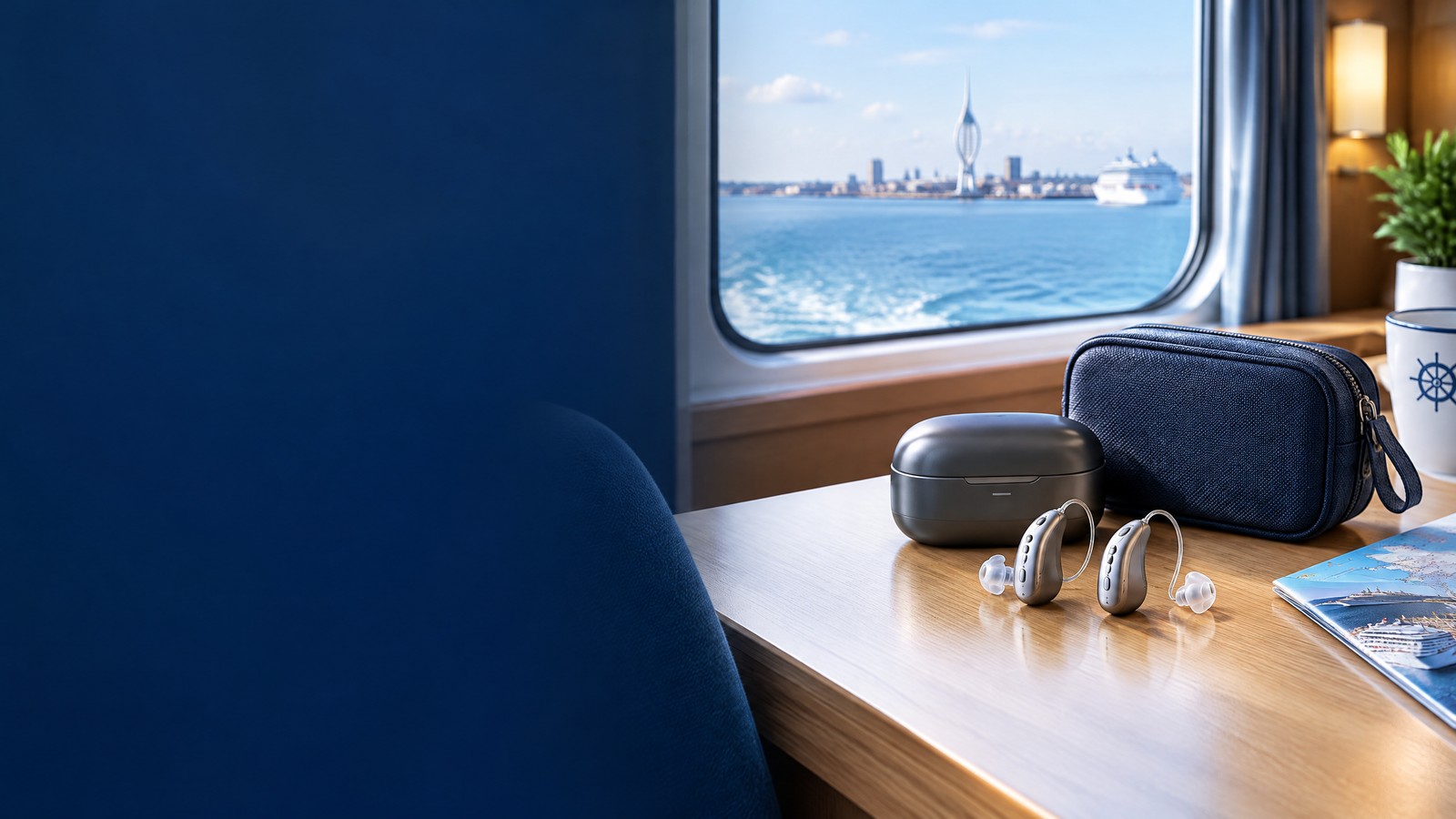
Cruising with hearing aids from the UK is doable with the right prep. This 2026 guide explains power planning, drying and care, what to disclose to the cruise line, how to use loops and assistive listening, and how to handle muster, theatres and shore days—plus money-saving tactics and UK-specific checks.
Before choosing a cabin, compare the operator’s accessibility information with our accessible cruise cabin guide, then confirm the exact ship and sailing requirements in writing.
Thinking about a cruise with hearing aids and need a UK-focused guide? Here’s the short version: it’s absolutely feasible in 2026, but you’ll want to book any hearing-related needs as an accessibility request, not an assumption. This cruise with hearing aids UK guide walks you through what to disclose, how to look after your devices at sea, how hearing loops and assistive listening can work on board, and the practicalities of embarkation, muster and shore days—plus power planning for both rechargeable and disposable hearing aids. Throughout, we signpost the checks to make with your exact cruise line and ship before you commit.
The UK decision in one page: feasible, but confirm ship-by-ship
Objectively, cruising with hearing aids in 2026 is achievable for UK travellers if you treat accessibility as a reservation item. The reason is that facilities vary by operator and by ship. For example, P&O Cruises’ UK guidance explains that certain assistive features are installed in specific places (hearing loops at Southampton terminals and onboard reception, and infrared listening support in listed venues), while visual alert systems are available across ships and its LISA visual/tactile system is currently noted only on Arvia and Iona in some accessible or partially accessible cabins. Royal Caribbean’s UK page describes portable visual–tactile room kits, TTYs, amplified telephones, assistive listening systems in main theatres and captioned televisions, with advance-notice timelines for equipment and for any interpreting service (availability and limits apply). That variability is why the smartest UK decision is: choose your ship and itinerary first, then ask the operator in writing what is available on that exact sailing—and what must be reserved.
Tell the cruise line what you need—and when to do it
Do this at booking, not at embarkation. In 2026, P&O asks guests to complete its On-Board Needs Questionnaire as soon as possible and no later than two weeks before departure. It also notes that some items are provided first-come, first-served, so the earlier you request, the better your chance. Royal Caribbean’s UK page states that special-needs equipment/services should be requested at least 30 days in advance and that sign-language interpreting requests (which its page limits to sailings departing from and/or returning to the US and Canada) require 60 days and are subject to availability. Those timelines are Royal Caribbean’s policy, not a universal UK rule—other lines may differ. Editorially, we recommend putting your requirements in writing at the time you place a deposit and reconfirming before final payment. If your trip is a fly-cruise, remember airline assistance has its own notice periods; that’s separate from cruise-line timelines.
Your hearing aids vs the ship’s accessibility equipment
Two distinct responsibilities make a cruise smooth for hearing-aid users. First, there’s your personal device care: batteries or chargers, cleaning tools, and moisture control. That sits with you and your audiologist/manufacturer instructions. Second, there’s the ship’s hearing-accessible equipment and communication support, which may include hearing loops, infrared assistive listening devices, visual/tactile alert kits and captioned content. Those sit with the cruise operator, and availability can vary by ship, venue and sailing. The winning strategy is to prepare both tracks: bring a complete, self-contained kit for your own devices, and secure written confirmation from the cruise line for any ship-provided equipment you intend to use, including how to collect it and whether it’s limited in number.
Power at sea: rechargeable vs disposable hearing aids
Power planning is a top concern for UK travellers. If you use disposable batteries, NHS guidance notes that typical life can be around 8–14 days under stated assumptions, and heavy use—especially Bluetooth streaming—may shorten this. That’s a broad estimate, not a promise for your brand or itinerary; bring more than you think you need, store them safely, and never heat or attempt to recharge disposable batteries. If your aids are rechargeable, take your manufacturer’s charger, the correct cables, and at least one spare power option (for example, a secondary charging dock or power bank, if your maker supports it). Cruise cabins often have a limited number of sockets, and plug types can vary by ship; always verify your ship’s socket and voltage information with the operator and bring appropriate travel adapters. Avoid extension leads or high-load multi-gang adaptors unless your cruise line explicitly permits them. Keep the charger and any batteries in your hand luggage, never in checked suitcases, so you can power devices during travel delays.
<table><thead><tr><th>Traveller type</th><th>Recommended power plan</th><th>Why this helps</th></tr></thead><tbody><tr><td>Disposable battery user (short cruise)</td><td>Pack at least 2x your expected battery use plus a drying kit and cleaning tools</td><td>Battery life varies; extra stock covers streaming, shows and unexpected drain</td></tr><tr><td>Disposable battery user (14+ nights)</td><td>Carry a full voyage supply in hand luggage; split spares across two sealed containers</td><td>Mitigates moisture and loss; avoids relying on ports to find the right batteries</td></tr><tr><td>Rechargeable user (standard dock)</td><td>Bring primary charger, spare cable, suitable plug adapter(s), and verify cabin sockets</td><td>Ensures overnight charging even if one cable fails or sockets are limited</td></tr><tr><td>Rechargeable user (portable case)</td><td>Fully charge case pre-travel; add a power bank if supported by your device maker</td><td>Gives resilience during delays, shore days and tender waits</td></tr><tr><td>Heavy Bluetooth streamer</td><td>Reduce streaming time where possible; carry extra batteries or midday top-up plan</td><td>Streaming increases power demand; managing use extends uptime</td></tr><tr><td>Fly-cruiser</td><td>Keep all power items in carry-on; check airline rules for batteries and devices</td><td>Prevents loss if hold luggage is delayed; aligns with airport security guidance</td></tr></tbody></table>
Packing smart for hearing-aid users
Build a self-sufficient kit into your carry-on. Include spare batteries or the correct charger and cables, the manufacturer’s travel case, cleaning tools, domes or earmould supplies approved by your audiologist, and a safe drying solution recommended by your clinician. NHS guidance emphasises that moisture can damage hearing aids; a dedicated drying kit is a sensible accessory. Do not rely on buying spares in port. For broader cruise packing structure, see our practical lists in Ultimate cruise packing list and Cruise packing list essentials.
- At deposit: email the cruise line’s accessibility team describing your hearing requirements and your sailing details. 2) Ask what assistive listening systems your ship/venues use (loop vs infrared) and whether you must reserve devices. 3) Confirm availability of visual/tactile room alerts and any caption options, and how to request them. 4) If you need written versions of key announcements or shore-excursion commentary, ask whether and how this can be provided. 5) Complete the operator’s needs form by its deadline (P&O requests completion as soon as possible and no later than two weeks pre-departure; Royal Caribbean’s UK page states 30 days for special-needs equipment/services and 60 days for interpreting, subject to availability). 6) Check cabin socket types/voltage with the operator and bring suitable adapters. 7) Visit your audiologist for spares, cleaning supplies and water-resistance guidance for your model. 8) Build a hand-luggage kit with all hearing essentials. 9) If you are flying, separately request airline/airport assistance under their timelines.
Embarkation, muster and announcements without stress
On embarkation day, tell reception/guest services and your cabin steward how you prefer to communicate. Ask them to note your profile so you receive safety and muster information in accessible formats. P&O notes hearing loops at Southampton cruise terminals and at onboard reception; for loops like these, your hearing aid typically needs to be switched to the ‘T’ (telecoil) setting. At muster, ask where visual information is shown and whether written or video-captioned content is available; P&O says its emergency video has captions. For general public announcements, clarify with guest services how you will be reached if you miss an overhead announcement (e.g., written follow-up, in-person check, or visual indicators where provided). For a UK departure planning overview, our Southampton cruise terminal accessibility guide covers the bigger picture of reaching and navigating the port.
Theatres and venues: loops, infrared and assistive listening systems
Ship theatres may use different technologies. P&O’s guidance references hearing loops at reception and infrared systems in named venues; the Southampton-terminal and reception loops require switching your hearing aid to the ‘T’ (telecoil) position. Royal Caribbean’s UK page says assistive listening systems are available in main theatres. The practical step is to ask your operator which technology is in each venue on your ship and how to access equipment (for instance, collecting an infrared headset from guest services). Captioning isn’t universal: P&O notes that subtitle availability varies by ship, though its emergency video is captioned, and it can provide theatre song transcripts. Royal Caribbean’s page mentions captioned televisions. For each performance or talk you plan to attend, ask the venue team which accommodations they can arrange and whether you need to reserve a device.
In-cabin alerts, door knocks and phone calls
If you need visual or tactile alerts in your cabin, ask at booking. P&O’s page mentions Ameriphone visual alerts across ships and notes that the LISA visual/tactile system is on Arvia and Iona only, in some accessible or partially accessible cabins. Royal Caribbean’s UK page describes portable visual–tactile room kits, TTYs, amplified telephones and captioned televisions, subject to request and availability. Because cabin equipment is limited and sometimes allocated first-come, first-served, request it early, confirm whether a deposit is required, and ask how staff will communicate urgent messages if the kit is unavailable. If subtitles matter to you, verify the exact status on your ship as P&O says this varies by ship.
Shore excursions, tender ports and communicating off the ship
Shore days can be busy, loud and spread out. If you have difficulty hearing coach narration, ask the shore-excursions team whether written commentary can be provided; P&O notes that written commentary may be possible. For tender ports, discuss with the on-board team how safety messages will be delivered if you remove your devices for spray or rain. In all cases, explain your preferred communication method to the excursion staff before departure and confirm where to find written timings and meeting points. Do not assume priority seating, captioned commentary or interpreter provision unless the operator confirms it for your exact tour.
Dining rooms, bars and social spaces: practical tactics
Open dining rooms and bars can be noisy. While specific accommodations vary by ship, there are traveller-tested tactics that don’t rely on special equipment: arrive early to request seating away from loudspeakers; choose a table against a wall to reduce background noise; ask your server to face you when speaking; and, if you use a telecoil accessory for remote mics, verify with your audiologist how to deploy it in restaurants. For families, agree simple hand signals for basics (water, dessert, bathroom) so you can maintain the flow of conversation without straining. If you are debating cabin location for quieter sleep or calmer corridors, our Best cabins on a cruise ship guide explains location trade-offs without assuming hearing-specific features.
Fly-cruise note: airports, security and assistance
If your cruise involves flying, airport rules are separate from cruise rules. GOV.UK’s 2026 guidance says you can ask for a hand search of hearing aids and should bring a doctor’s letter explaining why they should not be scanned; however, the airport makes the final decision on whether scanning is required. It also advises requesting airline disability assistance at least 48 hours before departure. Treat those timings as aviation-specific; they do not set cruise-line deadlines. Keep hearing aids and all power items in your carry-on and be ready to explain your equipment briefly to security personnel.
Insurance and documentation: small steps that pay off
Tell your travel insurer that you wear hearing aids and check coverage for loss or damage on land and at sea. Photograph your devices, serial numbers and charger before you travel and store the photos in a secure cloud folder. Keep a copy of your audiogram and your audiologist’s contact details. If you rely on captions or visual alerts, bring a short written summary of your needs; handing this to guest services on embarkation makes it easier for them to coordinate.
<table><thead><tr><th>Traveller profile</th><th>What to confirm before booking</th><th>Editorial recommendation</th></tr></thead><tbody><tr><td>UK cruiser, binaural aids, prefers theatre</td><td>Venue tech (loop vs infrared), booking method for ALDs, caption availability</td><td>Pick ship only after theatre tech is confirmed in writing; practise telecoil switching if loops are used</td></tr><tr><td>Rechargeable-only user, 14-night Med</td><td>Cabin sockets/voltage, adapter compatibility, charger space near bed</td><td>Pack spare cables and a supported backup power option; avoid last-minute cabin swaps that reduce socket access</td></tr><tr><td>Fly-cruiser via UK airport</td><td>Airline assistance timeline, airport security approach to aids, carry-on rules</td><td>Carry doctor’s letter for security, keep all hearing gear in hand luggage</td></tr><tr><td>Light sleeper, sensitive to PA noise</td><td>How emergency info will be delivered in your cabin, availability of visual alerts</td><td>Request visual/tactile alert kit early; discuss non-audio notification routes at guest services</td></tr><tr><td>Family group with one hard-of-hearing adult</td><td>Dining room seating policy, show reservations, staff communication notes</td><td>Email the line asking for communication notes on your booking; arrive early for quieter seating</td></tr></tbody></table>
Money-saving without cutting corners
- Reserve ship-provided equipment early so you are not forced to buy third-party gadgets you may not need. Some items are limited; ask about any deposits or conditions.
- Buy spares from your usual UK supplier before you sail rather than trying to source niche batteries or domes in foreign ports.
- Minimise streaming on sea days if you use disposables; it can reduce battery life. Saving runtime means buying and carrying fewer spares for longer itineraries.
- If you are choosing between two sailings, pick the one where the operator can confirm your needed equipment in writing—changing plans late often increases costs on flights, hotels or insurance amendments.
Troubleshooting and backup if something goes wrong
If your aid stops working at sea, start with basics: replace or recharge power, clean domes and microphones with approved tools, and dry the device properly. Then visit guest services to record your communication needs and ask about alternative notification routes while you troubleshoot. For venue events, request written notes or transcripts where available. If a ship kit you reserved is out of service, ask for the operator’s alternative (e.g., different venue seating, written material) and record the conversation in your cabin mailbox or email, so teams on the next shift can help consistently. Do not attempt unapproved repairs or heating for moisture—follow your audiologist’s advice.
- Reconfirm your accessibility requests in writing with the cruise line (include booking reference). 2) Complete or update any needs questionnaire (e.g., P&O’s form). 3) Inventory your hearing kit: batteries or charger, spares, cleaning and drying supplies. 4) Test every cable and charger overnight before packing. 5) Prepare a short printed card describing your communication preferences for guest services and your cabin steward. 6) Screenshot your accessibility emails in case you lose signal. 7) If flying, re-check airline assistance and carry your doctor’s letter for airport security.
Common pitfalls—and how to avoid them
- Assuming every ship has hearing loops everywhere: they don’t. Ask which venues have loops or infrared systems on your exact ship and how to access them.
- Waiting until embarkation to request a room alert kit: equipment may be limited or require advance reservation. Request early and reconfirm a week out.
- Relying on cruise staff to know your needs without telling them: introduce yourself to guest services and your steward and explain your communication preferences.
- Wearing aids in water on the basis of ‘water-resistant’ marketing: confirm the rating in your manual and follow your audiologist’s guidance.
- Packing hearing essentials in hold luggage: keep them in your carry-on in case of delays or lost bags.
- Expecting sign-language interpreting on any sailing without confirming: Royal Caribbean’s UK page limits this service regionally and it is subject to availability; other lines have their own policies. Always verify before booking.
Sources and verification (checked 2026)
Always check the cruise line’s website for your exact ship and sailing before you book and again before you travel. Key references consulted for this guide:
- P&O Cruises – Facilities for guests with visual or hearing impairments (On-Board Needs Questionnaire timing; Southampton-terminal and reception loops; infrared support in listed venues; Ameriphone visual alerts; LISA on Arvia and Iona in some accessible/partially accessible cabins; emergency video captions; subtitle variability; theatre transcripts; potential written shore-excursion commentary): https://www.pocruises.com/help-hub/centre/getting-ready-to-sail/medical-requirements-and-accessibility/facilities-for-hearing-and-visually-impaired-guests
- Royal Caribbean (UK) – Visual & Hearing Disabilities (portable room kits, TTYs, amplified telephones, assistive listening in main theatres, captioned TVs; 30-day special-needs notice; 60-day interpreting notice; availability and regional limits): https://www.royalcaribbean.com/gbr/en/experience/accessible-cruising/hearing-visual-disabilties
- GOV.UK – Your rights at the airport (hand search request for hearing aids; airport decides on scanning; airline assistance requested at least 48 hours before departure): https://www.gov.uk/airport-rights
- Cambridge University Hospitals NHS – Hearing Aids and Audiology Services Guide: Ear Mould (typical disposable battery life 8–14 days under stated assumptions; streaming can reduce life; do not heat or recharge disposable batteries; moisture risks and drying kits): https://www.cuh.nhs.uk/patient-information/hearing-aids-and-audiology-services-guide-earmould/
- UK Maritime and Coastguard Agency – MGN 306M (guidance on accessible information, induction loops, textphones, visual displays, and complementary safety communications): https://www.gov.uk/government/publications/mgn-306m-amendment-1-designing-and-operating-smaller-passenger-vessels-guidance-on-meeting-the-needs-of-persons-with-disabilities/designing-and-operating-smaller-passenger-vessels-guidance-on-meeting-the-needs-of-persons-with-reduced-mobility
- Somerset Council – Holidays and travel support for people with hearing loss (tell your ferry or cruise company about requirements before booking; flight assistance timelines): https://www.somerset.gov.uk/health-safety-and-wellbeing/hearing-loss/hearing-loss-holidays-and-travel/
Editorial note: Facilities, forms and deadlines can change after October 2026. Verify details with the operator’s official pages and your audiologist before booking.
Frequently Asked Questions
Do cruise ships have hearing loops in every venue?
No. Availability varies by ship and venue. P&O’s page lists hearing loops at Southampton terminals and at onboard reception, and says certain venues use infrared systems. Always ask your operator which technology is installed in the venues you plan to visit and whether you must reserve equipment.
Can I rely on captions for every show and TV channel on board?
Not universally. P&O says its emergency video has captions and that subtitle availability varies by ship. Royal Caribbean’s UK page mentions captioned televisions. For theatres, options differ by ship and show. Confirm what’s available on your specific sailing before you book.
How early do I need to request assistive listening or room alert kits?
Request as early as possible at booking. P&O asks guests to complete its On-Board Needs Questionnaire as soon as possible and no later than two weeks before departure. Royal Caribbean’s UK page states 30 days for special-needs equipment/services and 60 days for interpreting requests, subject to availability and regional limits. Other lines may differ—verify on their official sites.
Are rechargeable hearing aids a problem on cruise ships?
They work when properly planned for. Bring your charger, spare cables, the correct adapters for your ship’s sockets, and consider a supported backup power option. Keep all power items in your carry-on. Confirm cabin sockets/voltage with the operator in advance.
How long will my disposable hearing-aid batteries last on a cruise?
NHS guidance gives a broad estimate of 8–14 days under stated use assumptions, but actual life varies—Bluetooth streaming and stronger prescriptions can reduce it. Pack more than you think you’ll need and store spares safely. Never heat or attempt to recharge disposables.
What should I tell staff on embarkation day?
Visit guest services and your cabin steward to explain how you prefer to communicate, ask how emergency and muster information will reach you accessibly, and note any equipment you have reserved. For theatre or excursion teams, state your needs at the venue before the event begins.
Can I go through airport security scanners while wearing hearing aids on a fly-cruise?
GOV.UK says you can ask for a hand search and bring a doctor’s letter explaining why scanning should be avoided, but the airport decides whether scanning is required. Request airline disability assistance at least 48 hours before departure. This is aviation guidance, not cruise-terminal policy.
Will a cruise line provide a sign-language interpreter on UK sailings?
Do not assume it. Royal Caribbean’s UK page discusses interpreting with notice, but limits it to cruises departing from and/or returning to the US and Canada, and it is subject to availability. Other lines have their own policies. If interpreting is essential, get written confirmation before booking.
What’s the safest way to handle water exposure on a cruise?
Treat pools, showers, rain and sea spray as device-risk situations. Follow your manufacturer’s water-resistance instructions, remove devices before activities beyond their rating, dry them using your audiologist’s recommended method, and use a drying kit overnight. Do not heat batteries.
If I miss an announcement because I took my aids out, what then?
Ask guest services how important announcements will be relayed to you—this could include written follow-ups or visual/tactile alerts where provided. At muster, confirm the accessible route for safety information. Put your preferences in writing on embarkation day so multiple teams can assist.
Related articles
- Ultimate Cruise Packing List 2026: Everything You Need to Bring
- Best Cabins on a Cruise Ship: Which to Choose?
- First Time Cruiser Complete Guide: What to Expect on Your Voyage
- Cruise Packing List Essentials: What to Bring on a Cruise
- Southampton Cruise Terminal Accessibility Guide 2026
- Accessible Cruise Cabin Guide for UK Travellers 2026