Home › Articles › Family & Accessibility
UK cruise with a toddler: the definitive packing list
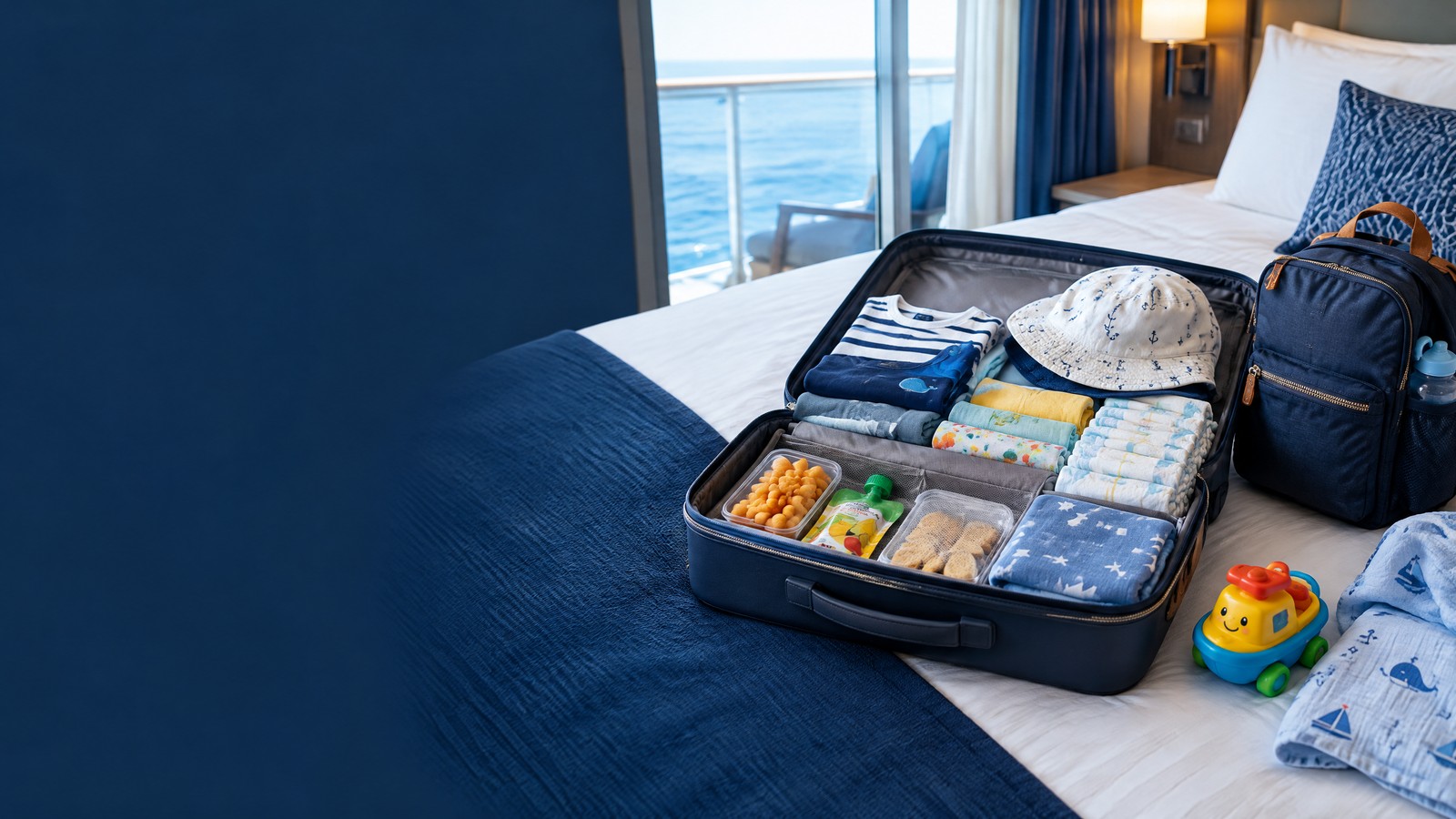
Cruising from the UK with a toddler in 2026? Here’s a practical, print-ready packing list that starts with your embarkation-day bag and separates must-pack items from “only if your operator confirms it”. Includes UK document reminders, fly-cruise liquid rules and money-saving tips.
Planning a cruise with a toddler from the UK in 2026 can feel like packing for every season and scenario at once. This UK-specific cruise with a toddler packing list keeps things simple: start with your embarkation-day carry-on, then add must-pack essentials, followed by items to consider if your child uses them at home, and finally a short list you should only pack if your operator and itinerary confirm they’re permitted or available. We reference official UK guidance for medicines and documents, and we point you to operator examples so you can verify the fine print before you sail.
How this UK-specific list works (and what to verify)
Parents cruise in very different circumstances: some sail no-fly from Southampton or Dover, others take a fly-cruise to the Med or Canaries; some toddlers are potty training, others use nappies; some need prescription liquid medicines or special dietary liquids. This guide separates packing into three tiers so you can adapt quickly: 1) Must-pack for nearly every family; 2) Useful if your child uses it at home; 3) Only if your operator/itinerary confirms it. Where policies can change by ship and operator (for example, swim nappies in pools, nursery age limits, food storage or refrigeration), we flag them clearly and direct you to verify with the cruise line before booking or packing. Celebrity’s own packing guidance highlights a day bag for the first hours on board because checked luggage may not be available immediately; treat this as an operator example rather than a universal rule. UK airport security rules for medicines and medical liquids also matter for fly-cruise itineraries—check your airline and departure airport as well as the cruise line.
<table><thead><tr><th>Category</th><th>Must-pack</th><th>Useful if your child uses it</th><th>Only if your operator/itinerary confirms it</th></tr></thead><tbody><tr><td>Travel docs</td><td>Passports/ID, boarding documents, travel insurance</td><td>Photocopies/digital backups</td><td>Permission letter and relationship evidence if needed for travel abroad (verify for your trip)</td></tr><tr><td>Health & medicines</td><td>Prescription meds, liquid medicines in hand luggage, thermometers</td><td>Child first-aid kit, saline spray, plasters</td><td>Medical equipment or special dietary liquids over 100ml for flights (check airport/airline rules)</td></tr><tr><td>Nappies & potty</td><td>Nappies, wipes, nappy cream, nappy sacks</td><td>Potty seat/reducer, fold-flat changing mat, inflatable bath</td><td>Swim nappies and pool access (verify pool rules and facilities)</td></tr><tr><td>Feeding</td><td>Bottles/sippy cups, bibs, wipes, familiar snacks</td><td>Portable drying rack, suction plates, toddler cutlery</td><td>Personal food on board and any storage/refrigeration (policies vary by line; verify)</td></tr><tr><td>Clothing</td><td>Day outfits, sleepwear, layers, hat, sun cover-up</td><td>Cardigan/fleece, rain jacket, water shoes</td><td>Formalwear if you plan to attend dress-up evenings</td></tr><tr><td>Sleep & comfort</td><td>Favourite comforter/blanket/soft toy, white noise app/device</td><td>Portable blackout (clips or cover), travel monitor</td><td>Travel cot if not provided/requestable (verify before packing)</td></tr><tr><td>Out & about</td><td>Compact foldable pushchair or a carrier</td><td>Wet bag, mini first-aid pouch for shore days</td><td>Beach tent/shade at destinations (check airline baggage and port excursion rules)</td></tr></tbody></table>
Your embarkation-day toddler carry-on: what must stay with you
Checked luggage can take time to reach your cabin, so assume you’ll manage the first few hours from your day bag. Some operators, such as Celebrity in their public guidance, recommend packing swimwear, flip-flops, a cover-up and sunblock in that first-hours bag—treat this as a sensible example rather than a line-agnostic rule. For UK families, anything critical to your toddler’s comfort, feeding or health should never leave your sight until it’s safely in your cabin.
- Passports, boarding documents and any necessary permission letter or relationship evidence for travel abroad
- Prescription medicines and essential liquid medicines (keep in hand luggage; see UK rules under “Liquids and medicines” below)
- Nappies, wipes, nappy sacks and a travel-sized barrier cream
- A complete change of clothes for your toddler and a spare top for you
- Bottle/sippy cup and familiar, factory-sealed snacks suitable for your child
- Comforter/blanket/soft toy, plus a white-noise app or device if you use one
- Sun protection: hat, cover-up and sunscreen for outdoor decks
- Lightweight hooded towel or muslin for shade and spills
- Sanitiser and antibacterial wipes for high-touch areas
- If you plan an early swim and your operator permits, swim gear in a wet bag (verify pool rules for toddlers)
Clothing and footwear for toddlers: pack for decks, dining and UK weather quirks
Aim for practical layers that handle sun, wind and air-conditioned interiors. On a ship, outdoor decks can be breezy even in summer; evenings can feel cool; and dining rooms often prefer neat casual. Pack enough comfortable daywear, plus sleepwear, a sun hat, a cardigan or light fleece and a rainproof layer for shoulder-season sailings. If you want help minimising bulk, our wardrobe tips in cruise-capsule-wardrobe can be adapted for children too.
- Everyday outfits your toddler actually wears; quick-dry fabrics are practical at sea
- Swimwear and a sun-safe cover-up or rash vest; see our guide to how-many-swimsuits-to-pack-for-a-cruise for quantity thinking without overpacking
- Lightweight rain layer for UK departures—see cruise-rain-jacket-packing
- Closed-toe trainers or sandals with a secure strap; plus easy-on shoes for the cabin
- Sun hat with neck protection if your child tolerates it
- Spare pyjamas in case of night-time spills
- Laundry-friendly colours if you plan to wash on board or ashore (some operators suggest using laundry rather than overpacking on longer itineraries; treat that as an operator example, not a guarantee of facilities on your ship)
Nappies, potty-training and bathroom kit
Cruise ships are compact; a few small items make bathroom time easier. Pack the exact brands your toddler uses at home—availability and sizes of nappies, wipes and creams can be limited and vary by ship. If you’re in the middle of potty training, think about your child’s routine and build in buffers for travel days.
- Nappies for the full trip plus contingency for delays and shore days
- Wipes, nappy sacks and a travel-changing mat for public restrooms and cabin use
- Barrier cream and a small hand sanitiser
- Foldable potty seat/reducer if your child prefers it
- A small pack of pull-ups or training pants if you’re mid-transition
- Swim nappies if your itinerary and operator confirm they are permitted for splash areas (always verify pool and splash rules before relying on them)
- Inflatable baby/toddler bath if your child won’t stand in a shower—only pack if you know your cabin layout can accommodate it
Feeding, milk and snacks: what works at sea
Keep your toddler’s feeding routine as close to home as possible. Bring bottles or sippy cups, familiar snacks and bibs. If your child needs special dietary liquids or formula on a fly-cruise, pack them in hand luggage and check the airline’s rules in advance. For onboard dining, many families prefer suction plates and toddler cutlery, which are light and easy to rinse in the cabin bathroom.
Sleep and comfort in your cabin
Good sleep drives good days on a cruise. Bring the comforter, blanket or soft toy your toddler relies on, and consider a white-noise device or app to soften corridor sounds. Portable blackout (clips, magnets or a pram cover for naps) can help, especially in bright destinations. If you’ll need a travel cot, ask your operator about availability and request procedures well before you sail; don’t assume it’s guaranteed on every ship or in every cabin type.
Health, first aid and sun safety for toddlers at sea
Cruise ship shops may not stock your preferred child medicines or brands. Pack your toddler’s go-to remedies and keep essential meds in your hand luggage. For sun, NHS-backed advice uses the simple “slip, slop, slap” idea—slip on protective clothing, slop on a suitable sunscreen and slap on a hat or stay in shade where possible. Always check the latest NHS/NHS Foundation Trust guidance before you travel.
- Prescription medicines in original packaging, plus copies of prescriptions if helpful
- Liquid medicines and any special dietary liquids in hand luggage for flights (see GOV.UK rules)
- Thermometer and child-safe pain/fever relief as advised by a healthcare professional
- Plasters, saline spray/drops, antiseptic wipes and a small dressing pack
- After-sun or gentle moisturiser
- Sun protection clothing, hat and sunglasses if tolerated
- A reusable water bottle for parents and older toddlers to encourage hydration on hot decks
Documents and permission when a child travels abroad
In the UK, permission is required from everyone with parental responsibility or a court before taking a child abroad. A letter is usually enough evidence, and evidence of the relationship (for example a birth or adoption certificate) can help at borders. This is a UK legal baseline, not a cruise-line boarding checklist that every line will ask to see at the terminal. For wider document planning, see our guide Do you need a passport for a UK cruise?. Always check your itinerary and the cruise line’s official guidance before you travel.
- Passports valid for your itinerary, and visas if required by the countries you will visit
- Permission letter if you’re travelling without one or more people with parental responsibility
- Evidence of relationship (birth/adoption certificate) if you think you may be asked for it
- Travel insurance details and emergency contacts
- Copies (digital or printed) of key documents stored separately from originals
Fly-cruise vs no-fly from the UK: what changes in your packing
No-fly cruises from Southampton, Dover or Liverpool simplify liquids and gear because you’re not dealing with airport security or airline baggage limits. Fly-cruises add UK airport screening rules for liquid medicines and any special dietary liquids, and carriers’ pushchair policies can differ. Plan your toddler carry-on accordingly and decide whether to gate-check a pushchair or rely on a carrier until you reach the ship. If you’re driving or going by rail to a UK port, allow extra time for loading, naps and snack breaks, and check port arrival guidance on official channels before you go.
<table><thead><tr><th>Planning area</th><th>No-fly UK departure (e.g., Southampton)</th><th>Fly-cruise from UK airport</th></tr></thead><tbody><tr><td>Liquids and meds</td><td>No airport liquid limits; keep essentials in your embarkation bag anyway</td><td>UK security rules apply to essential liquid medicines and special dietary liquids; bring proof if required</td></tr><tr><td>Pushchair</td><td>Bring a compact, foldable pushchair from home; no airline restrictions</td><td>Check airline for pushchair allowances and whether you can gate-check; consider a soft carrier as backup</td></tr><tr><td>Food and snacks</td><td>Easier to bring a wider range from home, still verify cruise-line policies</td><td>Factory-sealed snacks are typically safer to pack; verify line policy and any customs rules</td></tr><tr><td>Baggage</td><td>Car boot or rail limits; fewer weight constraints</td><td>Airline weight/size limits; consider packing cubes and a capsule wardrobe</td></tr><tr><td>Embarkation timing</td><td>Arrive with nap/snack windows in mind; check official port information</td><td>Plan for flight delays; split essentials across adult hand luggage</td></tr></tbody></table>
Shore days with a toddler: daypack and wet-bag planning
Port days are brilliant with little ones if you pack light and smart. Pre-pack a small day bag with nappies, wipes, snacks, water and sun protection, plus a wet bag for swimsuits and sandy gear. Decide early whether your destination is best done with a pushchair or carrier—cobbles and steps may favour a carrier, long flat promenades may be pushchair-friendly. For more detail, see our companion guide cruise-day-bag-for-shore-excursions.
- Nappies/wipes and a compact changing kit
- Factory-sealed snacks and water for adults/older toddlers
- Sun hat, cover-up and sunscreen; a lightweight towel or muslin
- A small toy or sticker book for cafés and queues
- Wet bag for swimsuits and spills
- Basic first-aid mini pack and sanitiser
- Emergency card with ship name, port agent details and your cabin number
Traveller-type recommendations: what to prioritise
Every toddler and itinerary is different. Use these editorial suggestions as a framework, then tailor quantities to your child’s age, toilet training, feeding and climate. Where a recommendation depends on line policy (for example, nursery access or pool use), verify it directly with your cruise operator before you book or pack.
<table><thead><tr><th>Traveller type</th><th>Top priorities</th><th>Notes to verify</th></tr></thead><tbody><tr><td>No-fly UK cruiser (nappy stage)</td><td>Bulk-pack nappies/wipes, compact pushchair, inflatable bath if needed</td><td>Pool/splash rules for non-toilet-trained children</td></tr><tr><td>Fly-cruise family (formula/milk)</td><td>All liquids in hand luggage, spare bottles, drying cloths</td><td>Airline rules for liquids and gate-checking pushchairs</td></tr><tr><td>Potty-training toddler</td><td>Potty seat/reducer, pull-ups for travel days, extra outfits</td><td>Cabin bathroom layout and laundry options</td></tr><tr><td>Allergy-managed child</td><td>Prescribed meds, factory-sealed safe snacks, translation cards if needed</td><td>Line’s policy on personal food and storage; discuss dietary needs with the operator</td></tr><tr><td>City-walking itinerary</td><td>Carrier for steps/cobbles, grippy shoes, sun/rain layers</td><td>Excursion details and pram accessibility</td></tr><tr><td>Beach-heavy itinerary</td><td>Sun shade/cover-up, water shoes, wet bag</td><td>Beach equipment allowances on flights and excursions</td></tr><tr><td>Single parent or solo adult with child</td><td>Hands-free carrier, simple day bag, duplicates of key comfort items</td><td>Nursery/club options and supervision rules</td></tr></tbody></table>
Money-saving and space-saving ideas for UK families
- Prioritise reusables: take a couple of sippy cups and two or three washable bibs rather than packs of disposables. A small bottle of dish soap and a sponge make cabin rinsing quick.
- Pack multi-use clothing: rash vests double as sun tops; muslins work as shade, burp cloths and nap blankets.
- Use a capsule approach: see cruise-capsule-wardrobe to coordinate colours so fewer pieces create more outfits—for you and for your toddler.
- Share the load: split nappies and spare outfits across adult carry-ons in case one bag is delayed.
- Avoid paying onboard for basics you rely on daily: bring your child’s specific nappies, wipes and medicines. Ship shops may have limited options and you should not rely on finding your preferred brand.
- Check whether doing a small load of laundry mid-cruise is simpler than overpacking; some operators suggest laundry can beat overpacking on longer sailings, but always verify your ship’s facilities and prices before you assume anything is available.
Common packing mistakes UK parents can avoid (editorial)
- Relying on ship facilities without checking: cots, fridges, food storage, toddler pool access and nursery spaces all vary. Verify, then pack accordingly.
- Putting medicines in checked luggage: keep all essential toddler medicines in your hand luggage for both flights and embarkation.
- Skipping the embarkation bag: the first few hours set the tone—snacks, nappies and a comforter need to be with you.
- Overpacking toys: a few compact favourites, books and stickers go further than a suitcase of plastic.
- Bringing a bulky pram: cruise cabins and gangways reward fold-flat, lightweight pushchairs; pair with a carrier for steps.
- Optimistic potty training on travel days: build in backups and spare clothes.
A copy-friendly toddler cruise packing checklist
Use this as your printable core list, then add or remove based on your child and itinerary.
- Documents: passports, boarding passes, travel insurance; permission letter and relationship evidence if needed
- Health: prescription medicines, liquid meds in hand luggage for flights, child first-aid kit, thermometer
- Nappies & potty: nappies, wipes, sacks, cream, changing mat; potty seat/reducer; swim nappies if permitted
- Feeding: bottles/sippy cups, bibs, familiar factory-sealed snacks, toddler cutlery/suction plate
- Clothing: day outfits, sleepwear, layers, sun hat, rain jacket; swimwear and cover-up; closed-toe shoes
- Sun & deck: sunscreen, cover-up/rash vest, sunglasses if tolerated
- Sleep: favourite comforter/blanket/soft toy; white-noise app; blackout clips/cover
- Out & about: compact pushchair, carrier, wet bag, daypack, reusable water bottle (for adults/older toddlers)
- Cabin helpers: pegs/clips, small bottle soap/sponge, foldable laundry bag
- Shore-day kit: mini first-aid, sanitiser, emergency contact card
Sources and verification (checked 2026)
Before you rely on any facility or policy, verify your exact sailing on the operator’s official site and check your UK airport/airline rules for fly-cruises. Official sources used for this guide (checked 2026-10-09):
- Celebrity Cruises — The Complete Guide To Taking A Cruise With A Toddler: https://www.celebritycruises.com/blog/cruise-with-a-toddler
- Celebrity Cruises — Cruise Packing List: https://www.celebritycruises.com/blog/cruise-packing-list
- GOV.UK — Hand luggage: medicines, medical equipment and dietary requirements: https://www.gov.uk/hand-luggage-restrictions/essential-medicines-and-medical-equipment
- Carnival — What items can I bring on board? (operator example): https://www.carnival.com/help?topicid=2633
- GOV.UK — Get permission to take a child abroad: https://www.gov.uk/permission-take-child-abroad
- GOV.UK — Foreign travel checklist: https://www.gov.uk/guidance/foreign-travel-checklist
- NHS/Trust sun safety overview: https://www.cuh.nhs.uk/our-services/dermatology/skin-cancer-service/sun-safety/
- National Rail — Travelling with children: https://www.nationalrail.co.uk/on-the-train/travelling-with-children/
- Southampton VTS — Cruise port information: https://www.southamptonvts.co.uk/port-information/cruise/
Frequently Asked Questions
What should go in my toddler’s embarkation-day bag for a UK cruise?
Keep passports/boarding documents, any required permission letter, prescription and essential medicines, nappies/wipes, a full outfit change, bottle or sippy cup, factory-sealed snacks, sun hat and sunscreen, a comforter and sanitiser. Some operators recommend packing swimwear for the first hours onboard because checked bags can arrive later, but treat that as an example and verify your line’s approach.
Can I bring my toddler’s favourite snacks on board?
Policies vary. As one operator example, Carnival’s policy allows only pre-packaged, factory-sealed, unopened personal food and says it cannot refrigerate, store or prepare personal food. Your line may differ, so check the official policy for your ship and sailing before you pack snacks, pouches or milk you expect to refrigerate.
How many swimsuits should I pack for my toddler?
Pack what suits your child and itinerary. One operator’s general packing advice suggests bringing multiple swimsuits and planning to do laundry rather than overpacking on longer sails, but that’s not a universal rule. For quantity thinking without committing to a fixed number, see how-many-swimsuits-to-pack-for-a-cruise.
Do cruise ships provide travel cots for toddlers?
Some ships can provide a cot on request, but it is not guaranteed across every line, ship or cabin. If you need one, contact your operator early to verify availability, request procedures and any space constraints in your specific cabin.
Are toddlers allowed in cruise ship pools if they wear swim nappies?
Pool and splash-area rules vary by line and ship and may depend on toilet training. Do not assume access with a swim nappy. Verify your exact sailing’s rules with the cruise operator before you pack or promise pool time.
What documents do I need if I’m travelling with my child without the other parent?
UK guidance says you need permission from everyone with parental responsibility or a court to take a child abroad. A letter is usually enough evidence, and bringing relationship evidence (for example a birth certificate) can help. This is a UK legal baseline and not a guarantee that a cruise line will always ask to see it at the terminal. Check your route and the line’s guidance before you travel.
How do UK airport liquid rules affect my toddler’s medicines and special foods on a fly-cruise?
UK security rules allow essential liquid medicines over 100ml and special food/liquids needed for medical reasons in hand luggage. You may be asked for proof for prescribed liquids over 100ml and containers can be opened at screening. These are airport rules; also check your airline’s policy and your cruise line’s onboard rules before you fly.
Should I bring a pushchair or a carrier for port days?
Both have a role. A compact, foldable pushchair is great for promenades and ship corridors; a soft carrier excels on steps, cobbles and in busy tender ports. Storage in cabins is limited, so keep gear lightweight and fold-flat. Choose based on your itinerary and your child’s nap routine.
Will there be baby supplies in the ship’s shops if I run out?
Availability varies by ship and should not be relied upon. Pack the nappies, wipes, creams and medicines your toddler uses at home for the full trip plus a small contingency for delays. Verify with your line if you’re considering buying anything essential onboard.
Related articles
- Ultimate Cruise Packing List 2026: Everything You Need to Bring
- Cruise Packing List Essentials: What to Bring on a Cruise
- Do You Need a Passport for a Cruise from UK in 2026?
- Cruise Capsule Wardrobe: UK Guide to Packing Smart 2026
- Cruise Embarkation Day Bag Checklist: What to Pack
- Packing a Rain Jacket for a Cruise: UK Guide 2026
- How many swimsuits to pack for a cruise in 2026
- The best cruise day bag for shore excursions