Best Cruise for Over 50s UK: Adults-Only, No-Fly or Small Ship
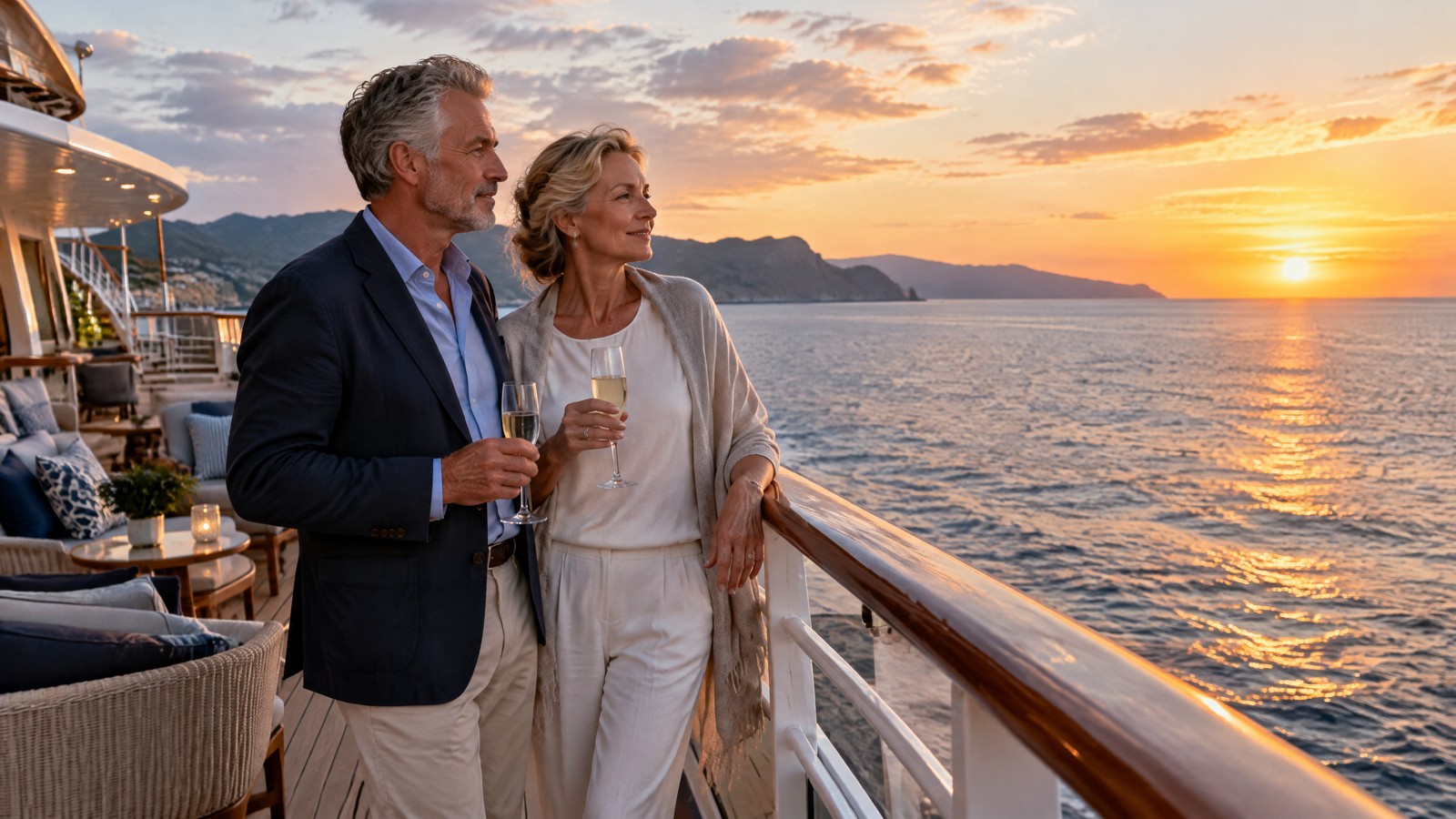
There isn’t one ‘best cruise’ for everyone over 50. In 2026, the right choice for a UK traveller depends on whether you prefer an age-qualified product, an adults-only sailing, a smaller ship, or an all-ages ship with the right cabin and itinerary. This guide shows you how to shortlist and what to verify before you pay.
Best cruise for over 50s UK is a planning question in 2026, not a single winner. The ideal sailing for a UK traveller aged 50+ depends on the onboard setting you want (age-qualified, adults-only, smaller ship or all-ages), how easily you can reach the departure port, the day‑to‑day pace of the itinerary and any health, mobility or equipment needs. This guide explains how to build a shortlist that fits those realities and where to verify the exact terms before you book.
Choose the cruise type before the cruise line
If you begin with brand loyalty or brochure images, you risk missing a better‑fitting option. A useful 2026 shortlist for UK travellers over 50 starts with four clear routes: an age‑qualified product, an adults‑only sailing, a smaller‑ship experience, or an all‑ages ship tailored by cabin choice and itinerary. Age alone doesn’t predict your preferred social setting, access needs or appetite for sea days—so let those priorities lead.
<table><thead><tr><th>Route</th><th>What it means</th><th>Who it can suit</th><th>What to verify before booking</th></tr></thead><tbody><tr><td>Age‑qualified product</td><td>Eligibility based on traveller age. Example: Saga’s ocean‑cruise FAQ states lead booker 50+, companions 40+ (check current wording).</td><td>Travellers who want a clearly age‑qualified environment.</td><td>Latest eligibility on the operator site; exact ship/date; cabin and itinerary specifics; assistance process; insurance requirements.</td></tr><tr><td>Adults‑only sailing</td><td>18+ environment on designated sailings. P&O positions Arcadia and Aurora as adult‑only options from Southampton; Ambassador states Ambience and Ambition are adult guests 18+ except on advertised multigenerational cruises.</td><td>Travellers who want an adult‑classified ship or voyage.</td><td>The exact sailing’s age classification and terms; itinerary; cabin choice; assistance and medical disclosure; insurance scope.</td></tr><tr><td>Smaller‑ship proposition</td><td>Fred. Olsen highlights smaller ships by design, fewer guests, and an intention to make getting ashore quicker and easier, plus a high guest‑to‑space ratio (their claims).</td><td>Travellers who prefer intimate ships and routes where smaller scale may suit port access goals.</td><td>The actual ship and itinerary; tender calls; sea‑day pattern; cabin location; assistance process; insurance fit.</td></tr><tr><td>All‑ages ship with targeted choices</td><td>Broad‑appeal ships where you shape the experience via cabin location, itinerary, and onboard interests.</td><td>Travellers flexible on passenger mix but focused on route, facilities and logistics.</td><td>Cabin and deck plan; noise/traffic considerations; port logistics and tenders; assistance confirmation; insurance for full itinerary.</td></tr></tbody></table>
A 50+ product, an adults-only sailing and an all-ages cruise are different choices
It’s easy to group these together, but they are not interchangeable. In 2026, treat eligibility, adult‑classification and ship scale as distinct filters—then test a few sailings against your everyday needs: where you sleep, how you get ashore, how many sea days you want, and what support you may require.
Saga’s ocean‑cruise FAQs state that for its ocean cruises with optional travel insurance, the lead booker must be over 50 and additional travellers can be aged 40 or over. That’s Saga’s wording, not an industry rule, and you should recheck the current eligibility and booking path on Saga’s official site before committing. Source: https://travel.saga.co.uk/cruises/faqs/ocean-cruises.aspx
P&O presents Arcadia and Aurora as adult‑cruise choices from Southampton. Ambassador’s A–Z information states Ambience and Ambition are for adult guests aged 18+ except on advertised multigenerational cruises. Treat these as operator‑specific terms and confirm the exact 2026 sailing’s classification and conditions on the line’s site before booking. Sources: https://www.pocruises.com/exclusively-for-adults-holidays and https://www.ambassadorcruiseline.com/before-you-sail/general-information/
Smaller ship or larger ship: let the itinerary lead the decision
Ship size isn’t a quality verdict. It’s a lens for comparing how you want to travel day‑to‑day. A smaller ship may visit certain ports or feel more intimate; a larger ship may offer more venues. What matters is the exact itinerary, the number of sea days, and how you’ll get ashore.
Fred. Olsen Cruise Lines explains that its ships are smaller by design, carry fewer guests and are intended to make getting ashore quicker and easier; it also describes a high guest‑to‑space ratio. These are the line’s own statements and not guarantees of a specific voyage. Always compare the published itinerary and ship details for the dates you’re considering. Source: https://www.fredolsencruises.com/fred-olsen-difference/smaller-ships
- How many sea days are scheduled, and are they clustered?
- Are any ports tender ports? If tendering matters for your party, read our guide to practicalities at tender calls: tender-port access.
- What time does the ship arrive and depart in each port? Short calls can compress your plans.
- Is the route walking‑intensive, coach‑based, or mixed? Consider stamina and interests.
- Are there overnight stays or early departures that affect sleep or routine?
- Does the likely weather affect shore comfort or packing?
Cabin location can shape your whole experience
Age labels don’t fix sleep quality or convenience—your cabin choice often does. If you’re noise‑sensitive or want easier lift access, prioritise deck and location once you’ve chosen a ship. Start here: how to choose a cruise cabin and, for specific needs, accessible cruise cabins.
No-fly cruise planning from the UK
A no‑fly sailing avoids airports and baggage limits, and can be ideal if you prefer a simpler start and finish. Southampton is a major UK turnaround port. Associated British Ports notes five cruise terminals, ship‑to‑shore walkways, cruise parking facilities, and national rail connectivity. These facts support a no‑fly plan, but your booking confirmation will set the exact terminal and arrival instructions for your date and ship. Source: https://www.abports.co.uk/locations/southampton/
- Confirm the exact terminal in your booking documents—Southampton has five, and allocations vary by sailing.
- Build journey contingency. Allow extra time for motorway or rail delays; check the latest engineering works and timetables.
- Decide parking vs drop‑off vs taxi well ahead; follow your cruise line’s guidance for approved options.
- If you need assistance, tell the cruise line or agent at booking, then reconfirm once you receive terminal instructions; do not wait until the 48‑hour legal minimum.
- If price‑hunting, start with no‑fly round‑ups such as cruises from Southampton, then check the operator’s site for your specific sailing.
- For detailed terminal considerations, see our Southampton terminal accessibility.
Choose itinerary pace, not just destination names
Two cruises to the same region can feel completely different. Look at sea‑day patterns, time in port, and how you’ll get around on shore. If a port requires a tender, that’s a separate operational choice; check the ship’s plan for your date. For remote or expedition‑style Arctic itineraries, the UK government advises that some areas are uncharted or ice‑covered, rescue may be distant and response can take days. Before booking such routes, check the operator’s experience and credentials, review onboard medical facilities, and discuss any pre‑existing conditions with the operator. Source: https://www.gov.uk/guidance/arctic-travel-safety-advice
Health, insurance and accessibility: checks to make before you pay
Preparation is itinerary‑led and personal. The NHS advises seeking travel‑health advice 4–6 weeks before travel because vaccine needs depend on the countries and locations you visit. GOV.UK recommends appropriate travel insurance for international trips that covers existing physical or mental health conditions and planned activities, noting cruises often require additional cover because of the difficulty of reaching hospital. UK guidance for disabled passengers says you should notify the cruise line, agent or operator at least 48 hours before departure if you need specific embarkation/disembarkation help—treat that as a legal minimum and disclose earlier at booking. Sources: https://www.nhs.uk/vaccinations/travel-vaccinations/; https://www.gov.uk/guidance/foreign-travel-insurance; https://www.gov.uk/transport-disabled/ships
- Book a travel‑health consultation 4–6 weeks before departure; bring your full itinerary, including any pre/post stays.
- Read your cruise line’s medical disclosure and assistance policy; declare relevant conditions and equipment requirements at booking.
- Compare travel‑insurance wording for cruise‑specific cover and all destinations on your route; declare pre‑existing conditions fully. Start research here: cruise travel insurance.
- If you require an accessible stateroom or adaptations, get written confirmation for the specific cabin number and its features. Read: [accessible cruise cabins].
- For tender ports and shore tours, ask the operator how access is handled on your exact date; also see our guide to [tender-port access].
Phone and data at sea: avoid satellite bill shock
Mobile usage aboard can be different from land roaming. Ofcom warns that near the coast or at sea, phones may connect to a ship’s satellite network, where charges can be higher than standard roaming. Understand your provider’s policy before you sail and consider how you’ll use Wi‑Fi. Source: https://www.ofcom.org.uk/phones-and-broadband/saving-money/using-your-mobile-abroad
- Ask your mobile provider how your plan treats maritime satellite networks; note that inclusive EU/EEA roaming typically does not apply at sea.
- Turn off data roaming when the ship is underway unless you intend to use satellite service.
- Use the ship’s Wi‑Fi only after you’ve read the terms and any fair‑use limitations; avoid auto‑updates and cloud backups on sea days.
- Consider offline maps and downloaded entertainment; sync emails/photos over Wi‑Fi at known times.
- If travelling with companions, agree a simple family plan: flight mode at sail‑away, Wi‑Fi only, and manual checks of bills.
Money-saving without false economy
Value for money in 2026 comes from matching the product to your priorities, not just chasing the lowest fare. No‑fly sailings can remove flight costs and baggage fees; shoulder‑season dates can change demand patterns; cabin location can deliver better sleep without upgrading category. But any saving must still respect your insurance, health and access requirements.
- No‑fly focus: compare sailings from reachable UK ports first to remove airfares and airport hotels from the equation.
- Date flexibility: if your calendar allows, compare multiple 2026 weeks for the same route; then confirm weather and port‑call patterns are acceptable.
- Cabin pragmatism: a well‑located inside or outside cabin may suit you better than a higher‑category cabin in a noisy area; see [how to choose a cruise cabin].
- Single travellers: availability and terms vary—shortlist first by setting, then review single‑occupancy options; read our guide to solo cruises for over‑50s.
- Check cancellation and change terms: flexibility rules differ by fare type; choose what suits your risk tolerance and insurance.
- Verify inclusions: before assuming any beverage, Wi‑Fi or gratuity policy, read the operator’s current terms for your sailing.
- Start your search with curated no‑fly options: [cruises from Southampton].
Recommendations by traveller type (editorial guidance)
These are planning pointers, not ranked winners. Always verify the exact 2026 sailing’s age rules, itinerary and access with the operator before booking.
- If you want an age‑qualified environment: consider a 50+ eligibility model and recheck the current wording on the operator’s site (see Saga’s FAQ link below). Confirm your companion ages meet the rule for your chosen date.
- If you specifically want adult‑classified ships from Southampton: shortlist P&O’s Arcadia/Aurora adults‑only proposition and Ambassador’s 18+ positioning (except advertised multigenerational cruises). Confirm the classification on your chosen departure.
- If you prefer intimate ships and port‑access claims resonate: evaluate Fred. Olsen’s smaller‑ship proposition against your route; check tender calls and sea‑day balance.
- If you’re a couple seeking shared downtime as much as ports: focus on cabin location and sea‑day spacing; then browse our round‑up of cruises for older couples.
- If you’re travelling solo: decide first on setting (age‑qualified vs adults‑only vs all‑ages), then review our guide to [solo cruises for over‑50s] for broader planning steps.
- If you need embarkation or shore assistance: disclose at booking, seek written confirmation for your cabin and equipment, and read our [Southampton terminal accessibility] guide for port‑day planning.
- If you’re comparing this article with advice for a different life stage: also see our Best Cruise for Over 60s UK for age‑adjacent scenarios, then return to the exact setting and itinerary that fit you.
Pre‑booking checklist for 2026
Before you commit money, run this short, practical checklist for your chosen sailing.
- Confirm the sailing’s age eligibility or adult‑classification on the operator’s official site.
- Check the exact ship and date, then map the sea‑day pattern and time in port.
- Identify any tender ports and ask how access is handled on your date.
- Choose cabin location with sleep and lift convenience in mind; read our [cabin guide].
- If you need assistance or an accessible cabin, disclose at booking and obtain written confirmation of arrangements; read [accessible cruise cabins].
- Verify the departure port and terminal instructions in your documents; plan travel with contingency; see [Southampton deals] and [terminal accessibility].
- Arrange travel‑health advice 4–6 weeks before departure (NHS guidance).
- Obtain travel insurance that explicitly covers cruising, declared conditions and all destinations (GOV.UK guidance).
- Decide your phone plan for sea days; review Ofcom’s advice and consider turning off data roaming underway.
- For remote or Arctic‑style itineraries, read the UK government’s Arctic travel advice, then confirm operator credentials and onboard medical facilities for your chosen voyage.
Closing recommendation
Treat “over 50” as a starting point, not a prescription. First decide your preferred setting (age‑qualified, adults‑only, smaller‑ship or all‑ages). Next, choose a workable UK departure and an itinerary pace you’ll genuinely enjoy day‑to‑day. Finally, verify the specific 2026 sailing’s terms, cabin, access, insurance needs and terminal plan directly with the operator before you pay. If your needs shift towards different life stages, cross‑reference our focused guides—then return to the exact sailing that fits you best right now.
Sources and verification (recheck before booking)
- Saga Cruises — Ocean cruise FAQs: https://travel.saga.co.uk/cruises/faqs/ocean-cruises.aspx
- P&O Cruises — Holidays exclusively for adults: https://www.pocruises.com/exclusively-for-adults-holidays
- Ambassador Cruise Line — A–Z General Information: https://www.ambassadorcruiseline.com/before-you-sail/general-information/
- Fred. Olsen Cruise Lines — Smaller ships: https://www.fredolsencruises.com/fred-olsen-difference/smaller-ships
- ABP — Port of Southampton: https://www.abports.co.uk/locations/southampton/
- GOV.UK — Foreign travel insurance: https://www.gov.uk/guidance/foreign-travel-insurance
- NHS — Travel vaccinations: https://www.nhs.uk/vaccinations/travel-vaccinations/
- Ofcom — Using your mobile abroad: https://www.ofcom.org.uk/phones-and-broadband/saving-money/using-your-mobile-abroad
- GOV.UK — Transport support services for disabled people: Ships: https://www.gov.uk/transport-disabled/ships
- GOV.UK — Arctic travel safety advice: https://www.gov.uk/guidance/arctic-travel-safety-advice
Ambassador Cruise Line review provide the next decision detail for this topic.
Frequently Asked Questions
Is there one best cruise line for over‑50s in the UK?
No. In 2026 the right choice depends on whether you want an age‑qualified product, an adults‑only sailing, a smaller ship, or an all‑ages ship with the right cabin and itinerary. Start with those settings, then verify the specific sailing’s terms and suitability on the operator’s site.
Are adults‑only cruises the same as over‑50s cruises?
They are different. An adults‑only sailing means a minimum age (often 18+) on designated ships or dates. A 50+ product uses an age‑eligibility rule, such as Saga’s FAQ stating lead booker 50+ and companions 40+ (check the current wording before you book). Neither label alone guarantees a particular atmosphere or pace.
Can I take a no‑fly cruise from the UK if I’m over 50?
Yes. Many lines offer no‑fly departures from UK ports. Southampton is a major example, with five cruise terminals, ship‑to‑shore walkways, parking facilities and national rail connectivity (ABP). Always follow your booking documents for the exact terminal and arrival instructions for your date.
What should I check if I have mobility or medical needs?
Disclose needs at booking, not at the 48‑hour legal minimum. Ask for written confirmation of your exact cabin, any equipment arrangements, and how embarkation, disembarkation and tender ports will be handled on your sailing. Review UK guidance for disabled passengers and confirm the operator’s process for your date.
Do I need special insurance for a cruise?
GOV.UK advises appropriate travel insurance that covers your cruise, all destinations and declared conditions, noting cruises generally require additional cover because hospital access can be difficult at sea. Compare policy wording carefully and check your cruise operator’s booking conditions before committing.
How far in advance should I arrange travel vaccinations?
The NHS advises seeking travel‑health advice 4–6 weeks before travel. Vaccine needs depend on the countries and locations you’ll visit, not on age alone.
Will my mobile plan’s EU roaming cover me at sea?
Not necessarily. Ofcom warns that phones at sea may connect to a ship’s satellite network, where charges can be higher and typical roaming allowances may not apply. Consider turning off data roaming underway and understand the ship’s Wi‑Fi terms before using it.
Are smaller ships always better for getting ashore?
Not always. Fred. Olsen states its smaller ships are intended to make getting ashore quicker and easier and highlights a high guest‑to‑space ratio, but outcomes depend on the exact port, date, sea conditions and ship procedures. Check the published itinerary and ask access questions for your specific sailing.
Which UK port is best for over‑50s?
There isn’t a single best port. Choose one that is realistically reachable for your party and works with your itinerary. Southampton is a major turnaround port with five terminals and national rail links (ABP). Your booking documents—not a generic port guide—will confirm terminal and arrival instructions for your date.
Related articles
- Best Cruise Deals from Southampton 2026 — Top Picks
- Best cruise line for solo travellers over 50
- Cruise Travel Insurance UK Best 2026: Top Cover Picks
- How to choose the right cruise cabin in 2026
- P&O Adult-Only Ships Guide 2026: Arcadia vs Aurora
- Southampton Cruise Terminal Accessibility Guide 2026
- Accessible Cruise Cabin Guide for UK Travellers 2026
- Can wheelchair users go ashore at cruise tender ports (UK, 2026)?